Introduction
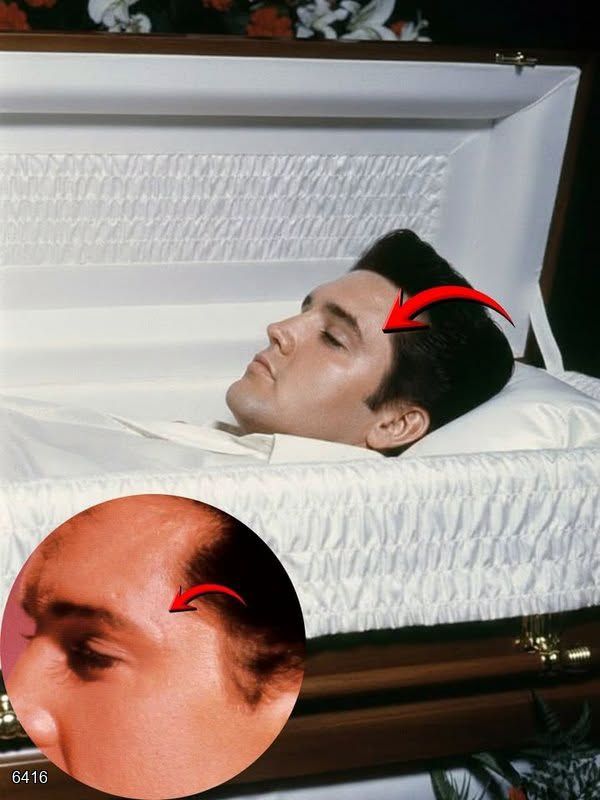
For those who remember the summer of 1977, the news of Elvis Presley’s death remains inseparable from the moment they first heard it. A radio announcement interrupted an ordinary afternoon. A familiar record suddenly sounded different. The voice that had accompanied their youth belonged, unexpectedly, to the past. Elvis died at Graceland on August 16, 1977, aged just 42—a fact recorded in his official biography. Yet accepting that loss proved far harder than hearing the announcement. graceland.com
Against that background, the phrase “THE SCAR THAT VANISHED: One Detail Inside Elvis Presley’s Coffin That Still Haunts the World” offers a powerful invitation to doubt. Its premise is unsettling: an unnamed woman supposedly looked into the casket and noticed that a familiar scar was missing. Could something so small overturn everything the public believed?
Before exploring that question, however, we must recognize the limits of the story. The alleged missing scar is not an established historical finding. The supplied account identifies neither the witness nor the scar’s location, and the sources reviewed for this article do not provide reliable corroboration of her observation. Nor is there evidence here supporting the assertion that makeup could not have concealed it. Those omissions matter, because an intriguing claim becomes meaningful evidence only when its details can be examined.
The chronology also deserves care. Contemporary reporting places the public viewing at Graceland on August 17, followed by the funeral and burial on August 18, 1977. Keeping those occasions distinct helps preserve the history beneath the increasingly dramatic retellings. The Washington Post
Nevertheless, the emotional appeal of the story is understandable. Listeners knew Elvis through movement and sound: the tilt of his head, the unexpected smile, the warmth that could enter a phrase almost imperceptibly. A still image of a beloved performer can feel profoundly unfamiliar. That distance between remembered vitality and final stillness creates fertile ground for uncertainty, even when uncertainty supplies no evidence of deception.
For an older listener, Elvis’s importance rarely rests on spectacle alone. In “Can’t Help Falling in Love,” his restraint allows the melody to unfold with remarkable patience. In “If I Can Dream,” conviction gives the performance its urgency. His gospel recordings reveal another dimension: a singer whose musical instincts could make faith, humility, and longing feel immediate. These performances explain why his absence was difficult to absorb. People had lost someone whose voice seemed woven into their own lives.
Stories of a secret escape offer an emotionally convenient alternative to that absence. They leave the door open for another appearance, another recording, another chance to hear the familiar voice. But affection for an artist need not depend on accepting an unsupported account. A compelling mystery deserves scrutiny, especially when it concerns a real family’s bereavement.
The enduring question, then, is less whether a scar disappeared than why this particular suggestion feels so persuasive. It transforms a final goodbye into an unfinished story. For readers who grew up with Elvis, that promise carries considerable weight.
Yet his recordings already provide something more substantial than the promise of a hidden return. Whenever the needle settles into the groove, his phrasing, humor, tenderness, and musical judgment become audible again. Elvis Presley’s legacy needs no unverified detail inside a coffin to remain extraordinary. The evidence of his greatness has been there all along—in the voice.