Introduction
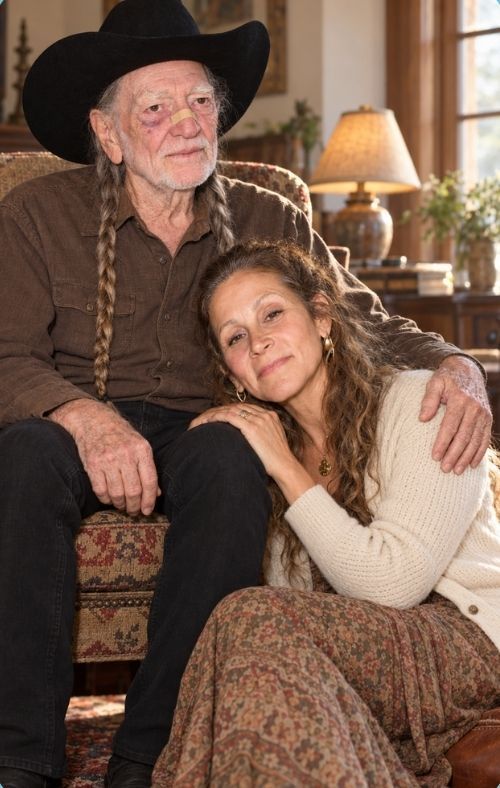
Ask a celebrated songwriter to name his best friend, and you might expect the answer to be another musician—a companion from the road, a familiar face backstage, someone who shared the long nights and uncertain beginnings. But in “Willie Nelson Says His Wife Is His Best Friend,” the most revealing moment arrives before the conversation has really begun. Asked whom he considers his closest friend, Willie Nelson points toward his wife, Annie, with the easy affection of a man who feels no need to dress up the truth.
There is something deeply moving about the simplicity of that answer. He does not offer a polished speech about marriage or attempt to turn their relationship into a grand romantic story. Instead, he describes the reassurance of having someone beside him when life becomes difficult. For listeners who have spent decades learning what companionship requires, the meaning is immediately recognizable: friendship is often measured by who remains present when the applause has faded.
Although this video is an interview rather than a musical performance, it offers a thoughtful introduction to the emotional world behind Willie Nelson’s songs. His writing has long found its strength in ordinary language carrying extraordinary feeling. In this conversation, that same quality emerges naturally. A brief observation about his wife becomes a reflection on loyalty, trust, and the comfort of being understood.
The mood grows more reflective when the discussion turns to old friends who have died. Nelson mentions Roy Clark and admits that he, too, wonders why he has outlived so many companions. There is no elaborate explanation, only an honest acknowledgment of uncertainty. That modest response gives the earlier tribute to his wife greater weight. As familiar voices disappear from a person’s life, the relationships that endure can become even more precious.
Yet the conversation never settles into solemnity for long. Nelson’s humor remains close at hand, especially when he talks about finding time off, spending time with horses, and playing golf. These exchanges reveal the balance that makes his presence so appealing: he can recognize sorrow without allowing it to occupy every corner of the room. His wit creates breathing space.
That balance also helps illuminate songs such as “Funny How Time Slips Away,” “Night Life,” and “Crazy.” Their emotional force does not depend on extravagant language. They invite listeners to recognize something from their own lives—a passing year, a remembered disappointment, a feeling that has survived longer than expected. When Nelson discusses Patsy Cline’s recording of “Crazy,” his appreciation turns toward what she brought to the song. The conversation reveals a writer who can value another artist’s interpretation alongside his own achievement.
His remarks about Farm Aid extend the portrait beyond music and marriage. Speaking about the difficulties facing small family farmers, he emphasizes the continuing need to help. Here, too, loyalty becomes a practical matter. It means showing up repeatedly for people whose struggles deserve attention.
Near the end, the discussion turns to Trigger, his beloved guitar. The affection surrounding the instrument echoes the warmth of his opening answer. Across this interview, people, places, and music emerge as lasting attachments rather than passing possessions.
What makes “Willie Nelson Says His Wife Is His Best Friend” worth watching is ultimately that sense of continuity. Beneath the familiar humor and remarkable songwriting stands a man who understands the value of a dependable companion. His quiet acknowledgment of Annie gives listeners another way to hear his music: with greater attention to the loyalty, vulnerability, and everyday tenderness that a few plain words can hold.