Introduction
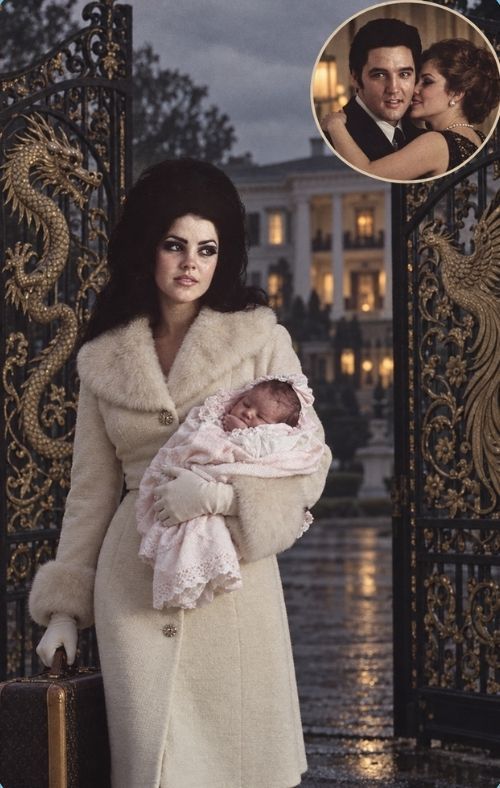
“She Walked Away From Elvis Presley… Then Received a Phone Call She Never Forgot”
To the outside world, Graceland appeared to be an enchanted kingdom—a grand Southern mansion filled with music, famous visitors, expensive cars, and the unmistakable presence of Elvis Presley. Yet for Priscilla Presley, it was also a deeply private home where she witnessed a side of Elvis that audiences could never see. Behind the celebrated voice and dazzling stage clothes stood a complicated man who could be playful and generous, but also lonely, uncertain, and burdened by expectations few people could understand.
Priscilla did not merely observe Elvis Presley’s fame from a distance. She lived within its powerful orbit. She heard the laughter that never reached the newspapers and saw the silence that arrived after the guests departed. She knew the difference between Elvis the performer and Elvis the man—the thoughtful dreamer from Tupelo who remained connected to gospel music, family memories, and a profound longing for peace.

As Priscilla matured, however, she began to recognize that life inside Graceland had left little room for her to discover who she was beyond Elvis. Leaving was therefore not a simple rejection of their shared history. It was an act of self-preservation and independence. Their marriage ended in divorce in 1973, but their emotional connection continued through their daughter, Lisa Marie Presley, and through conversations that revealed how difficult it was for either of them to close the door completely.
Elvis reportedly continued calling Priscilla after their separation. Those conversations could carry affection, concern, sadness, and the lingering familiarity of two people whose lives had become permanently intertwined. Some accounts suggest that reconciliation occasionally seemed possible, though history never gave them the opportunity to discover what might have happened. Priscilla’s later recollections portray a relationship that did not end neatly when the legal papers were signed.
Then came the telephone call that changed everything.
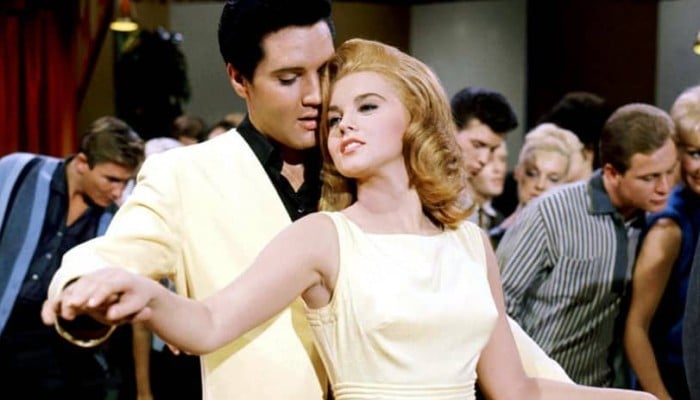
On August 16, 1977, Elvis’s longtime associate Joe Esposito contacted Priscilla with the devastating news that Elvis had died at Graceland. She was no longer his wife, and she had already begun building a separate life, but the message struck with the force of a final door closing. There would be no more unexpected late-night conversations, no opportunity to repair old wounds, and no chance to say the words that had been left unspoken.
The emotional power of this story can also be heard in Elvis’s music. Songs such as “Separate Ways,” “Always on My Mind,” and “You Gave Me a Mountain” now seem to carry shadows of the private struggles surrounding his final years. They should not be treated as literal diary entries, yet Elvis possessed a remarkable ability to make separation sound personal. His voice could transform a familiar lyric into something painfully intimate—as though he were confessing what ordinary conversation could not contain.
That quality explains why his recordings continue to move listeners decades later. Technical brilliance was only part of his gift. Elvis could place regret inside a pause, loneliness inside a lowered note, and tenderness inside a phrase that another singer might have delivered without consequence. For listeners who have experienced a marriage ending, a family changing, or a loved one slipping beyond reach, those performances remain startlingly recognizable.
Priscilla’s departure was not the ending many people assume it was. In the years that followed, she helped protect Elvis’s cultural legacy and played an important role in turning Graceland into an international destination. The woman who had once needed to leave the mansion in order to find herself eventually helped preserve it for generations of visitors.
That may be the most moving truth of all. She walked away from a marriage, but not from the memories. She left the walls of Graceland, yet continued carrying the voice that had once filled its rooms. And when that unforgettable telephone call arrived, it did more than announce the death of Elvis Presley—it ended the possibility of another conversation between two people who had never entirely learned how to say goodbye.