Introduction
BEHIND THE WALLS OF GRACELAND: THE FAMILY DOUBTS THAT NEVER DISAPPEARED AFTER ELVIS’ DEATH…
For nearly half a century, the death of Elvis Presley has remained one of the most closely examined tragedies in popular music. The official record states that Elvis was found unresponsive at Graceland on August 16, 1977, and was pronounced dead at the age of 42. Yet official explanations do not always silence a grieving family’s private questions. Behind the famous gates, away from reporters and mourning crowds, Elvis’s father, Vernon Presley, was reportedly left struggling with doubts that would not easily disappear.
Vernon was not a distant observer of Elvis’s extraordinary rise. He had known him before the tailored suits, the television appearances, the screaming audiences, and the international fame. He remembered the shy Mississippi boy who grew up surrounded by hardship, family devotion, and gospel music. To millions, Elvis was the King of Rock and Roll. To Vernon, he was still a son—the child whose first dreams had been formed inside a modest home.
That relationship gives the questions surrounding Vernon’s later concerns their emotional power. Various accounts have suggested that he felt deeply uneasy about the circumstances surrounding Elvis’s final years and death. Some versions of the story go further, claiming that Vernon believed important truths had been overlooked or concealed. However, no conclusive evidence has established the darker theories that have circulated since 1977. Memories differ, stories have changed over time, and speculation has often been repeated as though it were documented fact.
The most responsible way to approach this story is not to treat suspicion as proof. Instead, it should be understood as part of a father’s grief. Vernon had already endured the loss of his wife, Gladys Presley, in 1958. Her death devastated Elvis and permanently changed the emotional life of the Presley family. Nineteen years later, Vernon faced the unimaginable task of burying his only surviving son.
What could certainty have meant to a man carrying such sorrow? Perhaps his uneasiness grew from unanswered medical questions. Perhaps it came from his observations of the people surrounding Elvis, the pressures of fame, or the singer’s declining health. It may also have reflected the natural refusal of a parent to accept that someone so gifted and powerful could vanish so suddenly.
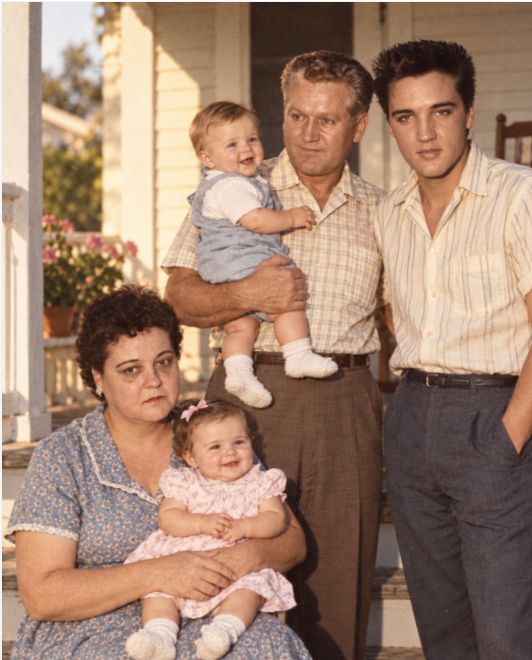
:max_bytes(150000):strip_icc():focal(975x559:977x561)/elvis-parents-vernon-gladys-presley-1-2a2f884da98247019822e4626fe51aea.jpg)
One private conversation is sometimes described as especially important—a moment when Vernon allegedly expressed a conviction he could not release. Yet without reliable documentation, its exact wording and meaning should be treated cautiously. The silence around such conversations has helped create an atmosphere of mystery, but silence alone is not evidence of a hidden crime.
What remains undeniable is that Elvis’s death did not end his family’s pain. It created a wound around which questions, memories, and rumors continued to gather. Graceland became both a shrine to a cultural legend and the setting of a deeply personal family tragedy.
The most haunting mystery may therefore be something quieter than a conspiracy. It is the question of what Vernon saw when he looked beyond the public image of Elvis Presley. Did he recognize warning signs that others ignored? Did grief make every unanswered detail feel unbearable? Or did he simply understand, before much of the world did, how completely fame had isolated his son?
This story does not offer a final verdict. It opens a door into the emotional world behind Graceland’s walls—a place where public history and private sorrow became forever entangled. The evidence may never support the darkest claims, but the Presley family’s lingering doubts remind us that an official conclusion cannot always bring peace to those left behind.