Introduction
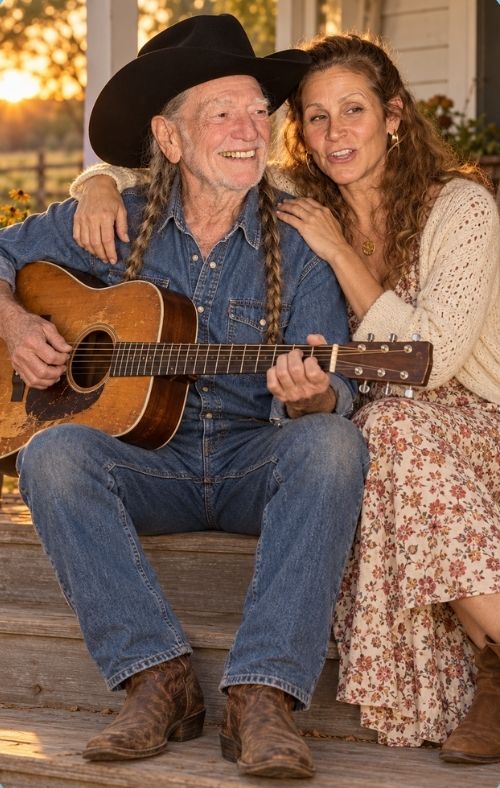
When people speak of Willie Nelson, they often begin with the unmistakable voice, the weathered guitar named Trigger, or songs that seem to understand a lifetime of regret and hope. Yet one of the most enduring stories in his life has unfolded away from the stage. It is the story of Willie Nelson and Annie D’Angelo: a marriage that has lasted through decades of touring, changing seasons, and the demands of a remarkable career.
Willie and Annie married in 1991. Their relationship does not need a dramatic scene to make it compelling. Its strength lies in its duration and in the ordinary work of sharing a life. For an artist whose name is so closely tied to the open road, the idea of someone to come home to carries a particular weight. Willie has spent much of his life moving from one audience to the next; Annie has been part of the life that continues when the applause fades.
That perspective can deepen the way we hear his music. “Always on My Mind” is one of Willie’s most beloved recordings because he sings it with unusual restraint. The narrator recognizes that affection alone does not excuse the times he failed to show it. Willie allows each admission to settle before moving on. He gives the song the sound of someone who has lived long enough to understand that love requires attention as well as feeling.
The song was not written as a portrait of his marriage to Annie, and their private life should not be reduced to its lyrics. Still, the performance helps explain why listeners care about the person behind the music. Willie’s voice has room for imperfection. It can sound tender without becoming sentimental and reflective without asking for pity. Those qualities have made his songs companions to people navigating their own marriages, memories, and second chances.
There is also something quietly moving about the contrast between Willie’s public image and the life he and Annie have built. The familiar figure in the bandana can seem almost timeless, but a long marriage is lived one day at a time. It passes through work, family routines, worry, laughter, and the simple choice to remain present. No concert photograph can tell that whole story. Its meaning comes from the years themselves.
Perhaps that is why Willie Nelson and Annie D’Angelo belong in a conversation about country music’s great love stories. Country songs often capture the instant a heart breaks or a promise is made. Their story invites us to consider what happens afterward: the years in which a promise is lived. As Willie’s music continues to reach new listeners, the lasting partnership beside it offers a quieter, equally human reminder. Love can be heard in a song, but its deepest expression may be the life two people keep building together.