Introduction
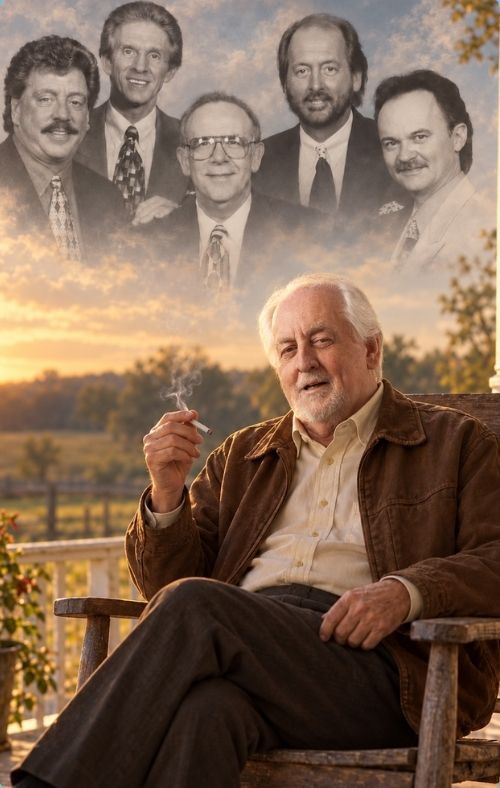
A familiar voice can vanish from the concert calendar without leaving the listener’s life. For decades, Don Reid helped give the Statler Brothers their unmistakable sound: four voices in close harmony, carrying stories of youth, faith, time, and the people we remember. When the group’s touring years ended, Reid appeared less often in public. Yet the songs remained, and so did the question behind them: what makes a voice feel like an old friend?
Listen to “The Class of ’57” and the answer begins to emerge. The song looks back at schoolmates whose adult lives took different turns. Its power lies in how plainly it observes them. The Statlers do not ask listeners to mourn a golden age; they invite them to consider the distance between what young people imagined and what life eventually brought. Reid’s lead vocal gives those observations warmth and restraint. He sounds as though he knows the people in the song, and respects the lives they went on to lead.
That quality runs through much of the group’s music. “Flowers on the Wall” has a playful, offbeat character; “I’ll Go to My Grave Loving You” draws strength from its steady promise. Across different moods, the voices fit together with remarkable care. Reid knew how to lead a line while leaving room for the other singers to answer it, deepen it, or gently change its meaning. The harmony was more than a finishing touch. It was part of the storytelling.
The group’s path from Virginia stages to wider national attention included years performing with Johnny Cash. They eventually built a career under their own name, earning devoted listeners and a lasting place in country music. Their songs spoke to people who recognized that ordinary lives contain enough humor, disappointment, loyalty, and hope to fill a record. The Statlers could be witty one moment and deeply reflective the next, without making either feeling seem forced.
Reid’s quieter life after the group’s performing years also casts the music in an interesting light. He continued to tell stories through writing, exchanging the nightly rhythm of the stage for the slower pace of the page. It feels like a natural extension of what listeners had heard all along: a patient attention to memory and to the details that reveal a life.
Perhaps that is why Don Reid’s voice still carries so far. A Statler Brothers song can bring back an old classroom, a family gathering, or someone whose name has not been spoken in years. The music gives those memories shape without telling us exactly how to feel about them. Reid helped make that possible, one clear line at a time, with three other voices close beside him.