Introduction
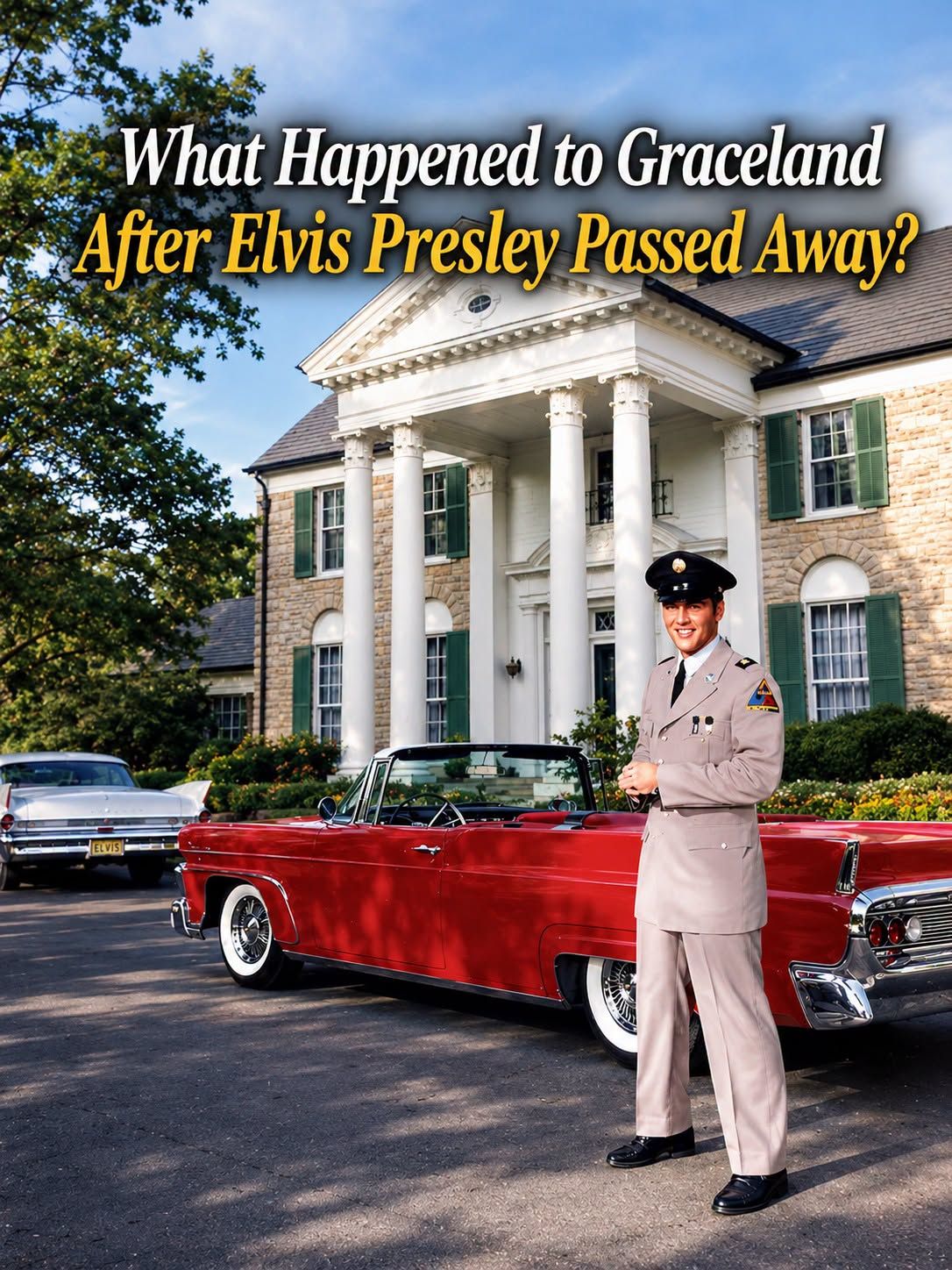
When Elvis Presley passed away, many people wondered what would become of Graceland. Would the famous mansion be closed forever, or would it slowly fade into history? Instead, something extraordinary happened. The gates remained, the white-columned house continued to stand above Elvis Presley Boulevard, and over time Graceland became something far greater than the residence of a famous entertainer. It became a place where memory, music, family history, and generations of devotion could meet.
For those who had followed Elvis Presley through the remarkable decades of his career, Graceland was never merely an impressive house in Memphis. Elvis purchased the property in 1957, during the extraordinary rise that transformed a young singer from Mississippi into one of the most recognizable performers in the world. Yet behind those famous gates, he was also a son, a father, a friend, and a man trying to preserve some sense of home while living an increasingly public life. Graceland therefore came to represent two very different worlds: the spectacular career witnessed by millions and the quieter personal life that existed when the stage lights were gone.
After Elvis died in 1977, the future of the estate presented his family with difficult questions. Rather than allowing the property to become merely another chapter in music history, Graceland was eventually opened to public tours in 1982. What followed demonstrated just how powerful the connection between Elvis and his audience remained. Visitors began arriving from across the United States and eventually from countries around the world, many traveling thousands of miles simply to stand inside the home they had heard about for decades.
They came to see the elegant living room, the famous Jungle Room, the displays of awards and stage costumes, automobiles, photographs, and reminders of a career that permanently altered popular music. Yet for many longtime admirers, the experience was never simply about seeing valuable objects. Every room seemed to carry another piece of a familiar story. Records, furniture, photographs, and personal spaces helped transform an international icon back into a human being who once walked those hallways and called this place home.
Perhaps nowhere is that feeling stronger than in the Meditation Garden, where Elvis rests alongside members of his family. The atmosphere there is dramatically different from the energy associated with his concerts. There are no screaming crowds and no blazing stage lights. Instead, visitors often encounter something quieter: flowers, messages, reflection, and the recognition that the performer whose voice once filled enormous arenas left behind an unusually personal relationship with generations of listeners.

That relationship explains why Graceland continues to attract visitors decades after Elvis Presley’s passing. Older fans return carrying memories of hearing his records on radios, watching him on television, or witnessing the cultural excitement surrounding his career. Meanwhile, younger generations arrive after discovering songs through parents, grandparents, films, recordings, or modern media. The remarkable result is that the audience continues to renew itself.
Nearly half a century after Elvis left the stage for the final time, Graceland remains far more than a museum. It stands as a physical connection between an extraordinary musical career and the ordinary human experiences behind it: family, ambition, loneliness, celebration, faith, loss, and home. Many performers leave behind recordings and photographs. Elvis left those things too, but he also left a place where people can physically enter part of his story.
And perhaps that is why the gates of Graceland still carry such meaning. The concerts ended, the crowds went home, and an era passed into history—but Elvis Presley never completely disappeared from the lives of those who loved his music. His records continue to play, new listeners continue to discover that unmistakable voice, and visitors continue walking through the doors of the house he once called home.
Graceland ultimately became something few could have predicted in 1977: not the final chapter of Elvis Presley’s story, but one of the reasons that story continues to be told. The King may no longer walk its rooms, yet every year people still arrive in Memphis searching for a connection to the music, the memories, and the man behind the legend. Some homes preserve history. Graceland keeps a legacy alive.