Introduction
# **When the Applause Grows Quiet: Bill Gaither and the Gospel Legacy That Refuses to Fade**
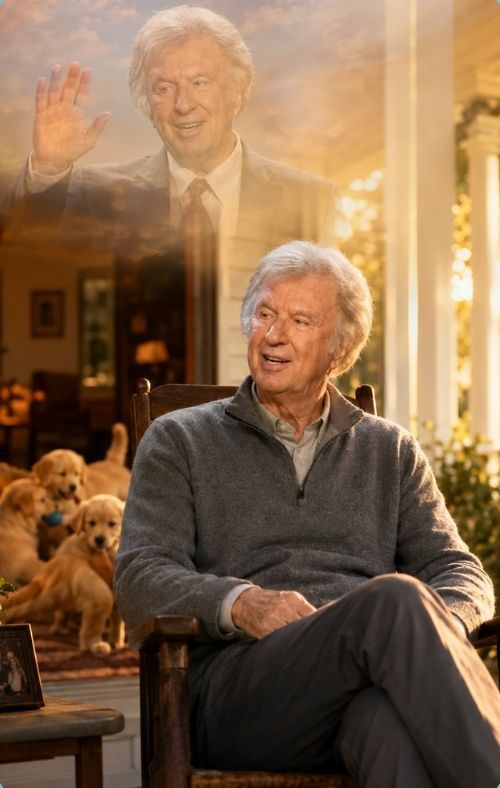
There comes a moment in the life of every great musician when audiences begin listening differently. The songs may be familiar, the melodies may have accompanied families for decades, and the voice may still carry the warmth people remember, yet something has changed. Each appearance begins to feel more precious. Each familiar hymn carries another layer of memory. For admirers of **Bill Gaither**, that feeling has become increasingly difficult to ignore.
For more than six decades, **Bill Gaither** has occupied a remarkable place in American gospel music. He has been a songwriter, performer, teacher, musical leader, and perhaps most importantly, a man who understood that a song could become far more than entertainment. His work has accompanied people through church services, family gatherings, celebrations, seasons of grief, and those quiet evenings when encouragement was needed more than applause. That enduring connection is why conversations about the later chapters of his career carry such emotional weight.
Gaither’s story has never depended upon spectacle. Born in Alexandria, Indiana, he came from an environment where faith, family, education, and music were closely intertwined. Before the concert halls and television productions, there was a young teacher writing songs during evenings and weekends, gradually discovering that music could become a lifelong calling. That modest beginning helps explain something essential about his appeal: **Bill Gaither** has always seemed less interested in appearing larger than life than in creating music that speaks directly to ordinary life.
One of the defining chapters of that journey came through his partnership with **Gloria Gaither**. Their marriage and songwriting collaboration became one of the most influential creative partnerships in modern Christian music. Together they wrote songs shaped by hope, perseverance, gratitude, and faith. Among them, **“Because He Lives”** became far more than a popular composition. For countless listeners, it became an expression of courage in uncertain times and a reminder that tomorrow could still be approached with confidence.
But Bill Gaither’s influence cannot be measured simply by the songs bearing his name. His vision expanded through the **Gaither Vocal Band** and, later, the beloved **Gaither Homecoming** gatherings. These projects created something increasingly rare in popular culture: a musical community where generations could meet rather than replace one another. Established gospel legends sat beside younger singers. Stories were shared. Old hymns were given new life. Laughter, memory, faith, and harmony existed in the same room.
The **Homecoming series** became especially meaningful because it rarely felt distant or overly polished. Viewers were invited into what seemed almost like an extended family gathering. Singers who had disappeared from mainstream attention were introduced to new audiences, while younger performers found themselves standing beside the very artists who had helped build the tradition they inherited. Gaither understood that preserving gospel music required more than remembering its past; it required giving that past a living voice.
That may ultimately be the most important way to understand **Bill Gaither’s legacy**. He did not merely build a career. He built bridges — between generations, between artists, between old hymns and new listeners, and between personal sorrow and spiritual hope. His influence can still be heard wherever families gather around familiar songs and wherever congregations sing words first written decades ago.
As the years move forward and public appearances naturally become less frequent, listeners may understandably wonder whether they are witnessing the closing chapter of an extraordinary musical journey. Yet describing this moment simply as an ending misses something fundamental. A career can slow down; a legacy does not have to.
The true measure of **Bill Gaither** has never been the brightness of a stage or the size of an audience. It can be found in the people who remember a Gaither song playing during one of the most important moments of their lives. It is found in younger singers carrying forward a tradition he helped preserve. It is found in churches where songs written decades ago remain as meaningful as they were when first heard.
Eventually, every spotlight grows dimmer. Every concert reaches its final note. But some music continues long after the room becomes quiet. **Bill Gaither’s extraordinary journey** reminds us that the greatest artists leave behind more than recordings. They leave language for hope, melodies for memory, and songs that people continue singing when the original singer is no longer standing at the center of the stage.
And perhaps that is why, whenever the final chapter of this remarkable career is eventually written, it will not truly feel like goodbye. For generations who grew up with his music, **Bill Gaither’s voice, faith, and enduring message of hope** have already become part of something much larger than a performance — they have become part of the soundtrack of a lifetime.