Introduction
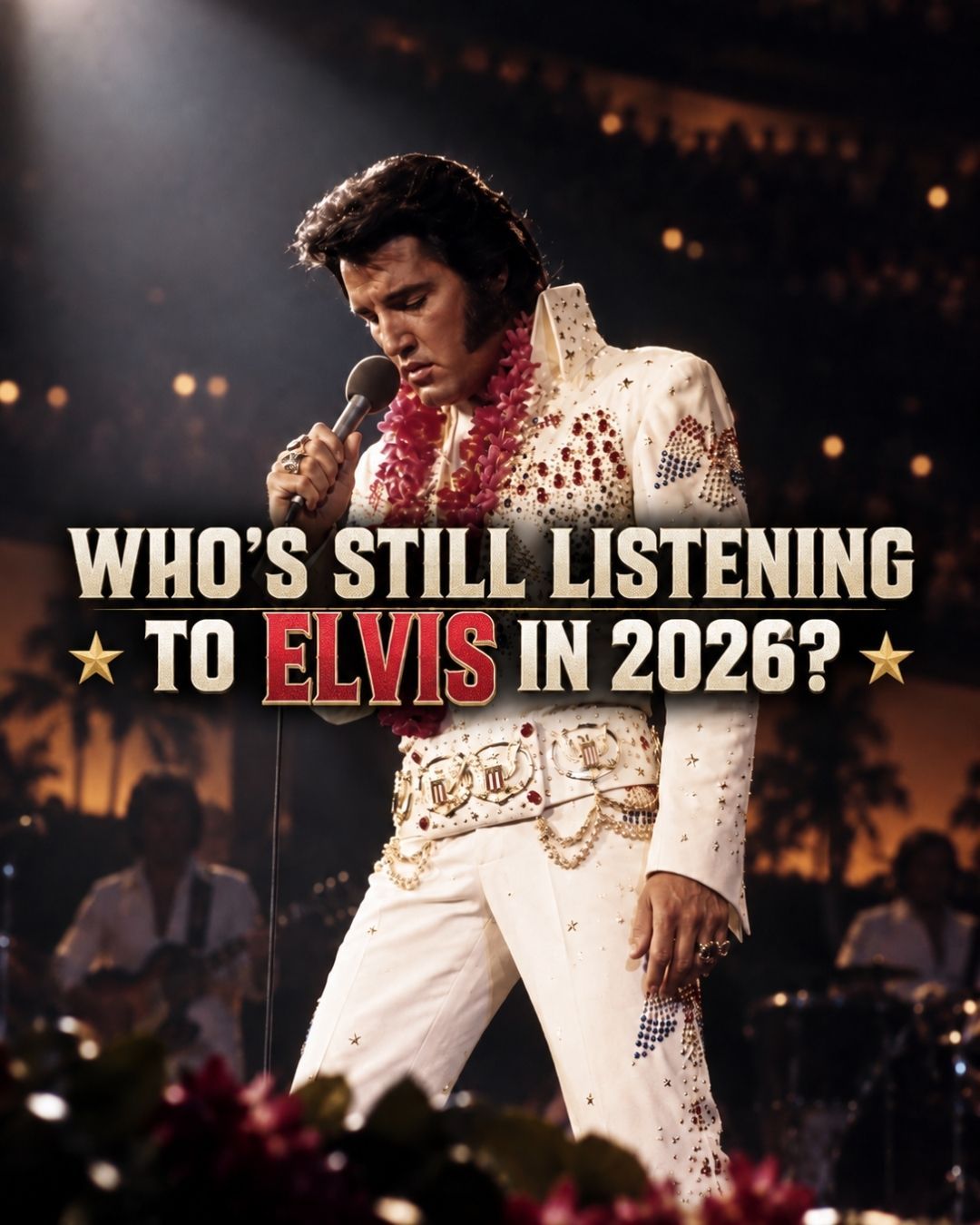
WHEN ELVIS SANG “MY WAY” IN HAWAII, NO ONE KNEW HOW CLOSE THE FINAL CURTAIN REALLY WAS
ELVIS SANG ABOUT THE FINAL CURTAIN—FOUR YEARS LATER, THE WORDS FELT TERRIFYINGLY REAL
In Honolulu in 1973, Elvis Presley stood before the world and sang “My Way” with a gravity few could ignore. At the time, it sounded like confidence. Years later, it sounds almost like a farewell written in advance. Every pause, every rising note, every reflection on regret and survival now carries an eerie weight—because Elvis had no idea how little time remained.
There are moments in music that change after history catches up with them. When they first happen, they may seem simply impressive, dramatic, or beautifully performed. But years later, once we know what followed, those same moments can take on an entirely different meaning. Elvis Presley’s 1973 performance of “My Way” during Aloha From Hawaii is one of those rare examples. What audiences heard that night was a major star interpreting a famous song about independence and reflection. What later generations hear is something far more haunting: a man singing about the closing chapter of a life that, tragically, would end only a few years later.
By 1973, Elvis was no longer the young revolutionary who had shocked American television audiences in the 1950s. He had lived through meteoric success, military service, Hollywood, changing musical tastes, personal pressures, and a remarkable return to live performance. He was still only thirty-eight, yet there was already something unusually seasoned in his delivery. His voice carried the authority of someone who had experienced triumph on a scale few people could imagine, but it also carried a quieter element—fatigue, reflection, perhaps even vulnerability.
That is what makes “My Way” such a fascinating song in Elvis’s hands.

The song had already been made famous by Frank Sinatra, whose version became almost synonymous with self-assurance and personal independence. Elvis brought something different to it. He did not simply present the lyrics as a proud declaration. He seemed to treat them as a reckoning. His interpretation moves between restraint and power, allowing the song to build gradually until it becomes something much larger than a standard concert number.
There is a sense of personal history in the way Elvis phrases the words. Even though he did not write the song, he sings it as though he recognizes something of himself in its central idea: a man looking backward and accepting the road he has traveled, including the mistakes, victories, disappointments, and choices that cannot be undone.
For older listeners, that theme can be particularly powerful. Life has a way of changing the meaning of songs. A lyric about regret can sound theoretical when we are young, but after decades of choices, losses, responsibilities, and memories, it can become deeply personal. “My Way” speaks directly to that experience. It does not claim that a life must be perfect to have meaning. Instead, it suggests that dignity can come from acknowledging the whole journey.
Elvis understood how to communicate that kind of complexity.
His greatest strength as a singer was never simply his famous voice. It was his instinct for interpretation. He could take a song written by someone else and make the listener believe that the emotion belonged entirely to him. In Honolulu, that talent was on full display. The orchestra rises around him, but he remains at the center of the performance, shaping each section with careful control. When the song reaches its larger emotional passages, he does not merely increase the volume. He increases the sense of consequence.
And this is where history makes the performance difficult to watch without emotion.
Elvis Presley died in August 1977, a little more than four years after the Aloha From Hawaii concert. Because we know that now, the imagery of a man looking back upon his life inevitably feels heavier. It is tempting to call the performance prophetic, although that would go too far. Elvis was not predicting his death, nor was he delivering a deliberate farewell. He was performing a song whose themes happened to become painfully significant in retrospect.
That distinction is important.
Yet it does not diminish the emotional effect.

When we watch the performance today, we know that the road ahead would become increasingly difficult. We know that the extraordinary energy of his career carried enormous pressures. We know that some of his final years would reveal a man struggling to maintain the demands placed upon him. And we know that the voice singing so confidently in Honolulu would fall silent far sooner than anyone expected.
That knowledge changes everything.
The performance stops being merely a famous interpretation of a famous song. It becomes a document of a particular moment in Elvis Presley’s life—a moment when he still stood before an international audience with extraordinary authority, while unknowingly moving toward the final chapter of his story.
Perhaps that is why Elvis Presley singing “My Way” in 1973 continues to resonate so strongly. It contains several versions of Elvis at once: the poor boy from Tupelo, the young man who transformed popular culture, the movie star, the comeback performer, the international icon, and the weary human being behind the legend.
For a few minutes, all of those identities seem to meet inside one song.
And when Elvis reaches the emotional peak of the performance, we are no longer simply listening to a superstar prove his vocal power. We are watching a man stand beneath the lights and reflect, through someone else’s words, on what it means to have lived boldly, imperfectly, and unmistakably on his own terms.
Four years later, Elvis Presley would be gone.
That is why the performance feels different now.
What sounded like confidence in 1973 has become something closer to testimony. What sounded like reflection now carries the weight of farewell. And what began as another remarkable moment in the career of Elvis Presley has become one of those haunting musical documents that history itself seems to rewrite.
He was not saying goodbye that night in Honolulu—but decades later, it can be almost impossible not to hear one.