Introduction
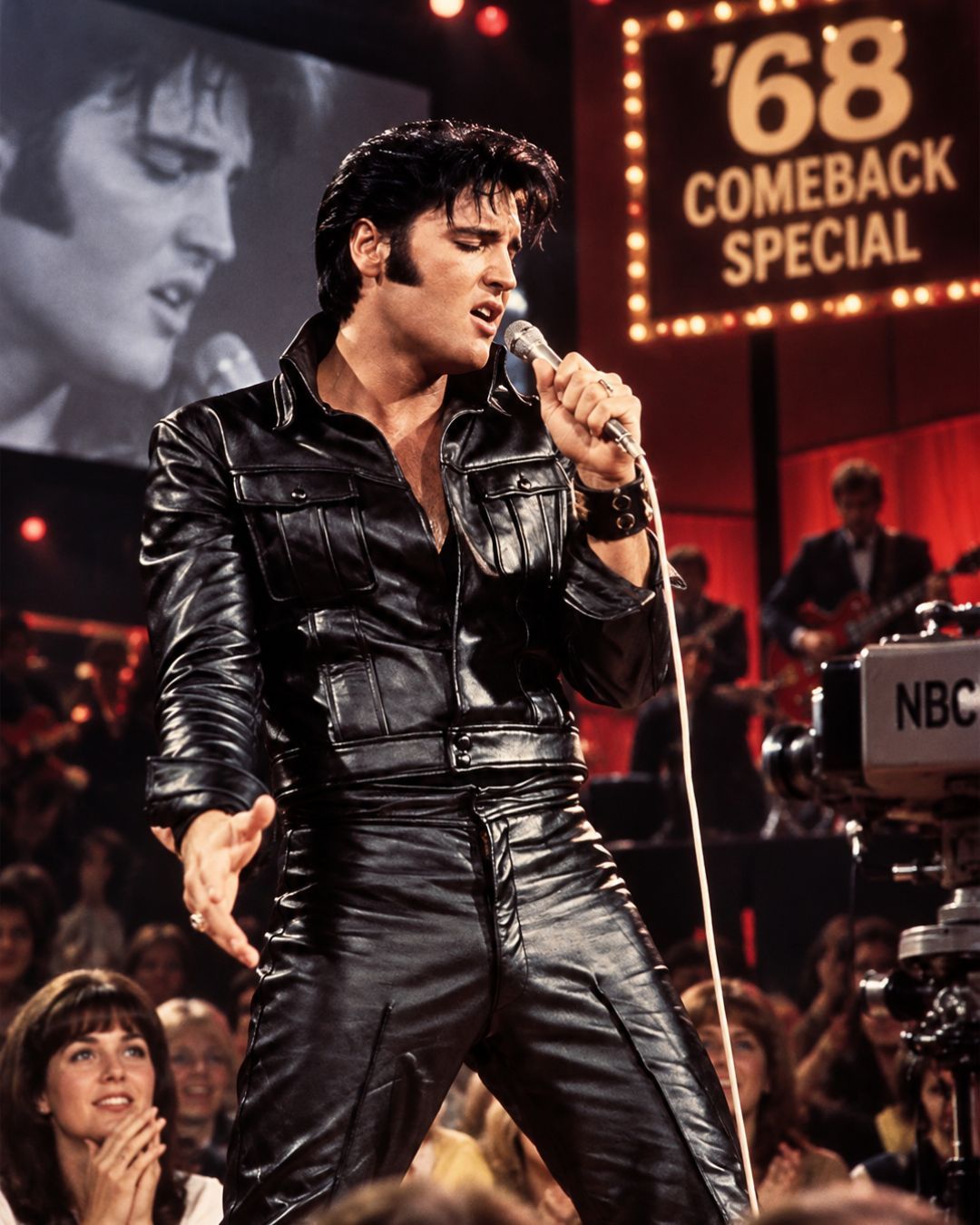
WHEN ELVIS RETURNED IN 1968, ONE QUIET LOVE SONG PROVED THE KING WASN’T FINISHED YET
ELVIS SANG A LOVE SONG IN 1968—BUT THE REAL COMEBACK WAS THE MAN BEHIND THE VOICE
After years of Hollywood scripts and fading expectations, Elvis Presley stepped back into the spotlight in 1968 and reminded America why it had fallen for him in the first place. Then came “Can’t Help Falling in Love.” Tender, restrained, and almost disarmingly simple, the performance felt bigger than romance. It sounded like a man reclaiming his voice, his confidence, and his place in music history—one unforgettable note at a time.
By the time Elvis entered the NBC studios in 1968, his career had reached a complicated crossroads. The explosive young singer of the 1950s had spent much of the decade working in Hollywood, appearing in films and recording soundtrack material while popular music changed dramatically around him. The British Invasion had arrived, rock had grown heavier and more experimental, and a new generation of performers was reshaping American culture. To some observers, Elvis already seemed like a figure from an earlier era.
The television special changed that perception.
What audiences encountered was not a faded movie star attempting to recreate his youth. They saw a performer who still possessed extraordinary command of a stage. The complete recordings from the ’68 Comeback Special include both the celebrated sit-down and stand-up performances, and the official Elvis catalog lists “Can’t Help Falling in Love” among the songs performed during the stand-up shows recorded at NBC Studios in Burbank.
That context matters because “Can’t Help Falling in Love” represents a very different side of Elvis from the restless energy of songs such as “Hound Dog,” “Jailhouse Rock,” and “All Shook Up.” Instead of relying on speed or spectacle, the song asks for patience. Its melody moves gently, creating a sense of inevitability. Elvis allows the phrases to unfold without forcing them, giving the performance a calm emotional confidence that contrasts beautifully with the harder-edged material surrounding it.

That restraint may be one reason the song remains so effective decades later.
Elvis had first recorded “Can’t Help Falling in Love” earlier in the 1960s, but by 1968 he was a different singer and a different man. His voice had grown fuller and more mature. There was greater depth in his lower register and more authority in the way he shaped a phrase. He no longer sounded like someone discovering fame. He sounded like someone who had lived inside it long enough to understand both its rewards and its costs.
The 1968 performance therefore carries a meaning beyond the words of the song itself.
The television special was built around the idea of rediscovery. The official Elvis Presley site describes the complete collection as documenting the television production that helped resurrect his career, preserving the sit-down shows, stand-up shows, rehearsals, studio sessions, and unused performances from that remarkable period.
And within that larger story, “Can’t Help Falling in Love” feels almost like a moment of stillness.
Elvis does not need to prove anything during the song. He simply stands before the audience and trusts the melody. There is something deeply revealing about that confidence. After years in which his public image had often been shaped by movie roles, costumes, scripts, and commercial expectations, here was the singer again—the interpreter whose greatest talent was his ability to make familiar words feel personal.
For older listeners, that quality may be especially meaningful. Time teaches us that a comeback is not always about returning to exactly who we were before. Sometimes it is about discovering what remains after circumstances have changed. Elvis could not become the nineteen-year-old who first walked into Sun Records again, and he did not need to. The man who appeared in 1968 possessed something the younger Elvis could not have possessed: experience.
That experience can be heard in the quiet assurance of “Can’t Help Falling in Love.”

There is warmth in the performance, but also dignity. There is tenderness without weakness and emotion without excess. Elvis understands that the song does not require dramatic gestures to communicate its message. He gives the melody space, allowing his voice to carry the emotional weight naturally.
It is also significant that “Can’t Help Falling in Love” appears within the broader medley structure of the special alongside songs that represented different chapters of his career. The official track listing places it among classics including “Heartbreak Hotel,” “Hound Dog,” “All Shook Up,” “Jailhouse Rock,” and “Love Me Tender.” Together, those songs created something close to a musical autobiography—a reminder of how much American popular culture had changed since Elvis first became famous, and how much of that change he himself had helped begin.
But the comeback was not simply about nostalgia.
That is the crucial point.
Elvis did not walk onto the stage merely to remind people of old records. He demonstrated that the performer behind those records was still present. The voice still had authority. The charisma had not disappeared. Most importantly, his connection with an audience remained immediate.
“Can’t Help Falling in Love” captures that connection in perhaps its most graceful form.
There is no need for explanation when Elvis begins to sing. The audience understands immediately why he mattered. The voice that had once seemed dangerous and revolutionary had matured into something richer—capable of tenderness, reflection, gospel intensity, blues grit, and dramatic power.
That range is what made the ’68 Comeback Special more than a successful television appearance. It became a declaration that Elvis Presley could still surprise people.
And perhaps that is why this performance continues to feel so moving today.
We already know what followed: a renewed period of live performances, major concerts, and another chapter in one of the most extraordinary careers in popular music. But in 1968, none of that future was guaranteed.
For those few minutes, there was simply Elvis, a microphone, a familiar melody, and an audience watching closely.
He was singing a love song—but what America heard was a man finding his way back to himself.