Introduction
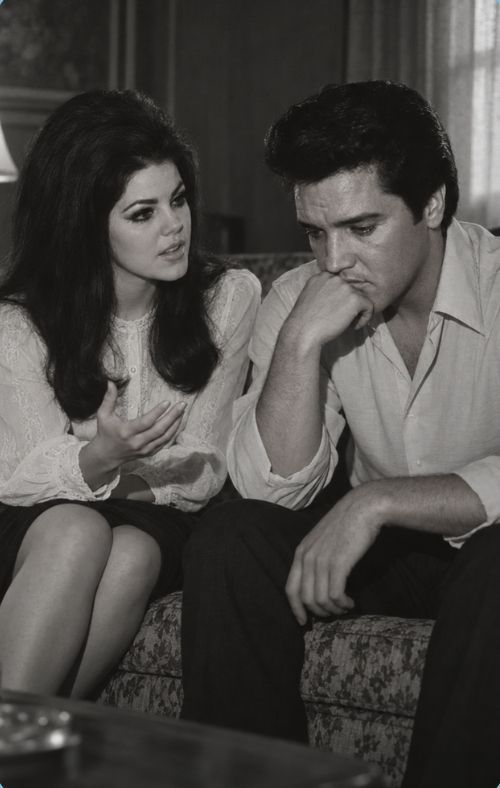
There are Elvis Presley recordings that make us remember where we were when we first heard them. Then there are performances that seem to change as we grow older, revealing feelings we were once too young to recognize. “Hurt” belongs to that second, more intimate category. Its emotional force reaches beyond the familiar image of the King of Rock ’n’ Roll, inviting us to listen to a voice that could convey both extraordinary strength and profound vulnerability.
The dramatic claim “PRISCILLA NEVER FORGOT THIS MOMENT: THE SONG THAT MADE ELVIS COMPLETELY FALL APART” offers an intriguing doorway into the recording. However, I could not verify a reliable account in which Priscilla Presley described Elvis repeatedly breaking down whenever he heard this song. That distinction matters: the performance gives us much to consider without supplying an undocumented private scene.
Elvis Presley recorded “Hurt” at Graceland on February 5, 1976. Knowing that this powerful vocal originated in his own home adds an intimate dimension to the listening experience, although the setting alone cannot tell us what he was feeling. The recording remains our clearest evidence of what he chose to communicate through music.
From its opening, the performance commands attention. Elvis approaches the melody with a fullness that makes the song’s sorrow feel immediate. His voice rises with remarkable authority, yet the emotional impression is more complicated than sheer vocal power. Beneath that commanding sound, a listener may hear disappointment, wounded pride, and the difficulty of accepting a love that has changed.
These are interpretations of the singing, rather than proof of a particular memory. Still, they help explain why the recording continues to move people. Elvis makes the feeling understandable before the listener has time to examine it.
His phrasing is especially compelling. The sustained notes give the emotion room to develop, while the movement between forceful passages and gentler expression prevents the performance from becoming simply a display of range. There is a sense of someone struggling to maintain composure, even as the music allows the feeling to expand. For listeners who have lived through separation or regret, that tension can feel painfully familiar.
The song also connected Elvis with a singer he admired. His official music website identifies Roy Hamilton as an important early model and describes “Hurt” as the kind of vocal challenge Elvis found difficult to resist. That connection offers a useful musical perspective: the recording reflects an artist responding to demanding material and a tradition of deeply expressive singing.

For older listeners, perhaps the most affecting quality is the song’s understanding that heartbreak rarely arrives as one uncomplicated emotion. Affection can remain after trust has weakened. Memories can bring comfort and discomfort in the same moment. Elvis’s delivery leaves room for those contradictions, allowing each listener to bring a lifetime of experience to the performance.
We cannot know every private thought behind Elvis Presley’s 1976 recording of “Hurt.” We can hear the care, intensity, and expressive ambition he brought to it. Listen again, especially to the way his voice holds a phrase before releasing it. Within those brief moments lies the enduring attraction of this recording: a great singer giving an ordinary human sorrow a sound we recognize—and remember.