Introduction
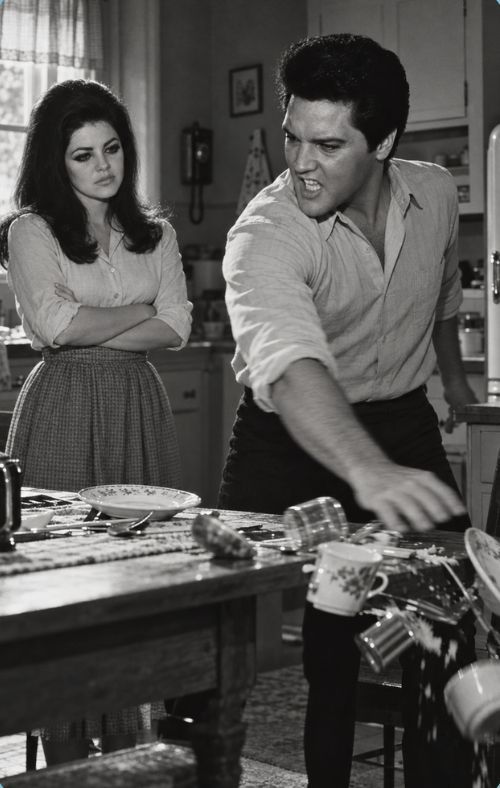
For audiences who remember Elvis Presley at the height of his Hollywood years, Viva Las Vegas still carries an irresistible brightness. There is the music, the movement, the easy confidence of a performer who seems capable of making every scene come alive. Yet beyond that sparkling screen image lies a more complicated story—one that Priscilla Presley would later describe from a very different perspective.
“WHY DID I HAVE TO LEAVE?” — THE PAINFUL HOLLYWOOD CONFLICT THAT ROCKED ELVIS & PRISCILLA… captures the emotional question at the center of that story. It should be understood as a dramatic framing, however, rather than a verified quotation from Priscilla. The distinction matters when a remembered private conflict becomes part of a public legend.
During the making of Viva Las Vegas, Elvis’s partnership with Ann-Margret attracted considerable attention. Priscilla’s memoir, Elvis and Me, describes her distress over reports surrounding the pair, including engagement rumors and a request that she return to Memphis until the publicity settled. This episode occurred before Elvis and Priscilla married.
Seen through Priscilla’s account, the painful issue was larger than a newspaper headline. Being asked to leave could suggest that her presence was a complication to be managed. For someone seeking reassurance, distance was hardly a comforting answer. That is an interpretation of the situation she described, rather than knowledge of everything either person felt or said behind closed doors.
The most striking detail is the broken vase. In her memoir, Priscilla recalled throwing a flower vase across the room and shattering it against a wall. This is her published recollection; it should not be embellished with invented dialogue or presented as an independently recorded scene.
A shattered object gives the story a vivid image, but the quieter question deserves equal attention: what happens when one person’s need for reassurance meets another person’s world of schedules, publicity, and professional demands? Readers who have lived through difficult relationships may recognize that tension without needing to turn either individual into a simple character in a melodrama.
For a music lover, this history also changes the experience of watching the film. Elvis’s performance has an outward energy that draws the audience toward him. His phrasing, physical ease, and command of the camera make the musical world feel inviting. Ann-Margret brings a strong presence of her own, giving their shared scenes a lively sense of exchange. Their effectiveness as performers helps explain why viewers found the pairing memorable; a convincing screen partnership does not, by itself, establish every claim made about private life.
The contrast between that cheerful entertainment and Priscilla’s recollection is what gives the story its lasting emotional weight. A film can preserve a moment of apparent happiness while concealing the uncertainty surrounding its creation. We see the polished performance. Those closest to the performer may remember the waiting, the unanswered questions, and the conversations that never appeared on camera.
Remembering this episode need not diminish the pleasure of Elvis’s music. It can deepen our understanding of the human circumstances around it. Viva Las Vegas remains a celebration of his remarkable ability to entertain, while Priscilla Presley’s account asks us to make room for another voice in the story.
For listeners returning to that familiar music, the bright lights may still shine just as strongly. Behind them, however, a quieter question remains: when the world is applauding someone you love, who is listening to you?