Introduction
Some of music’s most compelling stories concern the performances we never had the chance to hear. Imagine Elvis Presley singing “I Will Always Love You”: that unmistakable voice settling into the quiet opening, allowing each phrase to gather weight before reaching the farewell at its heart. It is a fascinating possibility, especially for listeners who remember how naturally Elvis could bring tenderness to a ballad. Yet behind that imagined recording lies a documented story about Dolly Parton, a treasured composition, and a decision that demanded considerable resolve.
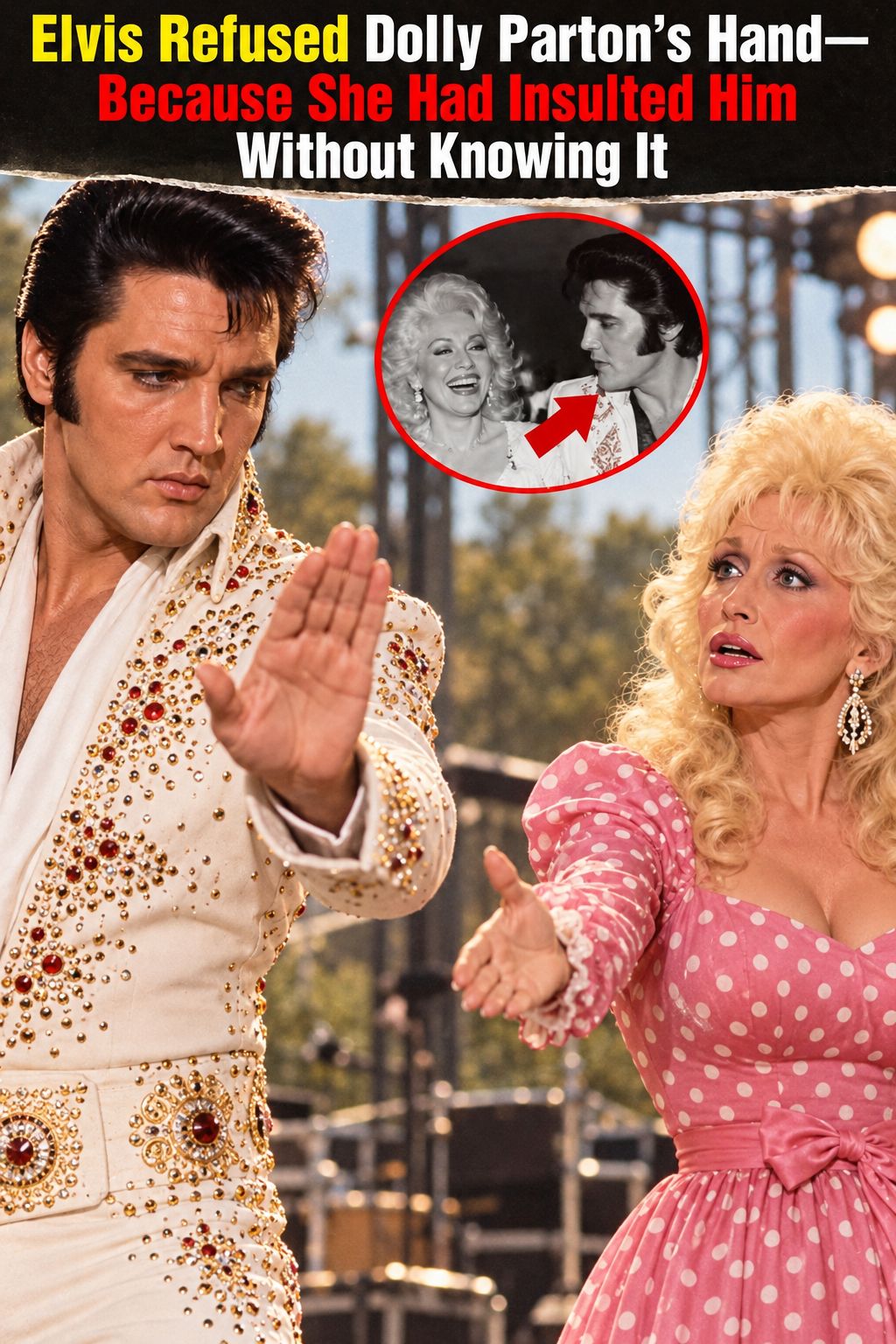
The suggestion that Elvis publicly wounded Dolly by refusing her handshake offers an easily pictured scene. However, her own account points elsewhere. In a 1989 interview, Dolly acknowledged that she had never met him, while discussing her admiration for the singer and the recording opportunity that failed to materialize. There is no need to invent an angry encounter to appreciate the emotional complexity of what actually happened. Her story already contains anticipation, disappointment, and the difficult experience of declining an opportunity she deeply wanted.
According to the Library of Congress, Elvis wanted to record “I Will Always Love You,” but his manager sought half the song’s publishing rights as part of the arrangement. Dolly declined those terms, and Elvis never recorded it. For a songwriter, publishing represents an enduring financial interest in the composition itself. Her decision therefore carried consequences beyond one recording session: she was weighing the prestige of an extraordinary interpreter against her continuing ownership of something she had created.
Listening to the song with that history in mind reveals an especially moving parallel. “I Will Always Love You” expresses affection alongside the determination to leave. Its emotional force comes from allowing gratitude and independence to occupy the same space. The narrator can value another person profoundly while recognizing that their paths must separate. Dolly’s delivery makes that balance feel intimate and believable. Her clear phrasing gives the words room to breathe, and her restraint encourages the listener to consider what remains unsaid between the lines.
For older listeners, that combination may feel particularly familiar. A long life offers many occasions when appreciation cannot settle every disagreement, and when saying yes would require surrendering too much. Careers change, partnerships end, and cherished opportunities sometimes arrive with conditions we cannot accept. The song speaks gently to that experience. It understands that a farewell can hold respect, sorrow, and conviction together, without needing an accusation or a villain.
Elvis’s unrealized interpretation remains an intriguing musical possibility. One can imagine his lower register giving the verses a reflective gravity, or his sustained notes lending the closing sentiment a different emotional shape. Those possibilities belong to speculation, however. What survives on record is Dolly’s own remarkable understanding of the song: the confidence to keep its language simple and trust the feeling beneath it.
That is what makes Dolly Parton’s decision worth remembering. Beyond the fascination of an Elvis recording that never happened stands a songwriter who recognized the lasting value of her work. And whenever “I Will Always Love You” begins, the deepest drama remains in the music itself—a voice offering a tender goodbye while finding the strength to move forward.