Introduction
There are moments in live television that are carefully scripted, meticulously rehearsed, and professionally executed. Then there are moments that transcend the script altogether—moments so genuine that they remind us why music still matters, why certain artists become timeless, and why audiences continue to cherish performances long after the cameras stop rolling.
The Season 51 finale of Saturday Night Live on May 16, 2026, delivered exactly such a moment.
What was expected to be a celebration of comedy, nostalgia, and another successful season unexpectedly transformed into something much deeper: a tribute to the enduring power of musical greatness. At the center of it all stood two beloved figures from entirely different worlds—Will Ferrell and Paul McCartney.
The evening began with everything viewers hoped for. Ferrell, one of the most iconic comedic performers ever associated with SNL, returned to host the season finale with the same energy and charm that made him a household name. The audience laughed, applauded, and enjoyed every familiar moment. There was even the amusing appearance of Chad Smith, whose long-running resemblance joke with Ferrell once again delighted viewers.
Yet beneath the comedy and celebration, another story was quietly unfolding.
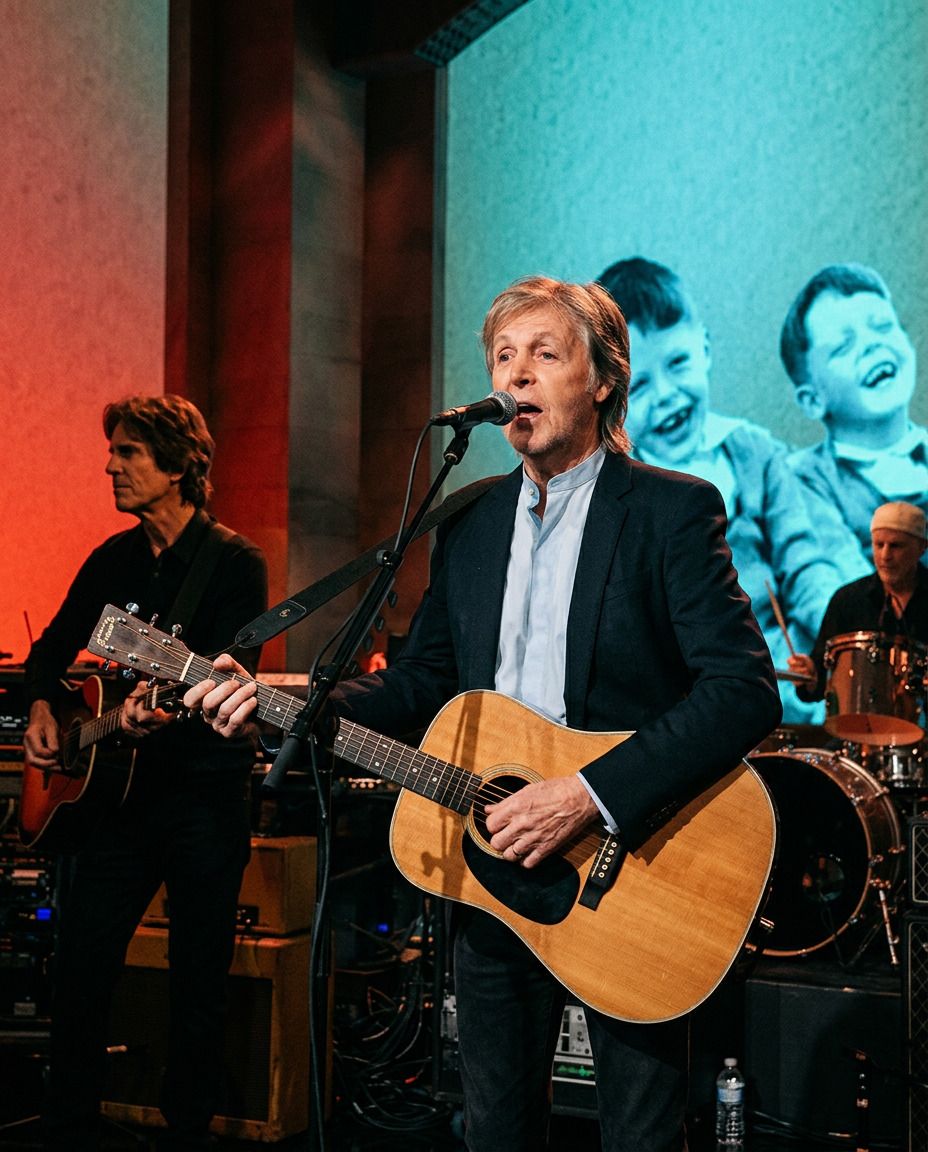
Paul McCartney, now 83 years old, stepped onto the legendary Studio 8H stage carrying something far more powerful than nostalgia. He carried history.
His opening performance introduced audiences to “Days We Left Behind,” a song from his upcoming album. It was reflective, thoughtful, and unmistakably McCartney. For longtime fans, it served as another reminder that true artists never stop creating. Even after decades of success, countless awards, and a place firmly secured in music history, McCartney continues searching for new melodies and new stories to tell.
Then came “Band on the Run.”
For many listeners, the song represents more than a classic recording from 1973. It represents an era. It recalls road trips, first loves, family gatherings, and countless memories accumulated over a lifetime. As the familiar notes filled the studio, the audience seemed to understand they were witnessing more than a performance. They were experiencing a connection between generations.
The energy inside the room grew stronger with every passing minute.
Most television broadcasts would have ended there.
The schedule said it was time.
The credits began to roll.
The cast gathered on stage.
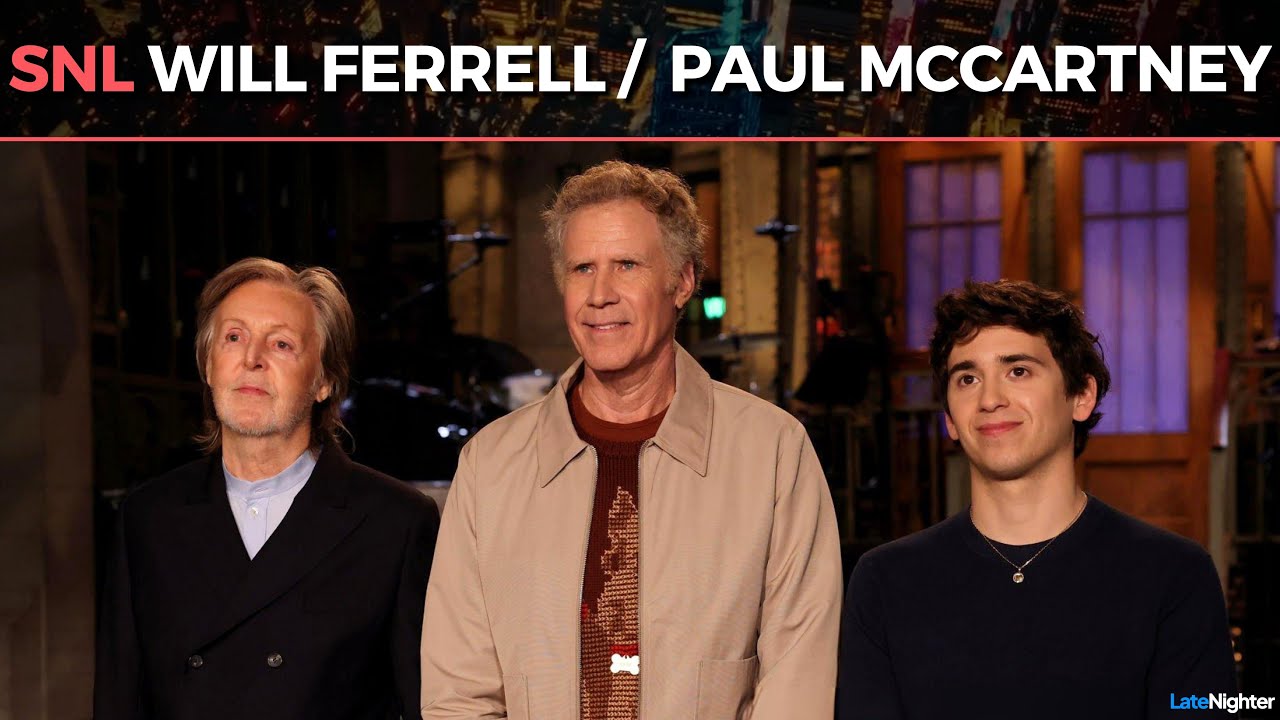
Everything appeared to be proceeding exactly according to plan.
And then Paul McCartney stepped forward one more time.
What happened next was the kind of unscripted magic that television rarely captures.
As the credits continued rolling, McCartney launched into “Coming Up,” the energetic 1980 hit that instantly transported many viewers back to an entirely different chapter of their lives. For some, it was a reminder of youth. For others, it was a reminder of how long this remarkable career has endured.
Forty-six years earlier, McCartney had appeared on the same stage during a very different era of American television.
Now, nearly half a century later, he was still commanding the room.
Still creating excitement.
Still making people smile.
And perhaps the most remarkable part of the moment was not McCartney himself.
It was Will Ferrell.
In an entertainment industry often defined by competition for attention, Ferrell made a choice that spoke volumes about respect and humility. He did not attempt to reclaim the spotlight. He did not force the focus back toward himself as host of the evening.
Instead, he simply joined the celebration.
That quiet gesture became one of the most meaningful images of the night.
Because sometimes greatness recognizes greatness.
Sometimes a performer understands that history is unfolding in front of him and chooses not to interrupt.
The result was unforgettable.
WILL FERRELL GAVE UP HIS FINAL MOMENTS ON STAGE — SO PAUL McCARTNEY COULD PLAY ONE MORE SONG.
That headline may sound dramatic, but for those who watched it happen, it felt entirely accurate.
Three songs.
Five decades of musical history.
One legendary television stage.
And a room full of people suddenly reminded that some artists do not merely perform songs—they create moments that live forever.
As viewers watched McCartney standing beneath the lights, surrounded by cast members, musicians, and admirers, time itself seemed to lose meaning. The decades between The Beatles, Wings, and modern-day television appeared to collapse into a single unforgettable moment.
For older audiences especially, the scene carried a profound emotional weight. It was a reminder that while years pass, fashions change, and generations come and go, truly great music remains.
And on that remarkable night, Will Ferrell understood something that everyone else in the room understood as well:
When Paul McCartney wants to play one more song, you let him.
Because some moments are simply too special to end.