Introduction
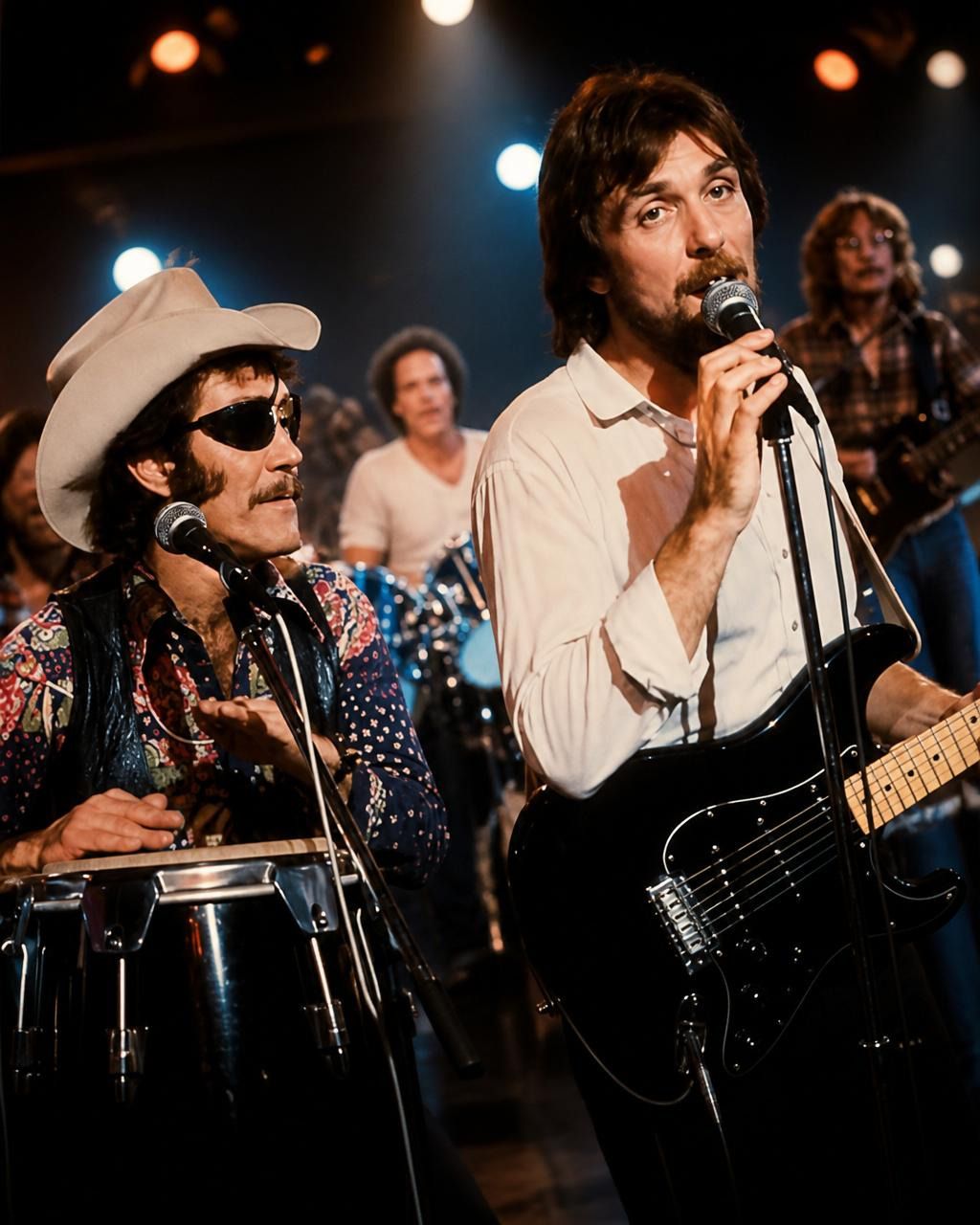
There are songs that become hits because they are clever, loud, or perfectly timed for radio. Then there are songs that seem to arrive quietly, slip into people’s lives, and stay there for decades because they capture a feeling almost everyone understands. Dr. Hook’s “Sharing The Night Together” belongs to that second category. It was not just another soft-rock single from the late 1970s. It was the song that helped change how many listeners saw the band forever.
Before this record, Dr. Hook was often remembered for humor, mischief, and country-flavored storytelling. They were the kind of group that could make audiences laugh, tap their feet, and remember a chorus after only one listen. Their early success with songs like “The Cover of Rolling Stone” gave them a playful public identity. They were entertaining, colorful, and impossible to ignore. But many people did not yet think of them as a band capable of delivering a midnight ballad with genuine emotional warmth.
Then came “Sharing The Night Together.”
Written by Ava Aldridge and Eddie Struzick in 1976, the song had already passed through other hands before Dr. Hook made it famous. Arthur Alexander recorded it first. Lenny LeBlanc also gave it a try. Yet somehow, the song had not found its final home. It had melody. It had feeling. It had the quiet glow of something special. But it still needed the right voice to unlock it.
That voice belonged to Dennis Locorriere.
In 1978, at Muscle Shoals Sound Studio, Locorriere stepped behind the microphone and delivered a performance that did not need force or decoration. He sang with warmth, ease, and sincerity. Nothing felt artificial. Nothing sounded overly polished. It was the kind of vocal that made listeners feel as though the singer was speaking directly to them, not performing at them. That intimacy became the magic of the record.
22 WEEKS ON THE BILLBOARD CHART. 1 SONG. AND A VOICE THAT MADE STRANGERS FALL IN LOVE AT MIDNIGHT.

The numbers tell part of the story. The song climbed to No. 6 on the Billboard Hot 100, reached No. 4 on Cash Box, rose to No. 3 in Canada, spent 22 weeks on the chart, and earned gold certification. Those achievements are impressive, but they do not fully explain why the song remains so beloved. Its real power lies in atmosphere. It carries the soft lights, late hours, and unspoken hopes of a generation that knew how much emotion could live inside a simple melody.
For many casual listeners, however, there was always a misunderstanding surrounding Dr. Hook. Ray Sawyer, with his famous eye patch and unforgettable image, was one of the most recognizable faces in the band. His appearance helped shape the group’s identity and even connected naturally to the “Hook” image in the public imagination. But on “Sharing The Night Together,” the voice that carried the song was not Sawyer’s. It was Locorriere’s.
That distinction matters.
Because this song reveals how complicated and fascinating Dr. Hook really was. They were not just a novelty act. They were not simply a funny band with a memorable look. They had several musical personalities inside one group, and when the right song found the right singer, they could produce something timeless.
“Sharing The Night Together” marked a turning point. It showed that Dr. Hook could move beyond humor and charm into something smoother, deeper, and more emotionally lasting. It gave older listeners a song they could remember not just as a radio hit, but as a personal memory. Perhaps they heard it while driving late at night. Perhaps it played during a quiet conversation, a dance, or a moment they never forgot.
That is the quiet strength of the record. It does not demand attention. It invites it.
And more than four decades later, Dennis Locorriere’s voice still carries the same gentle pull. It reminds us that sometimes a song waits years for the right person to sing it. And when that happens, the world does not just hear a hit.
It hears a memory being born.