Introduction
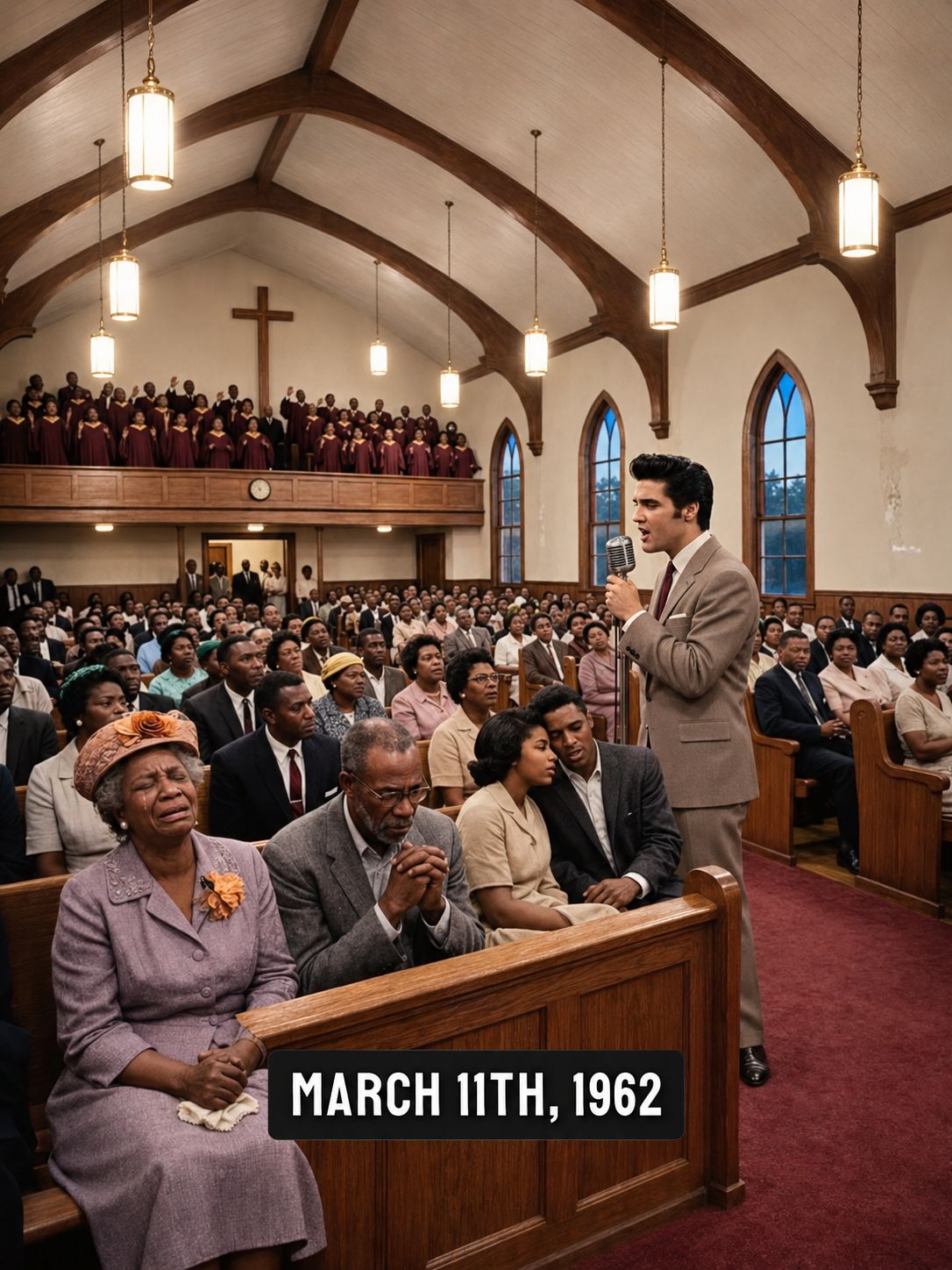
A church choir is about to sing for visitors from three states when its lead soloist is taken to the hospital. The director walks into the sanctuary and asks whether anyone can step in. A few people volunteer what they can, and then a quiet man in the third pew says he thinks he can manage. The video tells this as a story about Elvis Presley in a Memphis church. The account remains unverified, and the transcript leaves the songs unnamed. Still, the scene poses a question worth bringing to Elvis’s gospel recordings. What would a choir director hear in that voice before she knew whose it was?
In the story, the director asks the stranger to sing whatever he knows. He begins without accompaniment. For a singer, that first phrase is a surprisingly revealing test. There is no piano to establish the harmony or steady the tempo. The voice has to give listeners enough of both for the melody to feel settled. Then there is the matter of when to breathe. A pause in the right place can make a familiar line sound like a thought the singer is having at that very moment. Anyone who has sung in a church choir knows how quickly you hear these things when the room falls quiet.
For a recording that brings those qualities into focus, listen to Elvis’s “His Hand in Mine.” The opening has the warmth of a voice addressing someone nearby. There’s a gentle movement in the way he carries one phrase into the next, and the harmony behind him gives that movement a steady, reassuring shape. Listen to the endings of his phrases, especially the way he eases off a note as the other voices come into focus. The effect feels conversational. You can follow the words easily, and you can hear the other singers as people responding to him. That balance gives the recording much of its character.
The story also gives the gospel choir a role that can be easy to overlook when a famous singer enters the picture. The choir members have spent months learning an arrangement built around someone else’s voice. When a new soloist steps in, they have to listen for how long he holds a phrase and how he signals that it’s their turn to enter. He has to listen just as closely. A choir’s entrance can feel wonderfully natural from the pews, even when everyone singing has made several small adjustments to arrive together. That kind of work is part of what gives a strong gospel performance its warmth.
Many listeners first came to Elvis through the snap and restless energy of his early records. “His Hand in Mine” offers a chance to spend time with a quieter part of his singing. The voice still has that unmistakable weight, but what stays with me is how readily he lets the harmony finish a thought. If you’ve ever found yourself humming your own old choir part while listening to a gospel record, you may recognize the pleasure of it here. By the end, you can almost imagine the place where your voice would come in.