Introduction

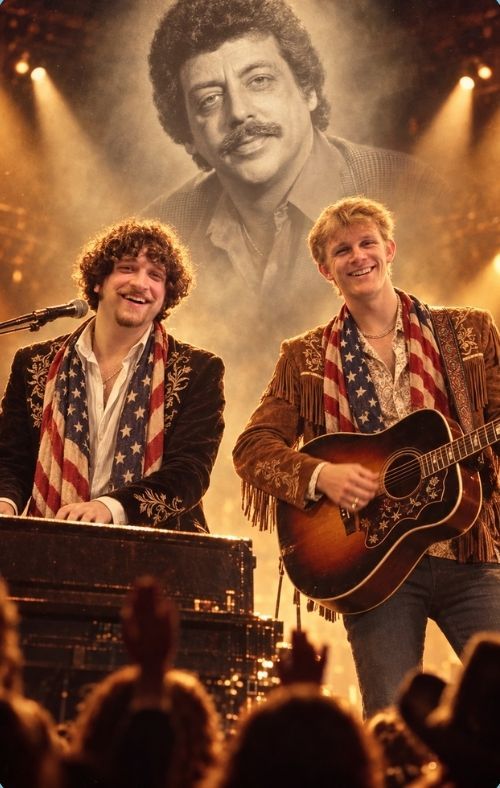
They came to hear a familiar country sound. When Jack and Davis Reid began to sing, listeners could hear something more: the shape of a family history carried in two young voices. Jack is Harold Reid’s grandson; Davis is Don Reid’s grandson. Together, the cousins bring another generation into the musical story of the Statler Brothers.
The phrase “Harold seemed to return” describes a feeling, not a literal event. For longtime listeners, his bass voice was one of the Statlers’ defining sounds. It gave their harmonies a foundation and made even a gentle song feel assured. Hearing his grandson sing can stir a particular kind of recognition: a reminder of the voice you remember, alongside the discovery of a voice you are meeting for the first time. Harold sang bass in the quartet, while his brother Don sang lead.

That distinction matters. Jack and Davis are not trying to become the Statler Brothers again. Their family connection gives them an unusual closeness to the music, but it also gives them room to make choices of their own. A song passed down through a family does not stay still. Its words may remain familiar while a new singer finds a different pause, a lighter touch, or an unexpected tenderness in a line everyone thought they knew by heart.
The Statlers understood how much could live inside a seemingly simple song. Their performances made space for humor and warmth, but also for the passing of years and the people we lose along the way. Songs such as “The Class of ’57” endure because their stories grow with the listener. What sounds like a portrait of old school friends at one age may sound, decades later, like a quiet account of how life changes everyone. PBS’s portrait of the Reid family’s musical legacy includes “The Class of ’57” among the songs that continue to be performed. PBS
It is easy to imagine why a performance by Jack and Davis might move an audience that grew up with those records. People would bring their own memories into the room: a radio playing in the kitchen, a parent who knew every word, a concert attended with someone who is no longer there. The cousins could sing the same melody, yet each listener would hear a slightly different history inside it.

That is the enduring power of family harmony. It does not erase grief or bring back the person who is missed. It allows a familiar sound to remain part of the present. Jack and Davis stand at the beginning of their own musical lives, while the names Harold and Don Reid belong to an extraordinary chapter of country and gospel music. For an audience listening closely, those two truths can meet in a single song. The final note fades; the connection it awakened may linger much longer.