Introduction
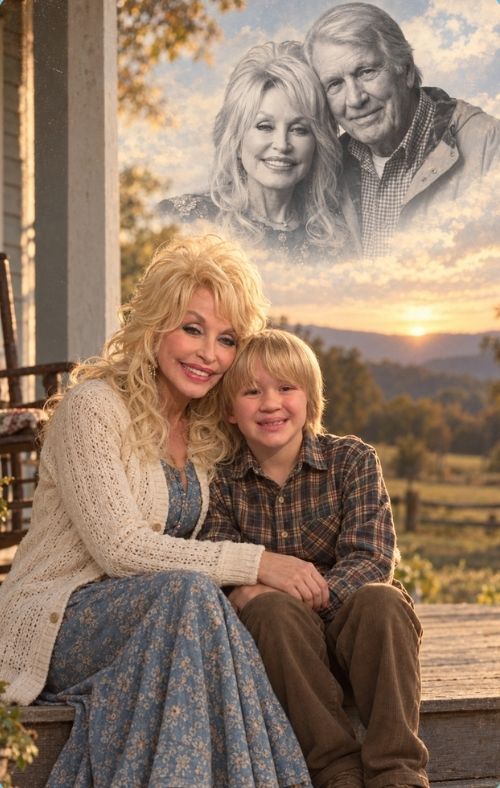
When Dolly Parton and Carl Dean were young, they pictured a family together. Years later, Dolly recalled wondering what their children might look like. They had even considered names. Their life took a different course, and they never had children of their own. What Dolly shared publicly, however, does not establish that they specifically wished for a first son. In one interview, she spoke of a daughter they might have named Carla.

That small detail makes their story moving without requiring us to invent the rest of it. The imagined child belonged to an intimate conversation between two people making plans for a future they could not yet see. Many couples know that feeling: a name spoken aloud, a passing thought about whose eyes a child might have, a picture of ordinary family life that seems close enough to touch. Dolly’s candor lets us glimpse that possibility, while her later reflections remind us that a life cannot be measured only by the plans that came true.
The public often looks for a single explanation when a beloved figure has no children. Dolly’s own account was more thoughtful. She acknowledged that she and Carl had once assumed they would become parents, but she also spoke about the life they built and the many children in their extended family. Their marriage lasted nearly six decades, much of it protected from the attention that followed her career. Its meaning did not depend on the family taking the shape they had first imagined.

Listeners may hear a connection between that history and the tenderness in Dolly’s music. Her songs often give careful attention to people who are lonely, overlooked, or trying to hold on to hope. Still, no one can point to a particular lyric and claim it reveals a private wish about motherhood. Songwriting transforms experience through imagination; its emotional truth deserves appreciation without being treated as a diary.
One part of Dolly’s care for children became unmistakably public. In 1995, inspired by her father Robert Lee Parton’s inability to read and write, she founded the Imagination Library in her home county of Sevier County, Tennessee. The program grew from a local effort to put books into young children’s hands into an international one. Its beginnings say something distinct about her: she saw what literacy could mean to a family, and she chose to act on it.
It would be too simple to say that those books replaced the children Dolly and Carl once pictured. She never needed a public project to justify the private shape of her life. Yet the warmth that people hear in her voice also found expression beyond the stage, in stories delivered to homes she would never visit and to children she would never meet.

Perhaps that is why this part of Dolly Parton’s legacy stays with us. She and Carl imagined children, and those children did not arrive. They also shared a long life whose quiet details were largely their own. Dolly gave audiences songs that helped them feel understood and gave young readers a chance to begin their own stories. The tenderness lies in holding all of those truths together, without turning an unconfirmed wish for a son into the story she told about herself.