Introduction
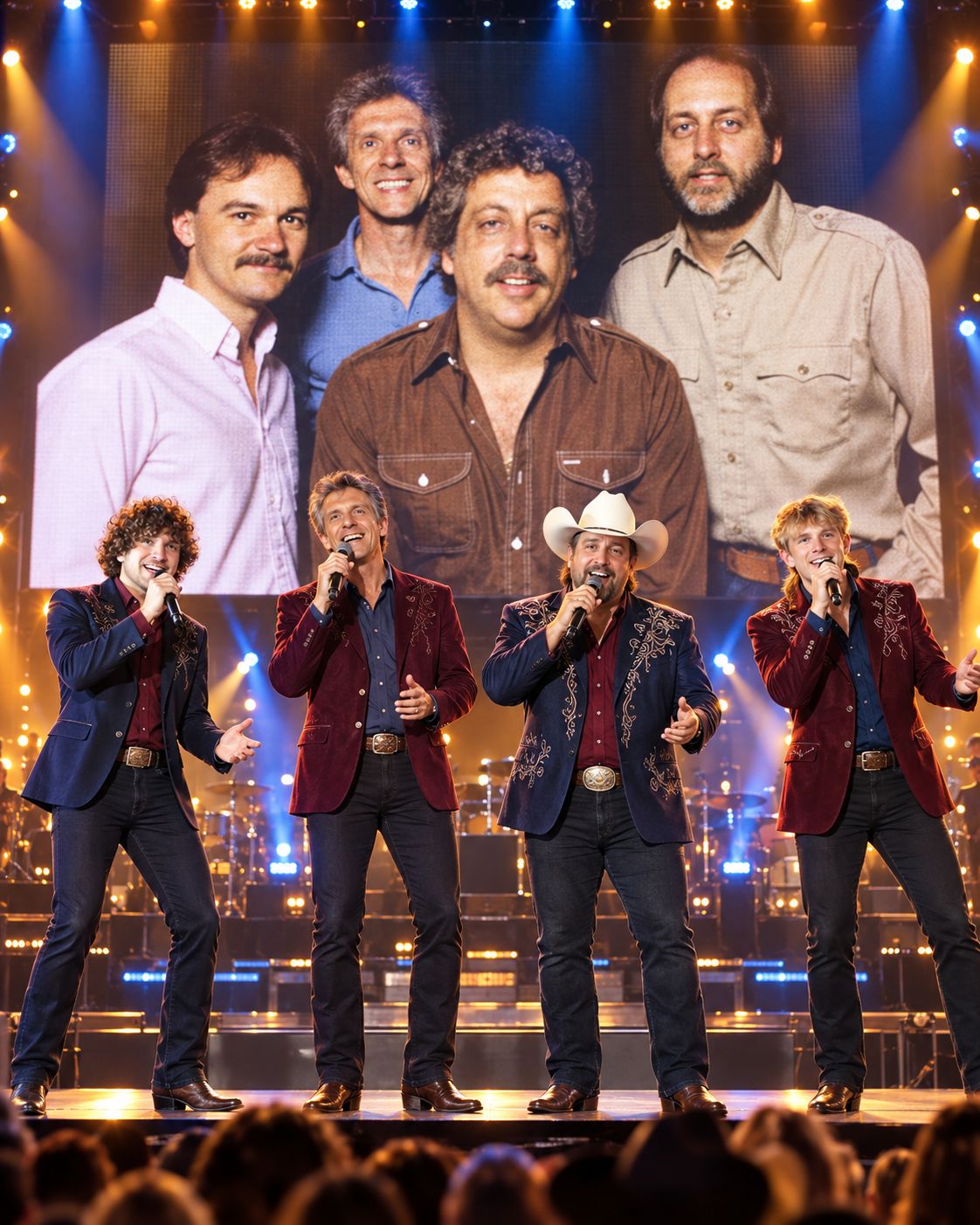
Some voices become part of a family’s history. Others become part of our own. For generations of country music listeners, The Statler Brothers provided the soundtrack to ordinary moments that grew precious with time: Sunday afternoons, long drives home, family gatherings, and evenings when a familiar song offered welcome company. Today, that musical inheritance continues through three generations of the Reid family, giving longtime admirers a moving reason to listen again.
The family connection begins with Harold Reid and Don Reid, whose contributions helped shape the Statlers’ unmistakable identity. Their sons, Wil Reid and Langdon Reid, perform as Wilson Fairchild, carrying their fathers’ influence into their own music. The next generation, Jack and Davis Reid, adds another chapter to that continuing story. Together, these family connections trace a living musical tradition from fathers to sons and onward to grandsons.
What made The Statler Brothers so memorable was the feeling that every voice belonged exactly where it was. Their harmonies rewarded careful listening, yet their performances never demanded specialized musical knowledge. You could appreciate the arrangement, smile at the humor, or simply recognize something of your own life in a song. That combination of craftsmanship and approachability helped their music feel personal to people who had never met them.
For older listeners, the significance of this continuing family tradition reaches beyond a familiar surname. Hearing younger performers embrace the music can bring back the people who first introduced it to us. Perhaps it was a father who kept country radio playing in the kitchen, or a mother whose favorite records accompanied the weekend chores. A harmony can recover those memories with remarkable speed, returning us briefly to a room, a voice, or a feeling we thought time had carried away.
Wilson Fairchild approaches that inheritance with both affection and creative purpose. Their album Statler Made, released through Gaither Music Group in January 2024, offered a direct connection to the musical world their fathers helped build. The project also reflected the cousins’ desire to introduce these songs to listeners encountering them for the first time. Preserving a song becomes especially meaningful when someone new discovers a reason to love it.

With Jack and Davis Reid, the story opens further. Their presence invites an interesting question: What does it mean to inherit music that already holds such a cherished place in other people’s lives? A family name may encourage an audience to listen, but the performance must create its own connection. Every new generation needs room to develop its phrasing, confidence, humor, and musical judgment.
That freedom is essential to a lasting musical legacy. The strongest tribute allows the original work to remain recognizable while giving younger voices something meaningful to contribute. Listeners can treasure the Statlers’ recordings and still welcome the individuality of the musicians who follow them. Affection for the past and curiosity about the future belong comfortably together.
Perhaps this is what makes the Reid family’s continuing journey so affecting. It shows how music can become a shared responsibility, passed along through listening, practice, encouragement, and love. Across three generations, the voices change, but the invitation remains familiar: come closer, hear the story, and find a little of your own life inside the harmony.