Introduction
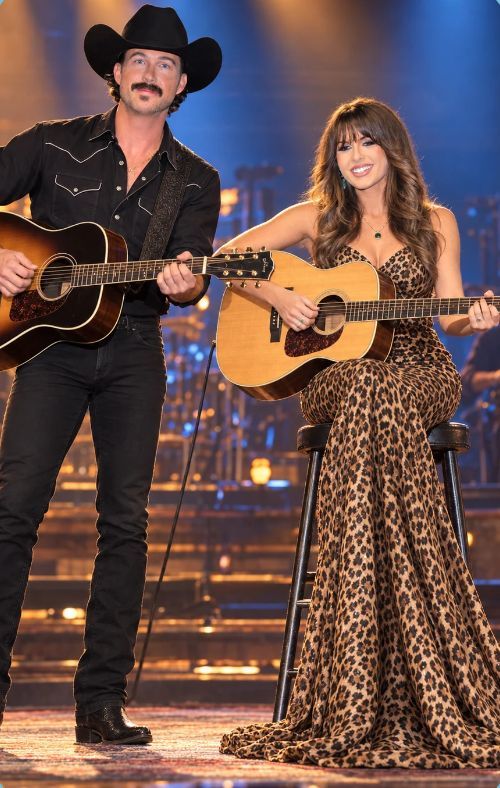
In country music, a few quiet words can sometimes draw more attention than a full-throated chorus. That appears to be the case with Ella Langley, whose reported response to Riley Green’s comments about her career has prompted a conversation about opportunity, recognition, and the work behind a breakthrough. For listeners who have followed country music through generations of memorable partnerships, the story touches on something familiar: sharing a stage can help an artist find an audience, but developing a voice that people remember is another achievement entirely.
The headline “Ella Langley Appears to Take Swipe at Riley Green Over His Comments About Her Success: ‘Typical’” centers on an exchange reported after Green mentioned Langley on The Voice. According to Holler, while recruiting the country duo Ferryn & Brinkley, Green recalled taking Langley on tour and observed that she was doing well. Some listeners interpreted the remark as suggesting that he deserved credit for her rise. That interpretation, however, should be distinguished from an explicit claim that he created her success.
During an October 8 Instagram Live, Langley appeared to address the subject after a viewer asked whether Green’s comments had bothered her. Parade reported that she said she “didn’t love that,” while Holler quoted her adding, “But typical. Pretty typical.” The response was brief, and the reporting leaves room for uncertainty about its full context. It provides a reason to discuss her apparent frustration, without establishing the broader private relationship between the two performers.
For music lovers, the more interesting question reaches beyond the exchange itself. How do we recognize the difference between helping an artist and explaining that artist’s success? Touring opportunities matter. A well-matched collaboration can introduce a singer to thousands of people who might otherwise never hear their work. Yet an introduction is only the beginning. Audiences must still find something in the performance that persuades them to listen again.

Consider the musical appeal of “You Look Like You Love Me.” Its conversational delivery invites the listener into a scene rather than overwhelming them with vocal display. The attraction lies partly in timing: the pauses, the relaxed phrasing, and the way two distinct personalities occupy the same recording. For older listeners who appreciate country storytelling, that approach offers the pleasure of hearing performers trust the material enough to let it breathe.
Langley’s voice is central to that effect. There is an unhurried quality to her delivery, a willingness to allow character and inflection to carry meaning. Green’s presence provides another texture, giving the collaboration a recognizable exchange between voices. Appreciating their musical partnership does not require assigning ownership of either performer’s career to the other.
That is why the reported “Typical” remark has a resonance beyond its brevity. It invites listeners to think about how casually the story of an artist’s rise can be simplified. Country music has always depended on people opening doors for one another. Its lasting performers, however, earn their place each time an audience returns to the song. Whatever further context may emerge, Ella Langley’s artistry deserves to be considered with that same care: through her voice, her interpretation, and the connection she builds with listeners.