Introduction
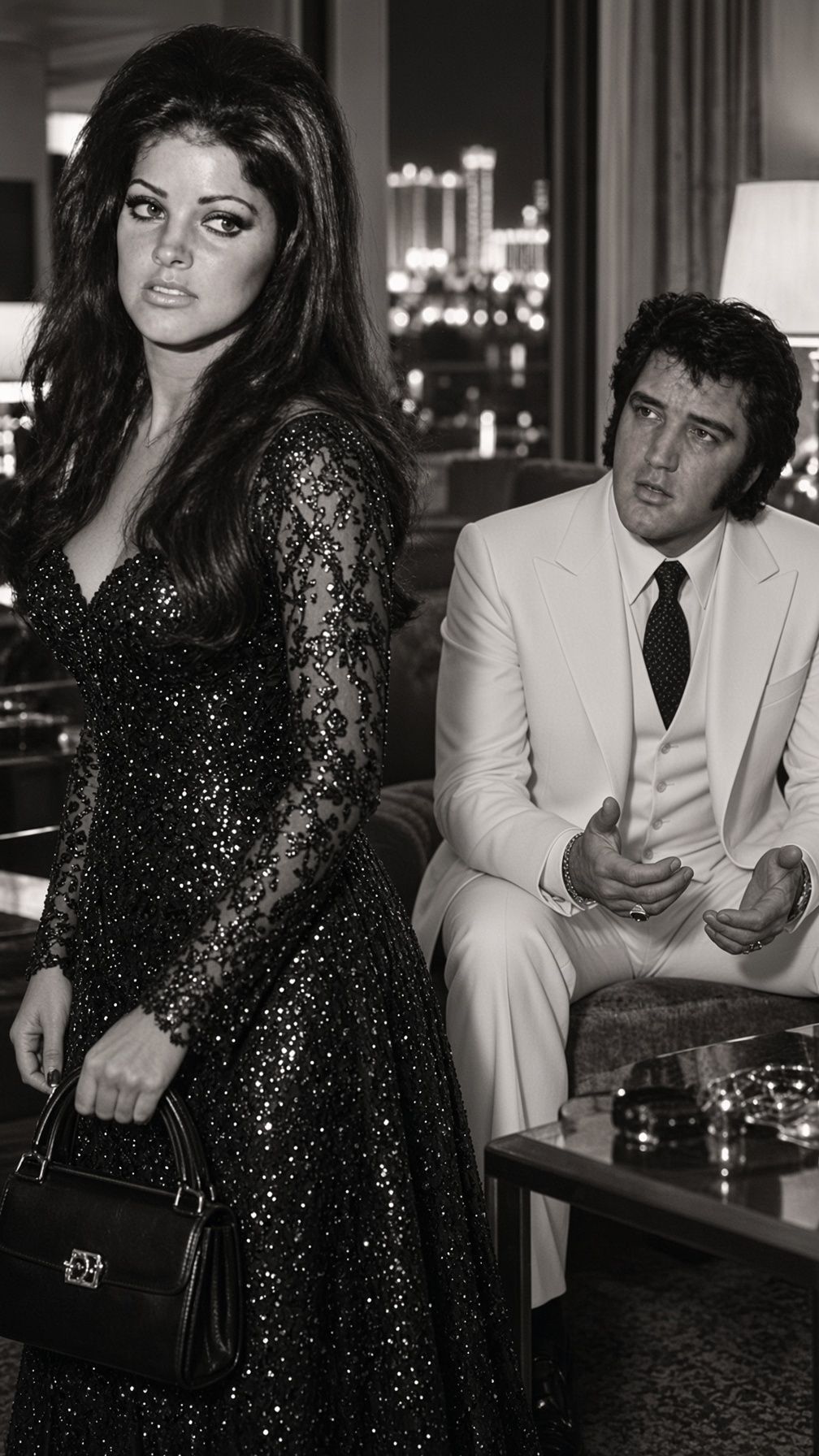
On Elvis Presley’s live recording of “Softly, As I Leave You,” the melody belongs to tenor Sherrill Nielsen, while Elvis speaks the words. It is an unusual arrangement for a performer whose singing voice could command a room within a few bars. Here, he lets another singer carry the tune. Nielsen gives the farewell its sweep, while Elvis delivers it with the measured pace of someone who knows there is very little time left to say what matters. That division between singing and speaking gives the performance a tenderness that a more dramatic reading might have lost.
The title takes on a second meaning in Priscilla Presley’s memoir, Softly, As I Leave You: Life After Elvis, written with Mary Jane Ross. In the book, Priscilla looks back on the life she built beyond Graceland, after years in which the public knew her primarily through her connection to one of the most famous singers in the world. There is a particular poignancy in seeing those words beneath her name on the cover. In the recording, they introduce a farewell. In the memoir, they open onto the years that followed one.
For readers who remember Elvis in his prime, it is easy to see how much of the marriage the public understood through photographs. There were the wedding pictures, the portraits with Lisa Marie Presley, and the familiar images of Graceland, each offering a moment that could be printed and kept. Priscilla’s perspective invites us to spend time with a question those photographs could never answer. What happens when a young woman grows up in a household organized around somebody else’s career, then begins to imagine a future she can shape for herself? The question gives her story a reach well beyond the Presley name.

Listen again to the recording with that question in mind, and notice how much Elvis leaves to Nielsen. The tenor can sustain a phrase past the point where an ordinary speaking voice would pause for breath. Elvis, meanwhile, brings the words close enough to feel like a private conversation. One voice gives the farewell room to linger. The other makes it feel immediate. That interplay is worth hearing on its own, especially if your strongest memories of Elvis are the big finishes and the full force of his concert voice.
There is room in Priscilla’s story for affection, grief, and the relief of making one’s own choices. Anyone who has looked back on a long relationship may recognize how naturally those feelings can coexist. The title she chose holds that complexity in a few quiet words. And when the last notes of “Softly, As I Leave You” fade, the subtitle gives the farewell somewhere to go. Life After Elvis is where Priscilla asks us to keep reading.