Introduction
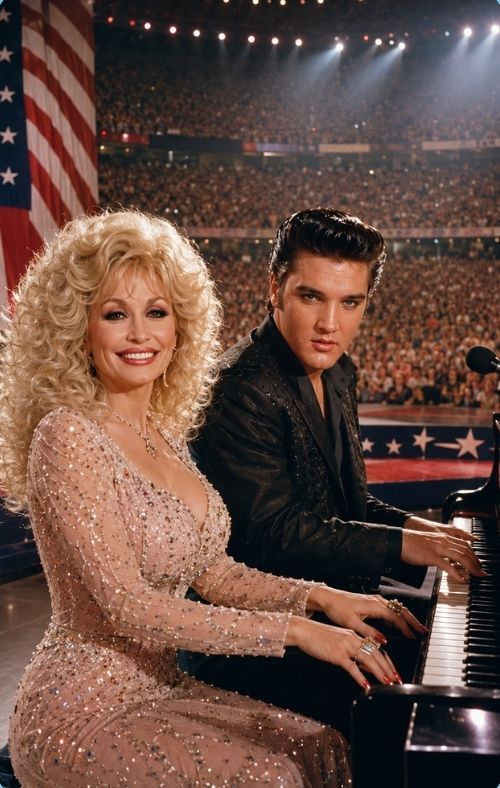
There are entertainers whose success can be measured by chart positions, record sales, awards, and years spent beneath the spotlight. Then there are artists whose importance reaches somewhere deeper. Dolly Parton belongs unmistakably to the second group. Behind the unmistakable voice, the colorful stage presence, and the enormous public personality was something much simpler and more enduring: a songwriter who understood how to turn ordinary human experience into music people could carry with them for a lifetime. In the archival portrait of her career, Dolly repeatedly returned to the same essential truth — almost everything that happened to her began with the music and the songwriting.
That is perhaps the best way to understand the extraordinary place Dolly occupies in American music. Long before she became a movie star, businesswoman, philanthropist, and international cultural figure, she was a young woman from the Smoky Mountains who believed in songs. According to the program, she spoke proudly of having written thousands of them, while her career eventually produced numerous country No. 1 singles, major Grammy recognition, and record sales reaching into the tens of millions. Yet numbers alone hardly explain why her work endured. Her songs sounded personal without becoming inaccessible, emotional without losing their clarity, and distinctly country while reaching listeners who had never considered themselves country-music fans.
Few examples demonstrate this better than “I Will Always Love You.” Dolly herself remembered the song as one of the compositions, alongside “Jolene,” for which she became especially recognized. She believed “I Will Always Love You” deserved an even larger life and hoped another singer might eventually discover its possibilities. That happened spectacularly when Whitney Houston recorded it for The Bodyguard. Dolly later praised Houston’s interpretation and expressed amazement that such a comparatively simple song could become something so enormous in another singer’s hands.
That response says something important about Dolly as an artist. She understood that a truly great song does not belong only to the person standing at the microphone. Once written, it can travel from one generation to another, from one musical style to another, accumulating new meanings along the way. “I Will Always Love You” became exactly that kind of composition: a reminder that restraint can sometimes carry more emotional weight than spectacle.
The same instinct appeared in “9 to 5,” a song Dolly wrote while making the 1980 film of the same name. The transcript recalls how the song brought wider attention to the concerns of working women seeking fairness and equal recognition. Dolly even demonstrated how she used the sound of her fingernails to help shape its memorable rhythmic character. What might initially sound like a bright, energetic popular song therefore contained something more substantial beneath its surface — an observation about dignity, work, frustration, resilience, and the hope for something better.
But perhaps the most remarkable part of Dolly’s story is that she never appeared satisfied simply with being successful. She spoke about wanting to be remembered as a good-hearted person, someone who had used what she was given to accomplish as much good as possible. That philosophy became visible far beyond music. Her Imagination Library, launched in 1995 and inspired by her father’s limited opportunity to receive an education, grew from a hometown initiative into an international literacy program providing books to children. She also remained deeply connected to East Tennessee, supporting education, local families, and recovery efforts after devastating wildfires.
For older listeners especially, that may explain why Dolly Parton feels different from so many celebrities who have passed through popular culture. Her songs are tied to memories: a radio playing in the kitchen, an old record spinning in the living room, a long drive through familiar countryside, or a melody heard decades ago that somehow still remembers exactly who we were when we first heard it.
Dolly once said that she loved working and could never imagine truly retiring; even later in her career, she continued looking toward new musical projects and collaborations. That restless creative spirit may ultimately be one of the clearest explanations for her longevity. Dolly Parton never treated music as merely a profession. She treated it as a calling.
And that is why songs such as “Jolene,” “I Will Always Love You,” and “9 to 5” continue to matter. They are not simply reminders of an extraordinary career. They are pieces of emotional history — songs strong enough to survive changing fashions, changing generations, and even the passing of time itself.
The rhinestones made Dolly instantly recognizable. The songs made her unforgettable.