Introduction
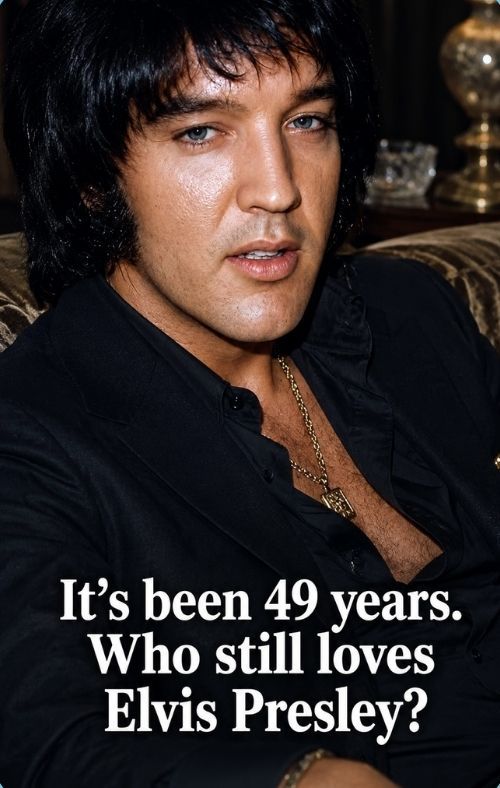
For millions of people, the name Elvis Presley immediately brings to mind an unforgettable voice, dazzling stage performances, Hollywood films, and a cultural impact that permanently changed popular music. Yet behind that familiar image was another Elvis—one far less visible to the public. Away from the spotlight, he could be intensely curious, reflective, and eager to explore questions that had little to do with fame. That raises an intriguing question: How intelligent was Elvis Presley?
The answer depends largely on what we mean by intelligence. Elvis was not known as a conventional scholar, nor did he build his reputation through universities, academic titles, or intellectual institutions. His intelligence appeared in a different form. He possessed an instinctive understanding of music, emotion, performance, and human connection, combined with a lifelong curiosity about subjects that reached far beyond the entertainment business.
People who spent time around Elvis often remembered his interest in reading. He was drawn to religion, spirituality, philosophy, history, numerology, symbolism, and the meaning of life. These were not subjects one might immediately associate with the man photographed in glittering stage costumes before thousands of screaming admirers. Yet in private, Elvis reportedly spent long periods reading, discussing ideas, and searching for explanations about human existence, destiny, faith, and personal purpose.
That contrast is important. The public Elvis lived in a world of television cameras, concert halls, recording studios, movie sets, automobiles, and enormous commercial expectations. The private Elvis frequently seemed interested in questions that fame could not answer. What gives life meaning? What happens beyond ordinary experience? Why are people drawn toward faith? What responsibilities come with extraordinary success? These concerns suggest a man who was not satisfied simply with applause.
His intelligence may also be seen in his extraordinary musical instincts. Elvis did not need to write every song he performed to understand how a song should feel. He possessed an unusual ability to recognize material that suited his voice and emotional character. He could absorb influences from gospel, country, blues, rhythm and blues, and traditional pop, then bring those influences together in a way that sounded unmistakably his own. That kind of artistic judgment requires more than technical skill. It requires intuition, memory, sensitivity, observation, and emotional intelligence.
Elvis also learned through experience. His education continued through endless travel, conversations with musicians, exposure to different communities, military service, filmmaking, recording sessions, and the extraordinary demands of international celebrity. By his early twenties, he had already encountered situations that few people experience in an entire lifetime.
Of course, intelligence should not be confused with perfect judgment. Highly intelligent people can still make mistakes, trust the wrong individuals, struggle with pressure, or become overwhelmed by circumstances. Elvis was no exception. His life contained contradictions, and those contradictions make him more interesting rather than less intelligent.
Perhaps the most revealing thing about Elvis Presley’s intelligence was his continued desire to search. Fame gave him wealth, recognition, influence, and opportunities beyond anything he could have imagined as a young man in Tupelo and Memphis. Yet achievement did not appear to end his curiosity.
Behind the King of Rock and Roll was a man who continued asking questions.
That may be the part of Elvis Presley worth reconsidering today. Beneath the legendary voice and unforgettable stage presence was a thoughtful, searching, intellectually curious man whose private interests remind us that the public image of a famous person is rarely the complete story.
Elvis conquered the world through music—but somewhere behind the applause, he was still trying to understand it.