Introduction
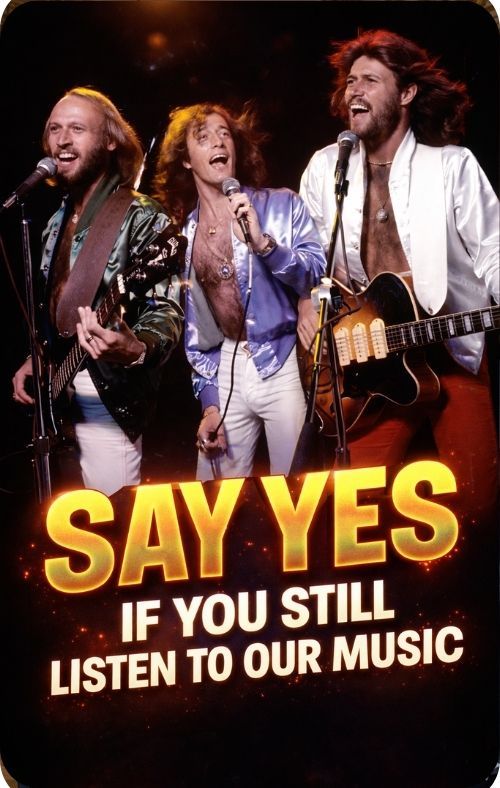
There are songs that belong to a season, a decade, or a passing cultural mood. And then there are songs that outgrow their own era and become something far more permanent. Bee Gees – Stayin’ Alive is one of those rare recordings. It did not simply ride the energy of the disco years; it rose above them. What began as a sharply crafted, rhythm-driven hit became, over time, a declaration of endurance, style, confidence, and human resilience. Decades later, it still sounds alive in every sense of the word.
Part of the lasting power of Bee Gees – Stayin’ Alive lies in the extraordinary tension inside it. On the surface, it moves with cool control. The beat is sleek, the groove is relentless, and the vocal delivery carries that unmistakable Bee Gees signature—elegant, urgent, and instantly recognizable. But underneath the polished sound, there is something deeper at work. This is not merely a dance record. It is a song about pushing forward when the world feels hard, cold, or indifferent. Its pulse feels urban, modern, and restless, yet its emotional core is timeless: keep moving, keep standing, keep living.
For older listeners especially, that is one reason the song continues to resonate so strongly. It brings back memories of a time when popular music seemed to move with confidence and precision, when a great song could be both radio-friendly and artistically memorable. But nostalgia alone does not explain its endurance. Many songs can remind us of the past. Far fewer still speak to the present. Bee Gees – Stayin’ Alive does both. It carries the shimmer of a specific moment in music history, yet it also speaks to anyone who has ever had to hold themselves together through difficulty.
The Bee Gees understood something essential about songwriting: the strongest songs often hide profound feeling inside irresistible melody. That is exactly what happens here. The track’s famous rhythm section gives it movement, but the title phrase gives it meaning. “Stayin’ alive” is simple language, almost conversational, yet it lands with unusual force. It sounds like a slogan at first, but with each passing year, it feels more like testimony. People hear it differently as they grow older. What once sounded stylish may now sound brave. What once felt like nightlife may now feel like survival itself.
That evolution is part of what makes the song so fascinating. Younger listeners may first discover it through its beat, its swagger, or its iconic place in pop culture. Older, more reflective listeners often hear something else: discipline, determination, and quiet defiance. The Bee Gees were never careless craftsmen. Their harmonies were too refined, their instincts too sharp, and their emotional intelligence too strong for that. Even in a song as immediately catchy as Bee Gees – Stayin’ Alive, they were building something carefully layered—music that could excite the body while speaking to the spirit.
There is also something remarkable about the confidence of the performance itself. The vocals do not plead. They do not collapse into sentimentality. Instead, they project control under pressure. That may be one of the song’s greatest achievements. It understands struggle, but it refuses to sound defeated by it. That balance is difficult to achieve, and it is one reason the record has never lost its authority. It still enters the room with presence. It still carries itself with purpose. It still feels like a song that knows exactly what it is.
In the end, Bee Gees – Stayin’ Alive remains unforgettable not just because it is catchy, iconic, or historically important, though it is all of those things. It endures because it captures a truth that never goes out of date: life asks something of us, again and again, and dignity often begins with the simple decision to keep going. Few songs have ever expressed that truth with such style, such rhythm, and such lasting grace. That is why this classic does not merely survive in memory. It continues to live.