Introduction
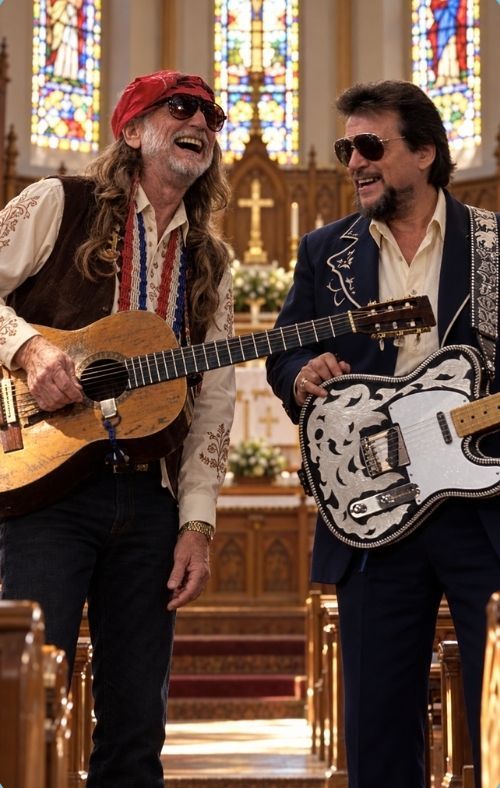
Some country songs stay with us because their melodies are easy to remember. Others endure because they recognize something about life that we have struggled to put into words. “Good Hearted Woman,” performed by Waylon Jennings and Willie Nelson, does both. Beneath its spirited rhythm and familiar chorus lies a story about devotion, disappointment, and the complicated people we choose to love. It is a song that invites us to sing along, then quietly gives us something to consider once the music has stopped.
For listeners who grew up with these two unmistakable voices, the recording carries the warmth of an old acquaintance. Waylon Jennings brings a deep, commanding presence, delivering the story with the confidence of someone who understands its rough edges. Willie Nelson, with his distinctive phrasing and conversational ease, adds a lighter touch. Their voices retain their individual character throughout, and that is a large part of the pleasure. We hear two different personalities finding common ground in the same story.
The duet became a major crossover hit in 1976, during the period when Jennings and Nelson were helping bring outlaw country to a broader audience. Their success also accompanied a shift toward greater creative authority for country artists within the recording industry. That history gives the song an added significance: these were singers whose musical identities mattered, and audiences responded to the freedom and individuality they heard in their performances.
Yet the emotional center of “Good Hearted Woman” belongs to the woman in its title. She shares her life with a restless man whose habits make that life more difficult than it needs to be. The song acknowledges the unevenness of their relationship while presenting her affection with warmth. Older listeners may recognize the tension immediately. Long companionship often involves knowing another person’s weaknesses as clearly as their virtues, and understanding how much those weaknesses can cost.
There is room here for both affection and a thoughtful question. Her loyalty is admirable, but what responsibility does he bear for the patience she extends to him? A careful listener can appreciate the song’s tenderness while still noticing that burden. This gives the familiar chorus more depth. The woman’s goodness is easy to celebrate; the man’s willingness to deserve it is less certain.
Musically, the performance keeps those difficult feelings moving within an inviting, steady pulse. The lively delivery prevents the story from becoming heavy, while the voices preserve its sense of lived experience. Jennings’s firm delivery gives the narrative weight. Nelson’s flexible timing lends it warmth and a hint of humor. Together, they make the song feel like a conversation among people who have known enough trouble to speak about it plainly.
That balance helps explain its lasting appeal. The recording offers enjoyment without requiring us to overlook the imperfections in its characters. Its storytelling is direct, its melody welcoming, and its emotional situation recognizable. Listeners can return to it at different stages of life and hear something slightly different: youthful admiration for a free spirit, sympathy for a patient companion, or a mature understanding that affection needs care and responsibility to survive.
Returning to Waylon Jennings and Willie Nelson’s “Good Hearted Woman” is therefore more than an exercise in nostalgia. It is a chance to hear two remarkable singers give personality and feeling to an enduring human story. Behind the easy chorus stands a woman whose loyalty holds the narrative together—and whose quiet strength deserves as much attention as the celebrated voices telling her story.