Introduction
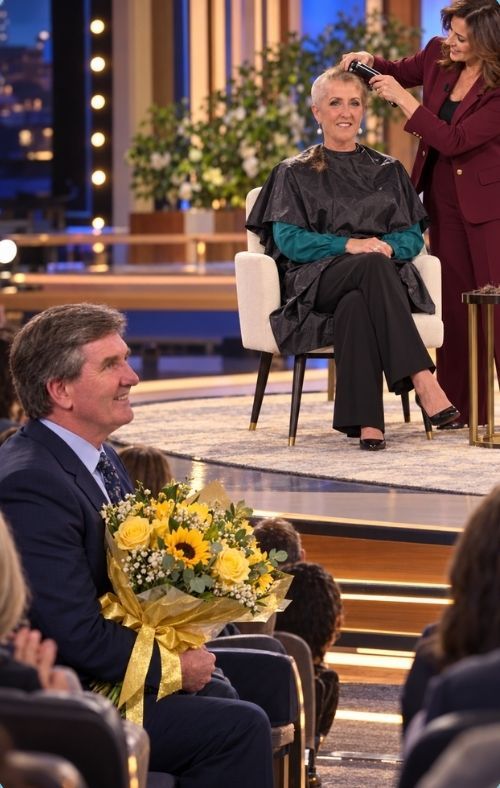
Some television moments remain with us because they reveal something that polished entertainment rarely can: a person meeting uncertainty with honesty. Majella O’Donnell’s appearance on The Late Late Show was one of those moments. In September 2013, she had her head shaved live on television to raise money for the Irish Cancer Society, turning an intensely personal experience into an appeal for others facing cancer. For viewers who knew her through her husband, Daniel O’Donnell, the familiar connection offered a reason to watch. Her own resolve gave them a reason to remember.
The supplied interview captures the emotional weight of that decision without needing a song or a dramatic announcement. As the shaving begins, Majella continues speaking with the presenter, answering questions and appealing for donations. There is something deeply moving about the ordinary rhythm of their conversation. A television studio carries on around her, yet she is undergoing a change that reaches far beyond appearance. She allows the audience to witness a difficult moment while keeping its purpose clearly in view: helping other people.
For older listeners who have followed Daniel’s music over the years, the scene may carry a particular resonance. Songs about devotion, reassurance, and perseverance become meaningful because people eventually encounter circumstances that test those very qualities. Here, those themes find expression through a practical decision. Majella cannot remove the uncertainty of treatment, but she can decide what this moment will accomplish. Her willingness to raise funds gives an immediate purpose to something she knows will be emotionally demanding.
One of the most revealing exchanges concerns her opportunity to stop. The presenter recalls assuring her that she could change her mind, and she explains why she wants to continue. In the transcript, her answer reflects a determination to finish what she has chosen to do and to feel that she has achieved something worthwhile. Her courage is deliberate. It does not require her to pretend that the experience is easy, nor does it make hesitation a weakness. The choice matters precisely because she understands its difficulty.
Her appeal for donations is equally affecting. She acknowledges that money is tight and asks viewers to contribute whatever they can. That recognition brings warmth and dignity to the request. People watching at home are invited to participate according to their means, and a small contribution is treated as valuable. The exchange makes compassion feel accessible: an individual watching television can become part of a wider effort to support someone else.

Majella also speaks candidly about the treatment ahead. In this historical interview, she describes her anticipated chemotherapy schedule and the further decisions she was considering at the time. These passages give the scene its seriousness. She is speaking from within uncertainty, before she knows how the coming months will unfold. Her openness allows viewers to appreciate that a brave public gesture can coexist with private questions, discomfort, and apprehension.
Then comes the mirror. Throughout the conversation, other people have offered reassurance about her appearance. Looking at herself introduces a different kind of encounter: she must take in the change on her own terms. The discussion of a wig, the unfamiliar sensations, and the moments of humor preserve her individuality. Majella O’Donnell remains a woman with preferences, wit, and a voice of her own.
What makes this footage worth revisiting is the generosity at its center. Majella shares a vulnerable experience so that it might benefit people she will never meet. For an audience accustomed to finding comfort in music, this moment offers a related kind of reassurance through human action. Its lasting power rests in dignity, resolve, and shared kindness—qualities that need no melody to be heard.