Introduction
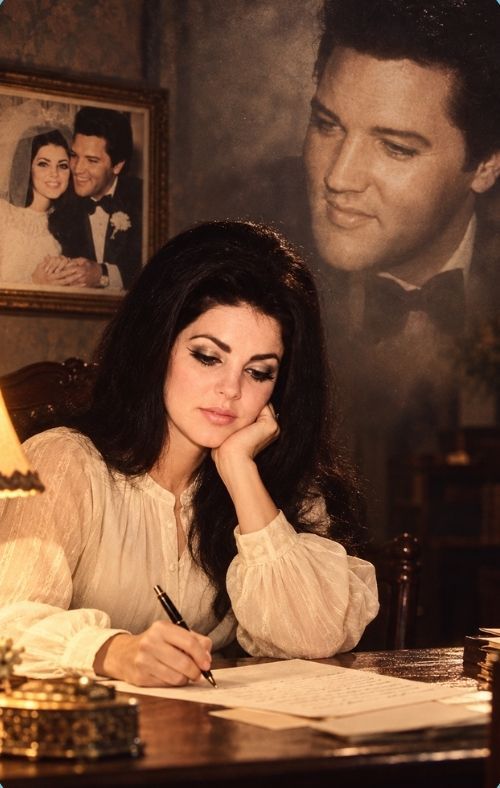
For those who grew up listening to Elvis Presley, his voice remains a familiar presence: a sound that can bring back a first dance, a family gathering, or an evening when the radio seemed to understand everything we could not say. His recordings preserve an extraordinary sense of life. That is part of what makes the story of his death so difficult to absorb. We hear him sing, and the distance between then and now briefly disappears.
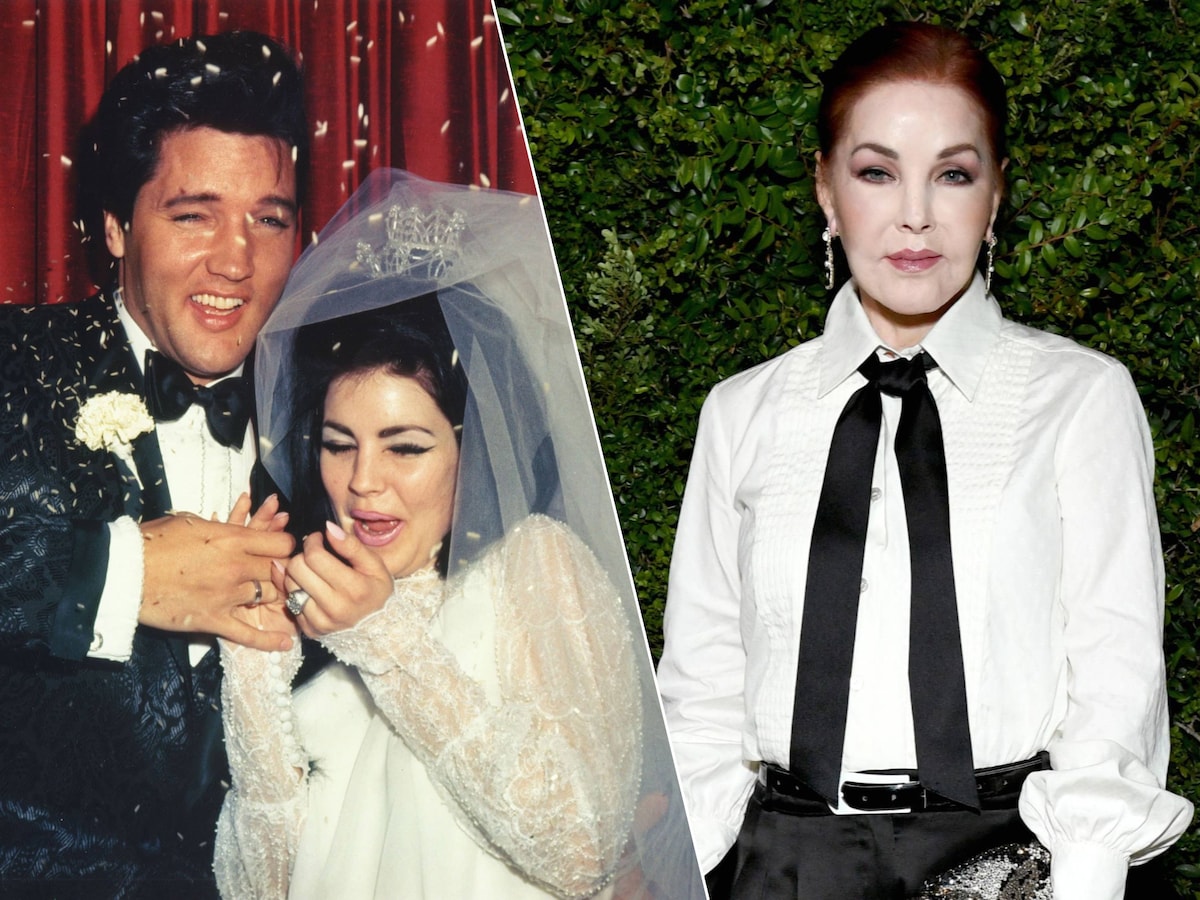
Yet for Priscilla Presley, remembering Elvis meant remembering someone beyond the records, photographs, and standing ovations. In a 2017 interview with Entertainment Tonight, she recalled receiving the news of his death from his longtime road manager, Joe Esposito. Her account described the shock of that telephone call and the grief she encountered when she returned to Graceland. These were recollections shared forty years afterward, rather than a statement delivered publicly on the day he died.
The suggested phrase “The King’s Last Love: What Priscilla Said After Elvis Died” carries considerable emotional weight, but “last love” should be understood as a dramatic framing, rather than an established description of their relationship. Elvis and Priscilla had divorced in 1973, and Ginger Alden was his fiancée when he died in 1977. Priscilla’s place in his story remains profound without requiring that distinction to be blurred.
What makes her later words so affecting is their simplicity. Asked about what she had lost, Priscilla answered, “everything.” She described Elvis as a mentor and confidant whose influence had reached into every part of her life. In the same interview, she remembered her immediate concern for their daughter, Lisa Marie, who was visiting Graceland. Her recollection brings the story close to an experience many readers will recognize: hearing devastating news while trying to understand what it will mean for a child.
For a listener, that personal perspective can deepen the experience of Elvis’s music. A tender ballad takes on a different resonance when we consider the people who continued living after the singer was gone. The recording remains unchanged; our understanding grows around it. A sustained note, a restrained phrase, or a moment of hesitation can invite reflection on the fragile lives behind even the most enduring performances.
There is also something particularly moving about the way memory resists a tidy ending. A marriage can end while affection, shared history, and family responsibilities continue. Bereavement does not sort those feelings into convenient categories. Priscilla’s account allows room for that complexity, and it gives mature readers something more substantial than a story of perfect romance: a glimpse of how deeply one person can remain woven into another person’s life.
Approached with care, Priscilla’s remembrance of Elvis becomes a compelling introduction to the emotional world his music still opens. It encourages us to listen beyond the grandeur of the legend and consider the ordinary human stakes of loss. The voice survives on the record. Those who knew its owner must learn to carry the silence that followed.