Introduction
THE REID FAMILY’S HARMONY DIDN’T END WITH ONE GENERATION — IT FOUND NEW VOICES. In Jack and Davis Reid, a familiar country music story has acquired a new sound. Their grandfathers sang with The Statler Brothers; their fathers formed Wilson Fairchild. Now the younger cousins perform as a duo in their own right, carrying a family history that audiences can hear without asking them to repeat it note for note.
The family connection is worth getting right. Jack is the son of Wil Reid and the grandson of Harold Reid. Davis is the son of Langdon Reid and the grandson of Don Reid. That makes them heirs to two branches of the same musical family, as well as partners in whatever they choose to make together.
For listeners who grew up with The Statler Brothers, harmony meant more than voices landing on the correct notes. A lead line could sound conversational while the voices around it gave the thought weight, warmth, or a touch of humor. Their songs often seemed to know that ordinary life could be funny and painful at once. That is a demanding tradition for any young performers to inherit. The temptation would be to reproduce the sound so faithfully that there is little room left for their own personalities.
Jack and Davis have a more interesting opportunity. When two singers know the same family stories, their musical understanding can begin before either one opens his mouth. One may hear where a phrase ought to breathe; the other may know just when to hold back. Those small choices give harmony its human quality. A song passed down through a family can keep its shape while changing in the hands of the people singing it today.
Their own biography says they have taken their music to theaters, fairs, and festivals. Those stages matter. They give Jack and Davis the chance to meet people who remember the Statlers vividly, alongside listeners encountering the Reid name for the first time. Both audiences deserve a performance that stands on its own.
That is why their story reaches beyond a famous surname. Many families preserve photographs, recipes, or stories told around a table. The Reids also have songs: something they can share in public, together, and reshape through practice. The older recordings remain available to anyone who wants to hear them. What Jack and Davis offer is the experience of hearing two younger voices decide what those songs, and that way of singing, mean to them.
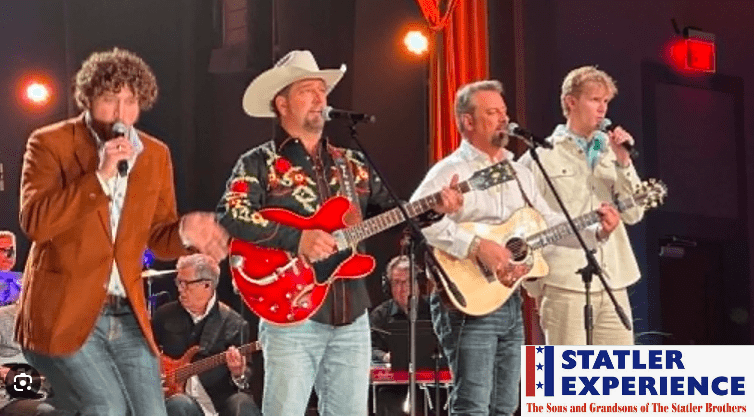
No one can hand an artist a future simply by giving him a name. Jack and Davis must earn an audience with every performance, like the generations before them. Yet there is something moving in the sight of that work continuing: two cousins stepping onstage with a history behind them and enough room ahead to make a sound of their own.