Introduction
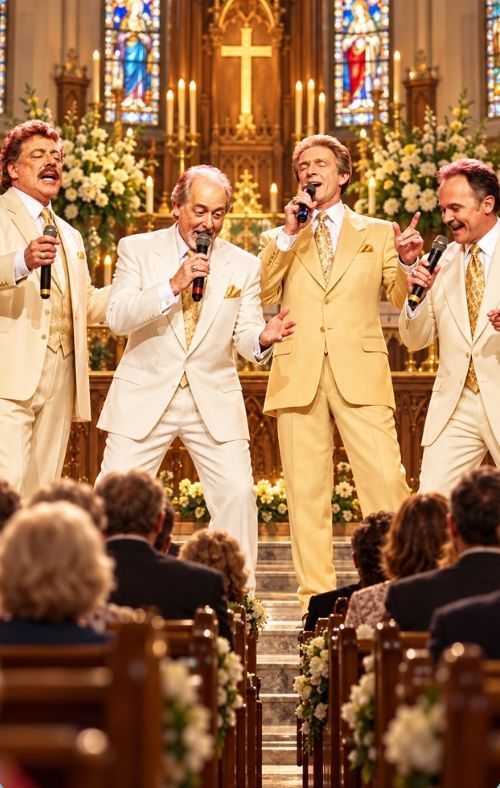
The Statler Brothers spent decades singing about memory: school days, old friends, familiar streets, and the quiet realization that life has moved on while a song was playing. When they retired from touring in 2002, that long interest in time gave their farewell a particular weight. Their story did not need a dramatic ending. The songs had already taught their audience how to listen for one.
The attached account traces the group’s journey from local performances in Virginia to a place among country music’s best-known vocal groups. It also asks why they chose to leave the stage. The question is compelling because their appeal was built on continuity. Listeners knew what to expect when those four voices met: a strong bass line, closely fitted harmonies, a little humor, and stories that seemed to understand ordinary lives.
Consider “The Class of ’57.” Its power comes from the distance between youthful expectations and the lives people eventually lead. The Statlers sing with affection, but they leave room for disappointment and change. “Do You Remember These” works differently, gathering the small details of an earlier America until recognition becomes an emotion of its own. Neither song asks the listener to believe the past was perfect. Both understand why people return to it.
Then there is “Flowers on the Wall,” whose wit gives the group another dimension. Its playful words and crisp delivery show how much character they could bring to a song without overwhelming it. Across their recordings, the voices remain distinct even when they blend. You can hear the pleasure they take in timing a phrase together, allowing a pause to land, or letting a bass note give a lighthearted line an unexpected depth.
That care helps explain why their music reached beyond one generation. An older listener might hear a reminder of a school reunion or a family gathering; a younger listener can hear four performers making a story clear through sound alone. Their gospel roots are part of that craft. The harmonies often carry a sense of gathering, as though the song is being shared in a room rather than delivered from a distant stage.
The group also knew how to give an audience a full evening’s entertainment. Humor sat comfortably beside reflection. A gentle joke could make the next serious song feel more human, while the music gave their stage warmth lasting substance. That balance was central to the Statler Brothers’ legacy.
Their retirement invites us to listen again to what they left behind. In those recordings, voices meet with an ease earned over years of work. The stories still make room for people who remember being young, for those surprised by how quickly time has passed, and for anyone who has found that an old song can bring a whole room back to life.