Introduction
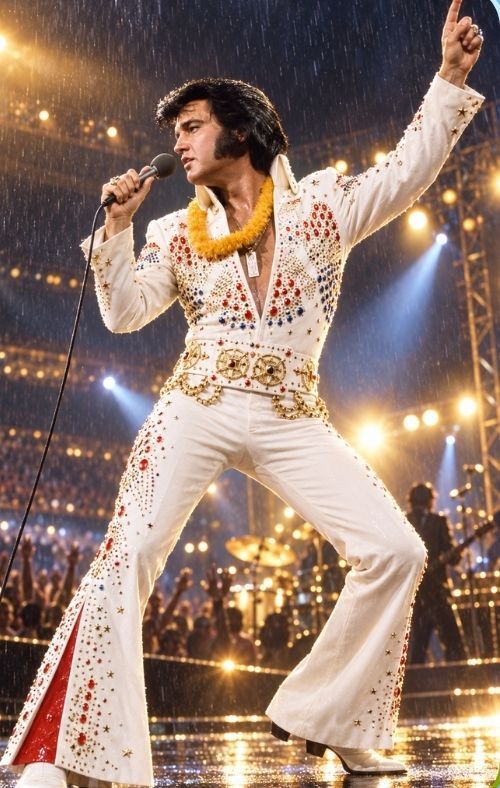
On August 16, 1977, the voice that had transformed popular music suddenly fell silent. Elvis Presley was only 42, an age when many performers are reaching their fullest artistic maturity. His death shocked millions, but the sorrow went deeper than the loss of an entertainer. The world had lost a cultural force whose music had crossed generations, challenged convention, and changed the sound of America.
Only weeks earlier, Elvis had appeared before thousands at Market Square Arena in Indianapolis. That performance on June 26, 1977, became his final concert. Those in attendance could see that he was physically exhausted, yet moments of unmistakable power remained in his voice. Elvis continued performing because the stage was more than a workplace. Beneath the lights, surrounded by musicians and listeners, he could briefly escape the isolation that accompanied extraordinary fame. Music allowed him to reach people when ordinary conversation could not.
To understand the man behind the famous image, however, we must return to Tupelo, Mississippi. Before the mansion, the gold records, and the brilliantly decorated stage clothes, Elvis was a poor Southern boy living with his parents in a modest two-room house. Financial hardship shaped his childhood, but so did the intense affection of his mother, Gladys Presley.
Gladys was not merely a beloved parent; she was Elvis’s emotional anchor. When success arrived, he used his first great earnings to improve his parents’ lives. Yet money could never replace the sense of safety he associated with his mother. Her death in 1958, while Elvis was serving in the United States Army, created a wound that those closest to him believed never completely healed. Fame gave Elvis almost everything—except the power to recover what he had lost.
Away from the crowds, he often found pleasure in remarkably ordinary activities. At Graceland, Elvis rode horses, watched films, practiced karate, laughed with friends, and enjoyed private moments without the pressure of being “The King.” These glimpses reveal a man searching for normality inside a life that had become anything but normal.
His generosity offered another window into his character. Elvis famously gave away cars, jewelry, money, and personal gifts, sometimes to friends and sometimes to people he barely knew. His gestures could be extravagant and impulsive, but they frequently came from a sincere desire to create happiness. He loved watching another person’s face light up. Giving allowed him to turn wealth into a moment of genuine human connection.

Nowhere was his tenderness more visible than in his relationship with Lisa Marie Presley. Around his daughter, the international superstar became an affectionate and playful father. He showered her with presents, introduced her to horses, and filled Graceland with memories that remained precious long after his death. Lisa Marie was only nine years old when she lost him. She could not yet comprehend the enormous public legacy he had left behind, but she understood something the public could only glimpse: Elvis was her father before he was the world’s King.
That distinction explains why his story continues to move listeners. We remember the unmistakable voice, the revolutionary records, the dramatic stage presence, and the history-making performances. Yet those achievements alone do not explain his lasting emotional power. Behind them stood a vulnerable man who loved his mother deeply, adored his daughter, searched for peace, and carried private wounds that applause could not heal.
The world called him “The King,” but his enduring legacy belongs equally to the human being behind the legend. Elvis Presley remains unforgettable not because he appeared invincible, but because beneath the grandeur was someone recognizably human—generous, lonely, loving, flawed, and forever reaching toward others through song. That is the Elvis who still lives whenever his voice fills a room.