Introduction
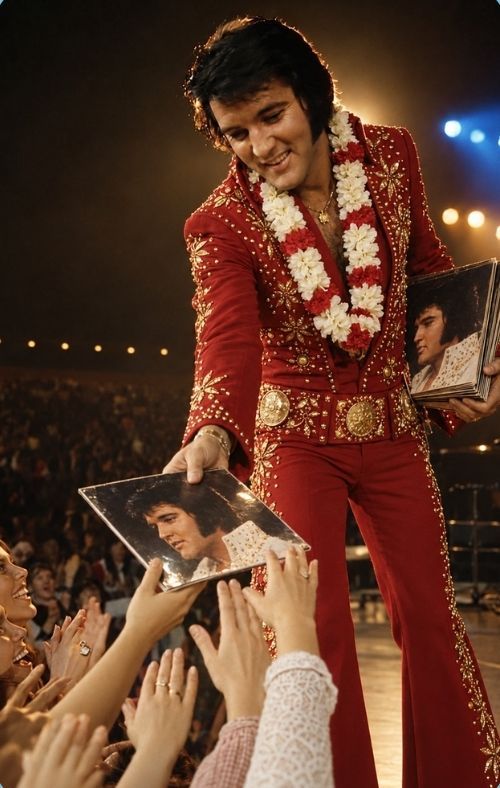
In the final chapter of Elvis Presley’s life, the world saw the exhaustion of a man who had spent years giving everything he had to his music and his audience. By 1977, the physical demands of touring had become increasingly difficult. His health was declining, his appearance had changed, and the confidence that once seemed effortless could occasionally give way to visible vulnerability. Yet whenever the lights came on and the musicians began to play, Elvis still attempted to become the figure his audience had traveled so far to see.
That effort is what makes his final performances so moving. They should not be judged solely against the youthful energy of the 1950s or the commanding brilliance of his 1968 television comeback. The Elvis of those last months was a different performer: older, troubled, physically weakened, but still capable of reaching extraordinary emotional depths. At certain moments, the polish disappeared and something more revealing emerged—a man relying upon instinct, faith, memory, and the voice that had carried him through almost his entire adult life.
What makes those final months so heartbreaking is the loneliness behind the fame. Elvis was rarely physically alone. Friends, musicians, employees, relatives, and admirers remained around him. But constant company is not the same as genuine peace. Behind the celebrated image was a man burdened by expectation. Millions of people remembered him as eternally young, rebellious, handsome, and unstoppable. Elvis himself had to live inside that image, even as his body began telling a very different story.
Music remained one of the few places where he could express what ordinary conversation could not contain. Songs of separation, regret, spiritual longing, and enduring devotion seemed to carry new meaning when he performed them near the end. His voice might sometimes sound strained, but it could still rise with astonishing authority. More importantly, it possessed a deep emotional weight that technical perfection alone could never produce.
And still, he kept singing. That simple truth lies at the heart of Elvis Presley’s final chapter. He did not walk onto those stages because every evening promised greatness. He walked out because performing had become inseparable from who he was. The audience was not merely watching him; it was completing a relationship that had defined his life for more than two decades.
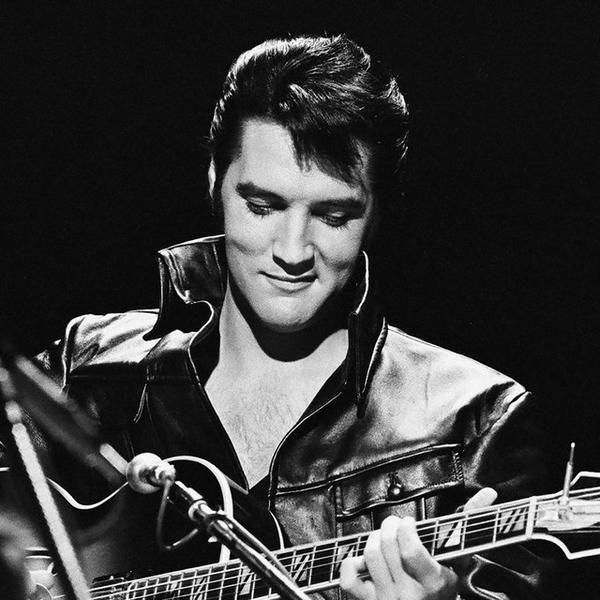
On June 26, 1977, Elvis took the stage in Indianapolis for the final time. The concert at Market Square Arena was not presented as a farewell. There was no official announcement that history was ending, no carefully prepared retrospective, and no ceremonial final bow. The people in the building expected Elvis to return to the road. They could not have known that he would die less than two months later, on August 16, at the age of 42.
That knowledge changes how the performance is remembered. Every gesture now appears heavier. Every lyric seems to carry an unintended message. The applause sounds almost like a goodbye, although neither Elvis nor the audience understood it that way at the time.
It was not perfection that made Elvis unforgettable that night. It was courage, obligation, and a final act of generosity. When he possessed far less strength than the legend demanded, he still stepped into the light and offered what remained.
His final concert therefore endures as something greater than a historical curiosity. It is a portrait of an artist confronting exhaustion without fully surrendering to it. Elvis Presley could no longer give the world the invincible young King it remembered—but he could still give it a song. And in the end, that vulnerable devotion may reveal more about the man than any flawless performance ever could.