Introduction

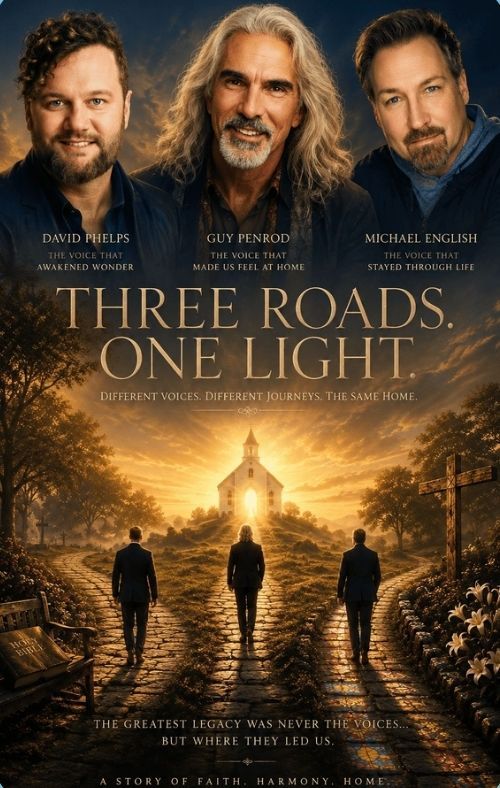
There are singers whose voices impress us for a season, and then there are voices that somehow become part of the landscape of our lives. For generations of gospel listeners, David Phelps, Guy Penrod, and Michael English belong firmly in that second category. Each man brought something unmistakably different to the music, yet whenever their voices rose through a hymn, a testimony, or a great gospel anthem, they seemed to lead listeners toward the same destination: a place of faith, memory, family, comfort, and home.
That is what makes the idea behind “THREE VOICES, ONE HOME” so powerful. It is not simply about three gifted performers standing beneath the same lights. It is about three musical personalities whose individual strengths helped define an era of gospel music that still carries extraordinary emotional weight today.
David Phelps possesses the kind of voice that can make a familiar song feel newly discovered. His remarkable range, classical discipline, and ability to move from a delicate phrase to a soaring climax have long made him one of gospel music’s most recognizable vocalists. Yet technique alone does not explain his enduring appeal. Beneath the power is a sense of sincerity. When Phelps sings, even the grandest musical moment can feel surprisingly personal, as though the song is being offered not to an arena but to one listener sitting quietly at home.
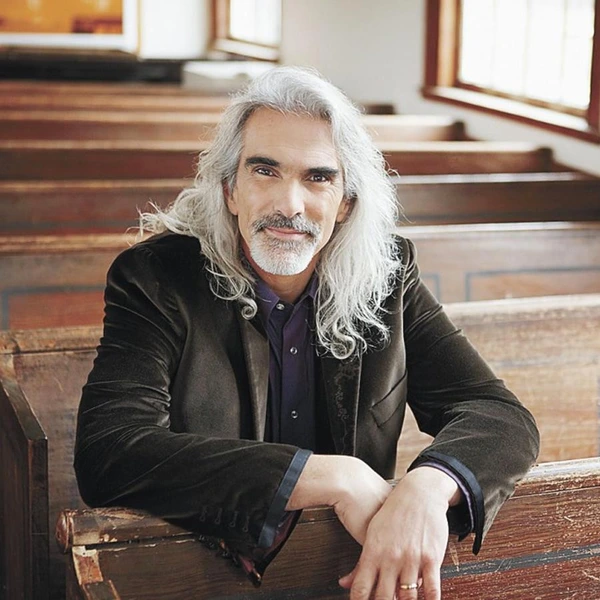
Then there is Guy Penrod, whose deep, warm voice carries an entirely different character. Penrod has always sounded grounded, reassuring, and wonderfully human. There is something in his delivery that recalls church pews, Sunday gatherings, family conversations, and the comforting traditions many listeners grew up knowing. His voice does not need to chase attention. It commands it naturally through honesty and presence. When Penrod sings about hope, perseverance, or grace, the message often feels less like a performance and more like wisdom passed from one generation to another.
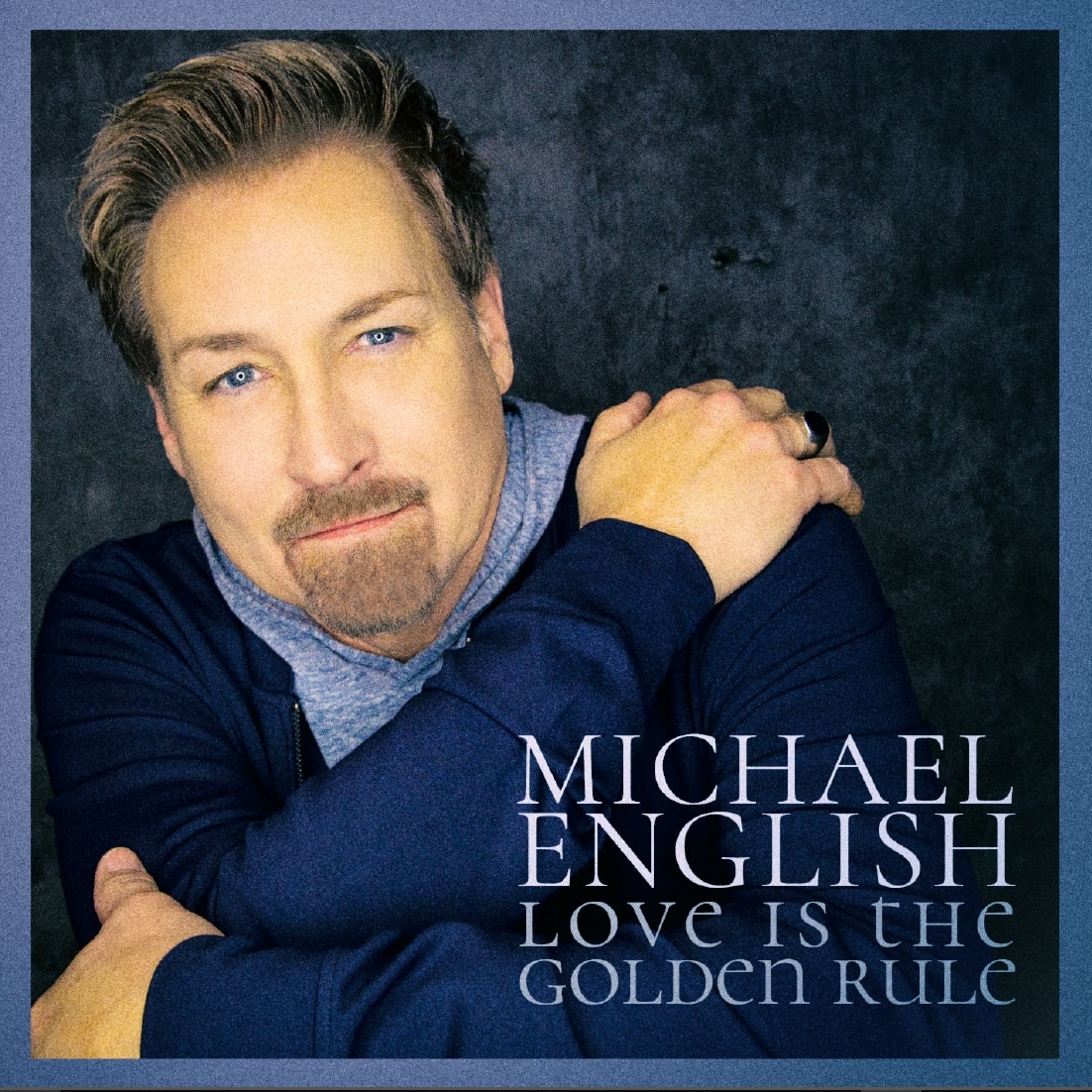
Michael English, meanwhile, has always brought a deeply expressive quality to gospel music. His voice can carry tenderness and strength within the same phrase, giving songs a sense of personal testimony. There is often an unmistakable vulnerability in his singing—the feeling that the words have been lived before they have been sung. That emotional openness is one reason so many listeners have remained connected to his music across the decades. He reminds us that gospel music has never been only about flawless notes. At its best, it is about truth.
Together, these three voices represent something larger than individual careers. They remind listeners of a period when gospel concerts could feel like family reunions, when a familiar melody could bring back the faces of parents and grandparents, and when hearing an old hymn was enough to make years of distance disappear for a few precious minutes.
Perhaps that is why their music continues to resonate so strongly with older audiences. The songs are tied not merely to recordings, but to lives. They recall weddings, Sunday mornings, long automobile journeys, difficult seasons, answered prayers, and loved ones who once sang along beside us. Music becomes a kind of emotional geography, and the voices of David Phelps, Guy Penrod, and Michael English have become landmarks within it.
Their greatest achievement may not be measured only in vocal range, awards, albums, or applause. It may be found in the quiet recognition that occurs when the first few notes begin and someone thinks, I remember this.
That feeling is the heart of “THREE VOICES, ONE HOME.”
Because no matter how different their voices may be, David Phelps, Guy Penrod, and Michael English have repeatedly accomplished the same rare thing: they have taken listeners beyond the stage, beyond the spotlight, and beyond the performance itself.
They have led us back to the places we came from, the people we still carry with us, and the faith and memories that time cannot easily erase.
And in a world that changes faster every year, perhaps that is why these voices still matter so much.
They remind us that sometimes, home is not a place at all—it is a song we never forgot.