Introduction
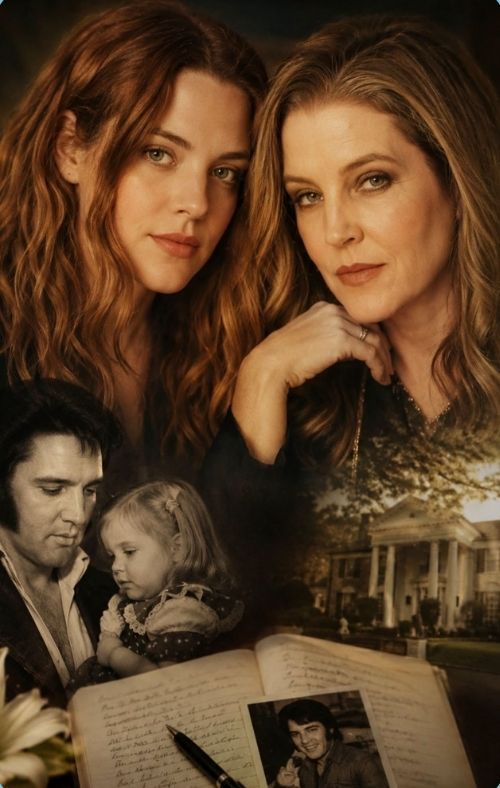
There are some voices a family expects never to hear again.
And then, one day, someone presses “play.”
For Riley Keough, the recordings left behind by her mother were more than material for a book. They carried the unmistakable voice of Lisa Marie Presley — thoughtful, wounded, humorous, complicated, and determined to tell her own story after spending a lifetime beneath one of the largest shadows in American popular culture.
That is what makes Riley Keough Opened Lisa Marie’s Final Recordings—and Heard the Presley Family Truth the World Was Never Meant to Know such a powerful idea. The reality was not a hidden conspiracy or a secret vault of scandal. It was something more human: a daughter listening carefully enough to allow her mother to be heard as a person rather than merely as the daughter of Elvis Presley.
Lisa Marie had begun working on a memoir before her death in January 2023. Afterward, Riley took on the difficult responsibility of completing it. The result, From Here to the Great Unknown, was published in 2024 and drew extensively from recordings Lisa Marie had made while working on the project. Riley later described finishing the memoir as something she felt a duty to do.
Imagine the emotional weight of that task.
Riley was not simply organizing dates, checking memories, or arranging chapters. She was listening to her mother’s voice return through headphones and speakers — sometimes discussing childhood, sometimes Graceland, sometimes Elvis, sometimes motherhood, addiction, grief, fame, and the extraordinary burden of belonging to a family the entire world believed it already understood.
Yet the Presley story has always contained two histories.
There is the public history: the gates of Graceland, the gold records, the screaming audiences, the photographs, the jumpsuits, the television appearances and the mythology of the King.
Then there is the family history.
That history happened when the cameras were gone.
Lisa Marie was only nine years old when Elvis Presley died in August 1977. For millions, Elvis became permanently frozen in memory as a cultural giant. For Lisa Marie, however, he remained her father — a man connected to childhood rooms, private conversations and memories that could never belong completely to the public.
That distinction gives the memoir much of its emotional force.
Riley’s role was not to make the Presley legend larger. If anything, she helped make it smaller, closer and more recognizable. Behind the extraordinary surname were people experiencing the same things ordinary families fear: separation, mistakes, dependency, parenthood, regret and devastating loss.
One of the darkest chapters involved Riley’s brother Benjamin Keough, who died in 2020. Riley has spoken about how profoundly his death affected Lisa Marie, describing a mother who never truly recovered from losing her son.
Lisa Marie’s own struggles with addiction were also addressed with unusual candor in the memoir. Rather than presenting them simply as sensational celebrity revelations, the book places them within a larger story about pain, survival and the ways grief can reshape a person’s life.
Perhaps that is the real “Presley family truth.”
Not that one explosive secret had been concealed from the world.
But that fame never protected this family from sorrow.
Money could not prevent loss. Graceland could not preserve childhood forever. A legendary surname could not make grief easier. And being Elvis Presley’s daughter did not spare Lisa Marie from having to discover who she was beyond her father’s enormous legacy.
For Riley, completing the memoir became an unusual act of preservation.
She could not bring her mother back.
But she could prevent her voice from disappearing.
And there is something profoundly moving about picturing Riley alone with those recordings, hearing a laugh, a pause, a familiar expression — perhaps moments when Lisa Marie sounded not like an icon’s daughter, but simply like Mom.
In the end, From Here to the Great Unknown does something celebrity mythology rarely allows.
It lets the famous become human again.
And after decades in which the Presley name has been examined, celebrated and endlessly discussed, perhaps the most revealing thing Riley Keough gave the public was not another legend.
It was her mother’s voice.