Introduction
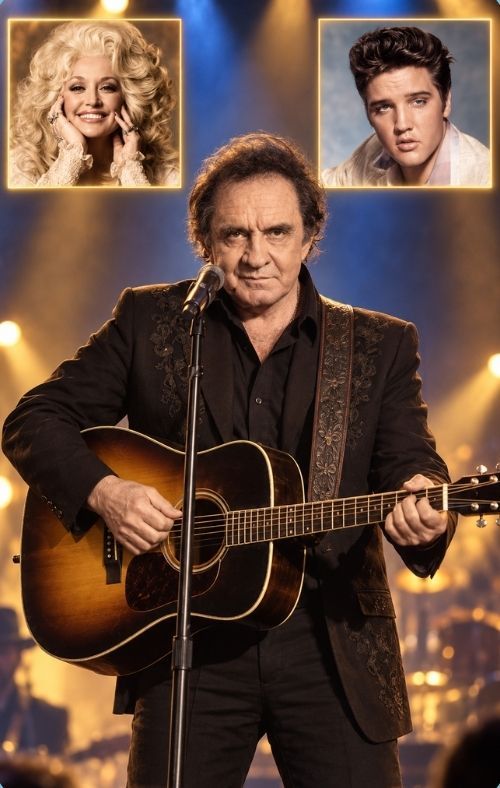
The friendship and mutual respect between Johnny Cash and Elvis Presley belonged to a remarkable chapter in American music. Both men emerged from the South, both recorded at the legendary Sun Studio in Memphis, and both carried the sounds of church, family, hardship, and ordinary working people into a rapidly changing world. Yet when Johnny Cash called Elvis “untouchable,” the description suggested something greater than popularity or stage presence. It pointed toward an extraordinary musical instinct—one that became especially powerful whenever Elvis returned to the gospel songs of his childhood.
JOHNNY CASH CALLED ELVIS “UNTOUCHABLE”—BUT THE GOSPEL TRUTH BEHIND THE KING GOES MUCH DEEPER.
Long before the gold records, Hollywood films, and crowded concert halls, Elvis Presley was listening to sacred music. Gospel was not a fashionable experiment he adopted after becoming famous. It was woven into his earliest understanding of melody, harmony, suffering, and hope. As a boy, he attended church with his parents, Vernon and Gladys Presley, absorbing the emotional force of congregational singing. He also listened closely to Southern gospel quartets, whose carefully blended voices would influence his musical imagination for the rest of his life.
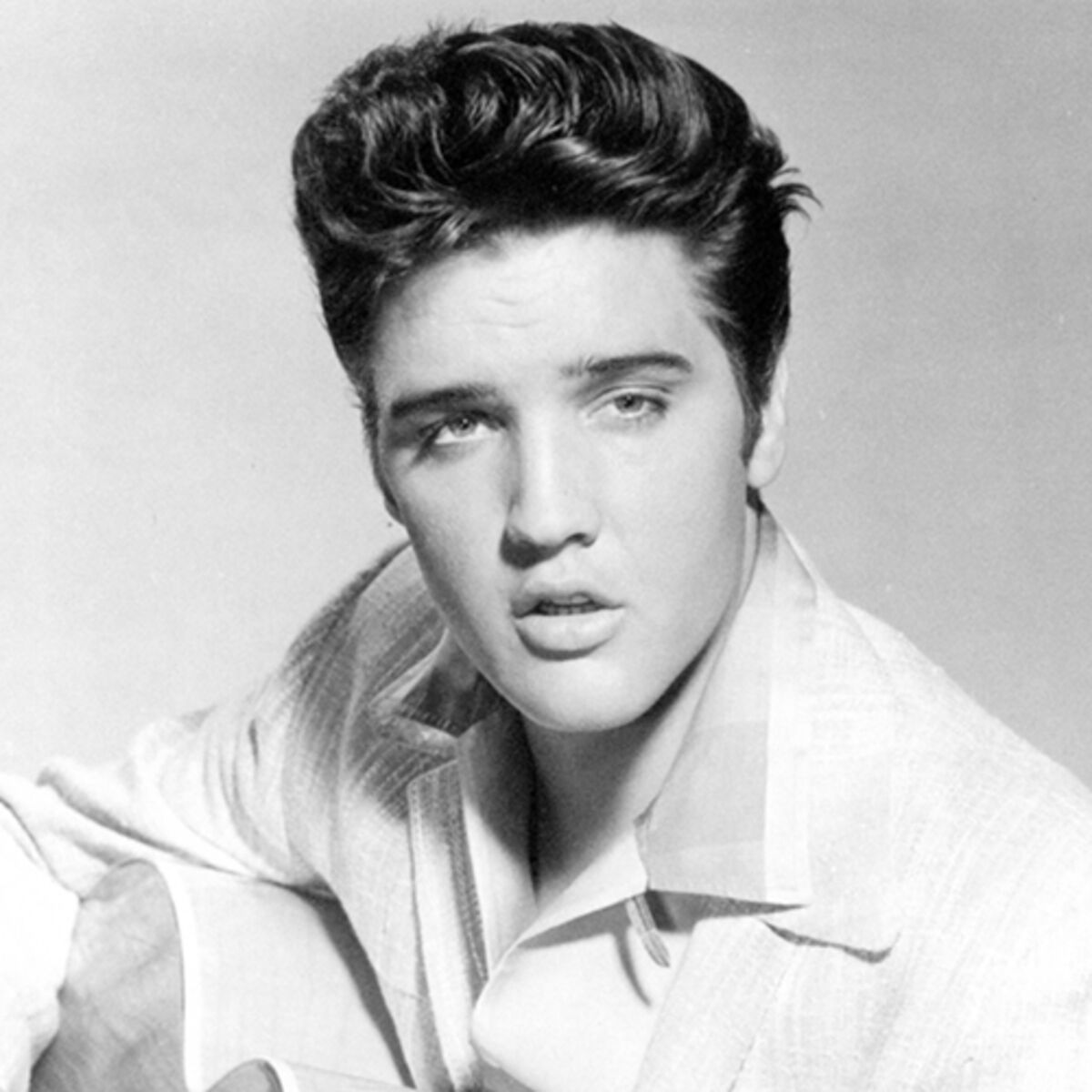
That background helps explain why Elvis often appeared most sincere when singing songs such as “How Great Thou Art,” “Peace in the Valley,” “Where Could I Go but to the Lord,” and “You’ll Never Walk Alone.” In these performances, the celebrated entertainer seemed to step away from his public image. His delivery became less concerned with spectacle and more focused on reassurance, humility, and spiritual longing. The famous voice remained, but its purpose changed. He was no longer simply commanding an audience; he appeared to be searching for peace alongside them.
Johnny Cash understood that spiritual foundation because he carried a similar inheritance. Cash’s own music repeatedly returned to faith, judgment, redemption, and human weakness. He knew that gospel could not be convincingly performed through technique alone. A singer had to bring personal history into every line. Perhaps that was why he recognized something unusual in Elvis: beneath the celebrity stood a deeply intuitive vocalist who understood how sacred music could comfort people without pretending that life was easy.
The contrast between the two men was fascinating. Cash often sounded like a weathered preacher delivering a warning from a darkened doorway. Elvis could sound like a wounded believer reaching upward for light. Their voices were different, but the emotional territory they explored was closely connected. Both understood loneliness. Both knew the pressures of fame. Both were drawn repeatedly toward songs promising mercy when earthly success could provide no lasting rest.

Elvis’s gospel achievements were also substantial. His recordings in the genre earned major recognition, including Grammy Awards, even though many listeners primarily remembered him for his popular hits. This distinction matters because gospel music was not a minor corner of his career. It was among the clearest expressions of his artistic identity.
To call Elvis Presley “untouchable” is therefore not merely to praise his fame. It is to recognize an emotional gift that few singers have possessed. He could make a familiar hymn sound like a private confession and transform a crowded room into something resembling a small Southern church.
The deeper truth behind the King was never found only in the dazzling costumes, the screaming crowds, or the record-breaking success. It could be heard when the lights softened, the musicians gathered close, and Elvis sang about grace. In those moments, the legend briefly disappeared—and the faithful boy from Tupelo could still be heard.