Introduction
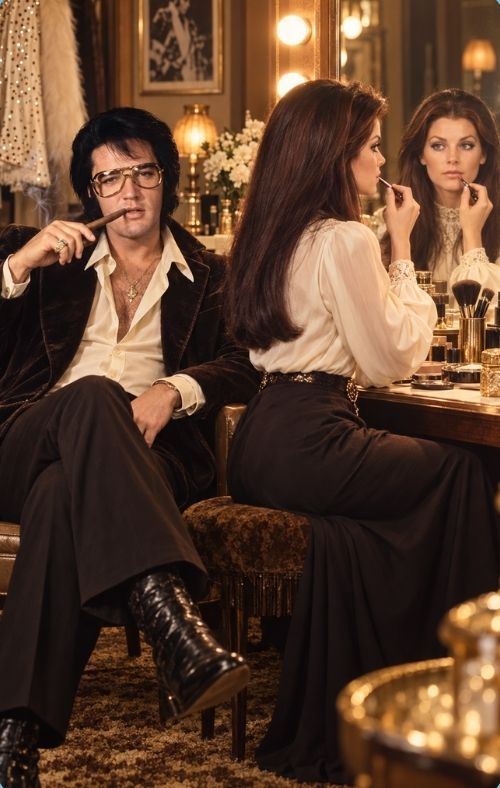
Elvis Presley had a voice that could make a crowded room feel intimate. He could turn a familiar lyric into a confession, then step offstage to applause that seemed endless. Yet the question raised by his later years is painfully ordinary: what happens when a person comes home after a life together has changed?
Elvis and Priscilla Presley separated in the early 1970s, and their divorce was granted in 1973. They remained close friends and shared a continuing bond through their daughter, Lisa Marie. Those facts matter because their story did not end with a clean break or a simple explanation for everything that followed. Elvis kept performing, recording, and drawing devoted audiences. His career still had moments of remarkable energy, even as his private life changed. Graceland’s historical timeline records both the divorce and the work he continued during those years.
That is the more compelling way to look inside Graceland. The house had long stood for what Elvis had achieved: security for his family, a place to welcome friends, and a home in Memphis to return to after another journey. Following the end of his marriage, it also held reminders of a family life that could no longer take quite the same shape. We cannot know what every quiet hour there felt like to him. But anyone who has lived through a separation will recognize how familiar rooms can acquire a different meaning.
The music offers another way into that experience, provided we listen carefully. Elvis had always understood the power of longing in a song. In his hands, a sustained note or a slight pause could carry more feeling than an elaborate arrangement. Later performances often invite listeners to hear the man behind the famous voice. That response is real for an audience, though it cannot tell us exactly what Elvis was thinking when he sang. A song may express grief beautifully without serving as a diary entry.
It is tempting to describe a hidden secret in the mansion or to make one person’s departure the answer to every question about Elvis’s final years. His life was more complicated than that. The available history tells us that Priscilla remained his friend, that Lisa Marie continued to spend time with him, and that music remained central to his work. It does not establish the private meaning of a photograph or confirm the late-night walks sometimes described in dramatic retellings.
Perhaps the most moving truth needs no such detail. Elvis Presley could command a stage and still face the changes that fame cannot prevent. When we revisit the songs from those years, we hear an artist whose gift for expressing yearning never deserted him. And when the record ends, the silence asks us to remember him as a father, a former husband, and a man whose home carried memories as enduring as his music.