Introduction
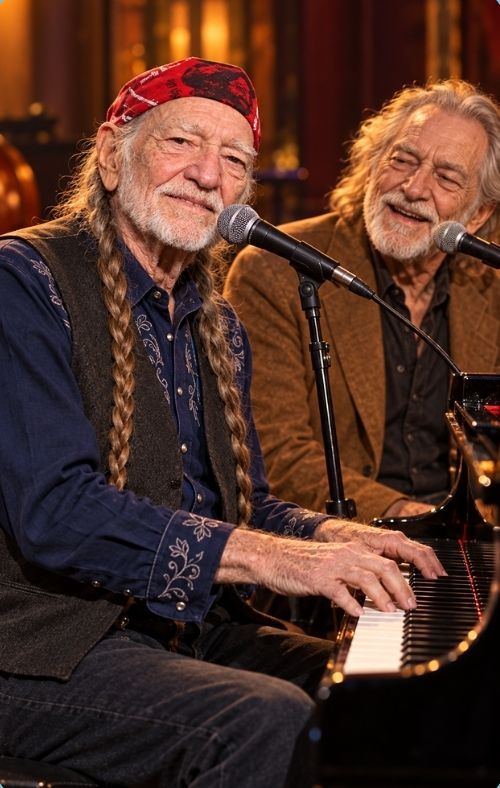
Some songs entertain us for a few minutes. Others leave behind a silence that seems to belong to the music itself. “Seven Spanish Angels,” the celebrated recording by Willie Nelson and Ray Charles, belongs to that second category. It tells a tragic story with remarkable economy, yet its emotional reach extends far beyond the events described. Beneath its dramatic setting lies a familiar human question: what do we hold on to when hope begins to disappear?
For listeners who appreciate country music’s gift for storytelling, this recording offers something especially memorable. The song unfolds like a miniature Western, bringing together danger, devotion, prayer, and loss. Its central characters face an approaching threat, and their final moments give the narrative its heartbreaking force. However, the lyrics leave much of their history unexplained. We are invited into a decisive moment rather than given a complete account of their lives. That restraint allows the imagination to do some of the work, making the story feel larger than its few verses.
Willie Nelson is particularly effective in a song that requires feeling without theatrical excess. His distinctive phrasing has always suggested a man thinking through the words as he sings them. He can linger over a phrase, enter gently, or allow a small pause to carry the weight another singer might place on a powerful note. In “Seven Spanish Angels,” that conversational quality brings the distant, almost legendary story close to the listener.
Ray Charles adds another dimension. His voice carries the expressive depth of gospel and soul, giving the recording both warmth and solemnity. There is strength in his delivery, but also an unmistakable vulnerability. Together, the two singers create a compelling balance: Nelson’s weathered intimacy meets Charles’s deeply felt emotional authority. Their different musical backgrounds become part of the song’s richness, demonstrating how naturally country, soul, and gospel can speak to one another.
The chorus provides the recording’s most striking image. Its angels and heavenly gathering lift the story beyond the earthly confrontation, suggesting a spiritual response to human suffering. Listeners may hear consolation in that passage, while others may feel its sorrow more strongly. The song leaves room for both reactions. Its religious imagery offers a sense of welcome and release without removing the tragedy of what has happened.

The arrangement supports this movement between tension and reassurance. The measured pace gives the narrative room to breathe, while the backing voices lend the chorus a communal quality. What begins as the desperate experience of two people gradually takes on the sound of a lament shared by many. The music never needs to hurry toward its emotional conclusion; the voices and the story provide all the momentum it requires.
For older listeners, “Seven Spanish Angels” may recall an era when a recording could command attention through a clear melody, distinctive voices, and a carefully shaped narrative. Yet its appeal does not depend on nostalgia. It remains moving because it treats its characters’ fear and devotion with seriousness.
Ultimately, Willie Nelson and Ray Charles make this song feel both intimate and expansive. The story is brief, but the questions it raises about love, mortality, and mercy linger. When the final notes fade, we are left with the extraordinary power of two unmistakable voices making a sorrowful tale feel profoundly human.