Introduction
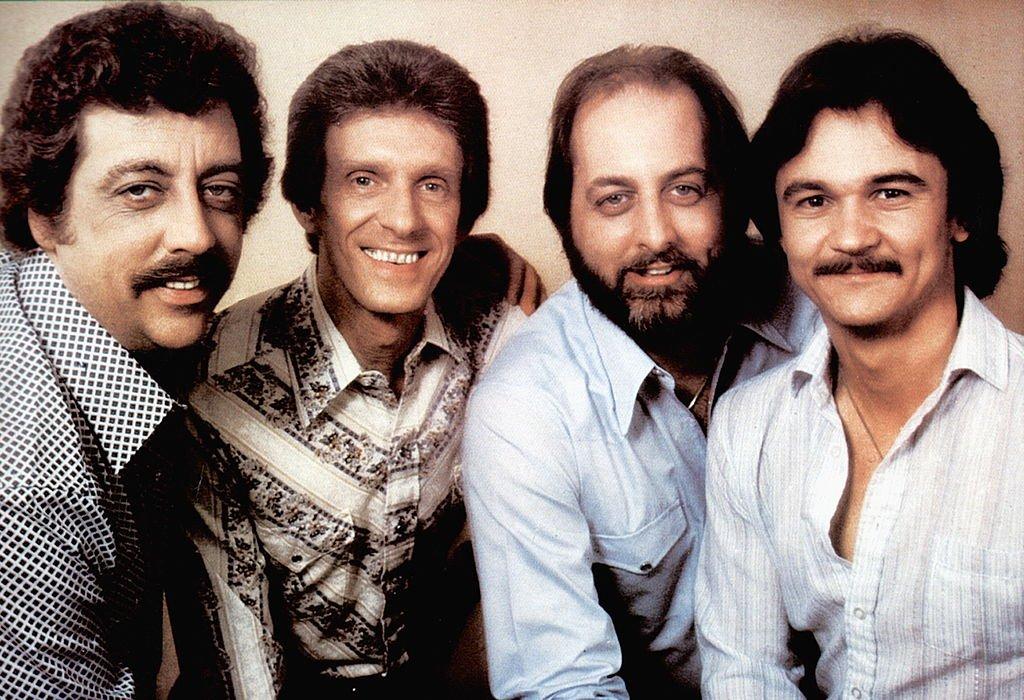
There are farewell concerts, and then there are moments that become part of country music memory forever. On October 26, 2002, inside the Salem Civic Center, Virginia, The Statler Brothers stood before thousands of devoted fans and did something many artists promise but few truly mean: they said goodbye. No long comeback campaign. No endless farewell tour stretched across decades. No dramatic return designed to rewrite the ending. When The Statler Brothers closed that chapter, they left behind a silence that country music still has not quite filled.
For older listeners who grew up with their records, their television appearances, their gospel warmth, and their unmistakable blend, the phrase “24 years cannot erase that haunting harmony” feels painfully true. The Statlers were never just another vocal group. They were a sound — a brotherhood in song, even though none of them were actually named Statler. Their name famously came from a tissue box in a hotel room, but their music came from something much deeper: small-town roots, church-trained discipline, gentle humor, and an almost sacred understanding of how four voices could become one.
Before they became legends in their own right, Johnny Cash gave them a chance in 1964, bringing them into his world and placing them before audiences who quickly understood that something rare had arrived. Their years with Cash helped shape them, but the Statlers did not remain in anyone’s shadow. They built their own legacy with songs like “Flowers on the Wall,” “Class of ’57,” and “Elizabeth,” each one carrying a different kind of emotional truth. Some songs were clever. Some were nostalgic. Some felt like letters written to the past. But all of them bore the unmistakable mark of The Statler Brothers.
Their achievements tell part of the story: 3 Grammys, 9 CMA Vocal Group of the Year honors, induction into the Country Music Hall of Fame and the Gospel Music Hall of Fame. Yet awards alone cannot explain why their music still moves people. The real reason is simpler and harder to duplicate. Their harmony sounded lived-in. It carried years of shared stages, shared jokes, shared grief, shared faith, and shared timing. You cannot manufacture that with technology. You cannot rush it in a studio. You cannot copy it with polish alone.
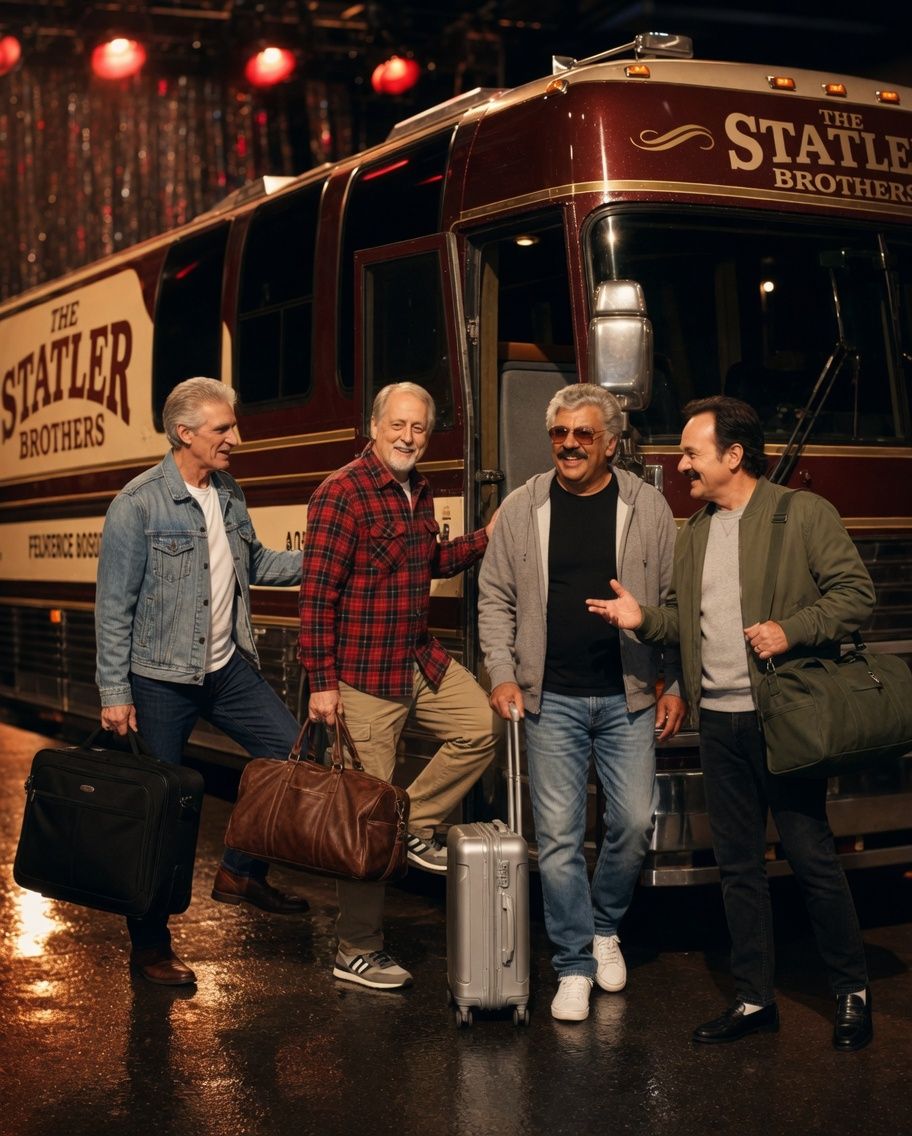
Today, with Harold Reid and Lew DeWitt gone, that original sound feels even more precious. The recordings remain, but the living chemistry can never be rebuilt exactly as it was. That is why the Statlers’ farewell still carries such emotional weight. It was not merely the end of a career. It was the closing of a door on a kind of country music that valued patience, character, humility, and human voices blending without shortcuts.
The Statler Brothers remind us that true harmony is not just musical. It is personal. It is spiritual. It is the result of time, trust, and devotion. And that is why, 24 years later, country music may have many talented groups — but none sound quite like four boys from a Virginia church choir who became, and remain, irreplaceable.