Introduction
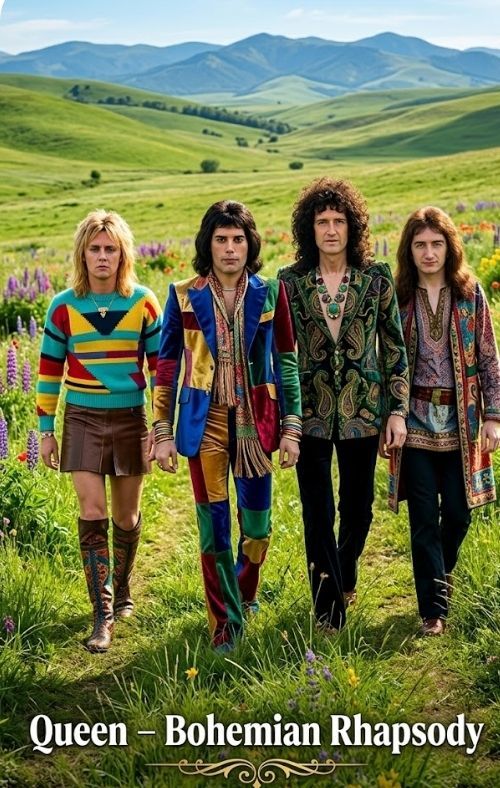
There are songs that become popular, songs that define an era, and then there are songs that seem to rise above time itself. Queen – Bohemian Rhapsody belongs to that rarest category. It is not simply a hit record, nor is it merely one of rock music’s most recognizable performances. It is a piece of musical imagination so bold, so emotionally layered, and so fearlessly unconventional that even decades later, it still sounds like nothing else in the world. For listeners who have lived through generations of changing music, that is perhaps the highest praise one can give: it has never faded into the background.
From the very first piano notes, Queen – Bohemian Rhapsody announces itself with a kind of quiet gravity. There is mystery in its opening, tenderness in its confession, and a dramatic weight that immediately asks the listener to lean in closer. Freddie Mercury does not simply sing the song; he inhabits it. His voice moves through doubt, sorrow, theatrical grandeur, and defiance with astonishing control. What makes the performance so unforgettable is not just its technical brilliance, but its emotional sincerity. Even when the lyrics feel abstract or elusive, the feeling behind them is unmistakably human.

That is one of the song’s greatest achievements. It does not explain itself in plain terms, and yet it connects with millions of people on a deeply personal level. Some hear heartbreak in it. Others hear guilt, fear, or the struggle of becoming oneself in a world that demands conformity. Many listeners, especially those who return to it over the years, discover that the song changes as they change. What may have sounded dramatic and fascinating in youth can feel haunting and profound later in life. That is the mark of enduring art: it grows alongside the listener.
Musically, the ambition of Queen – Bohemian Rhapsody remains breathtaking. It refuses to stay in one category. It begins like a ballad, opens into something operatic, then explodes into hard rock before settling into a reflective conclusion. On paper, that structure may sound impossible, even risky. In execution, it feels seamless. Queen did not approach music with small ideas, and this song may be the clearest proof of that. It is the sound of a band trusting imagination more than formula. Rather than asking what audiences expected, they asked what the song itself demanded.
And what the song demanded was courage. There is no shortcut in a composition like this. Every section must earn its place. Every vocal layer, every guitar phrase, every dramatic pause must contribute to the whole. Brian May’s guitar work gives the piece both elegance and force, while Roger Taylor and John Deacon provide the rhythmic foundation that allows the song to shift moods without losing its center. Yet the true miracle is how all four members serve the vision together. This is not chaos disguised as ambition. It is discipline dressed in drama.
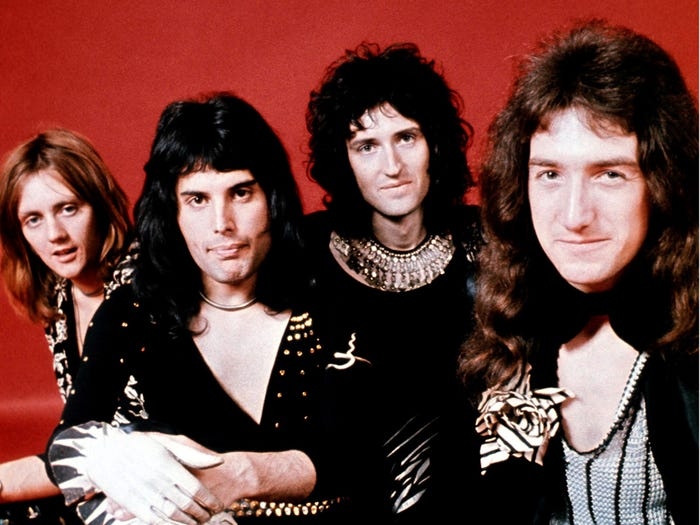
For older and more seasoned listeners, the power of Queen – Bohemian Rhapsody may rest not only in its grandeur, but in its refusal to be ordinary. It reminds us of a time when artists took great risks, when songs were allowed to be strange, theatrical, complicated, and unapologetically original. It stands as a reminder that greatness does not come from playing it safe. It comes from trusting that honesty, craft, and imagination can meet in one unforgettable moment.
That is why Queen – Bohemian Rhapsody still matters. It is not preserved merely by nostalgia, but by merit. It continues to move people because it contains something deeper than trend or spectacle. It carries longing, tension, beauty, and release. It sounds like the inside of a restless mind turned into music. And perhaps that is why generations keep returning to it. In a world full of songs that ask only for a few minutes of attention, this one still asks for wonder—and receives it.