Introduction
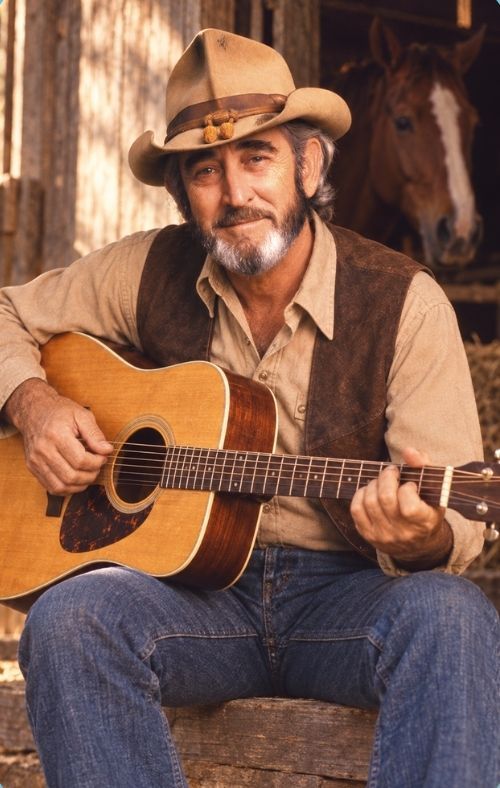
Some country songs announce themselves with a flourish. Others enter quietly, settle beside us, and reveal their meaning only when we have lived long enough to understand them. Don Williams – “Amanda” belongs to that second, deeply enduring tradition. It is a song whose emotional weight comes from its restraint, inviting us to listen closely to a man considering the distance between the life he has lived and the life he believes someone he loves deserved.
For listeners who remember the country music of the early 1970s, Williams’s voice carries a familiar reassurance. His warm baritone never seems hurried. He allows a melody to unfold with the patience of someone who knows that a sincere thought needs room to breathe. In “Amanda,” that quality becomes especially moving. His delivery suggests a private admission, offered carefully because the feelings behind it matter too much to dress up.
Written by Bob McDill, the song places affection beside self-doubt. Its narrator recognizes the passing years and looks at himself with an honesty that is neither flattering nor theatrical. He wonders whether the woman beside him should have had a more comfortable, more distinguished life. That uncertainty gives the song its central ache: the fear that being loved faithfully does not necessarily mean we have given enough in return.
What makes Williams’s interpretation so compelling is the dignity he grants that fear. He does not turn the narrator into an object of pity. Instead, he lets us hear a person who remains grateful, even while questioning his own worth. There is tenderness in that balance, and a maturity that many listeners will recognize from their own experience. Long companionship can deepen our appreciation of another person while making us more aware of our shortcomings.
The musical setting leaves space for these feelings to emerge. The melody is gentle and memorable, and the accompaniment supports the vocal without crowding it. Williams’s measured phrasing keeps the performance grounded. A small hesitation or softly settled note can carry the emotional force that a louder singer might seek through a dramatic climax. Listening becomes an act of attention: we lean closer because he gives us something worth hearing.
Older listeners may find that “Amanda” changes with them. Heard in youth, it can seem like a beautiful country ballad. Heard after decades of work, family responsibilities, disappointments, and unexpected kindness, it can feel far more personal. The narrator’s concern becomes recognizable as the question many people eventually ask themselves: Have I done enough for the person who stayed beside me?
There is no easy answer, and the song gains strength by leaving that uncertainty intact. Its tenderness comes from the willingness to ask. Williams makes the reflection feel human, allowing gratitude and regret to occupy the same quiet space.
That is why Don Williams remains such a rewarding artist to revisit. His singing trusts the listener’s experience. And in “Amanda,” he offers a lasting reminder that some of country music’s deepest emotions arrive in an unassuming voice, carrying words we may need a lifetime to fully understand.