Introduction
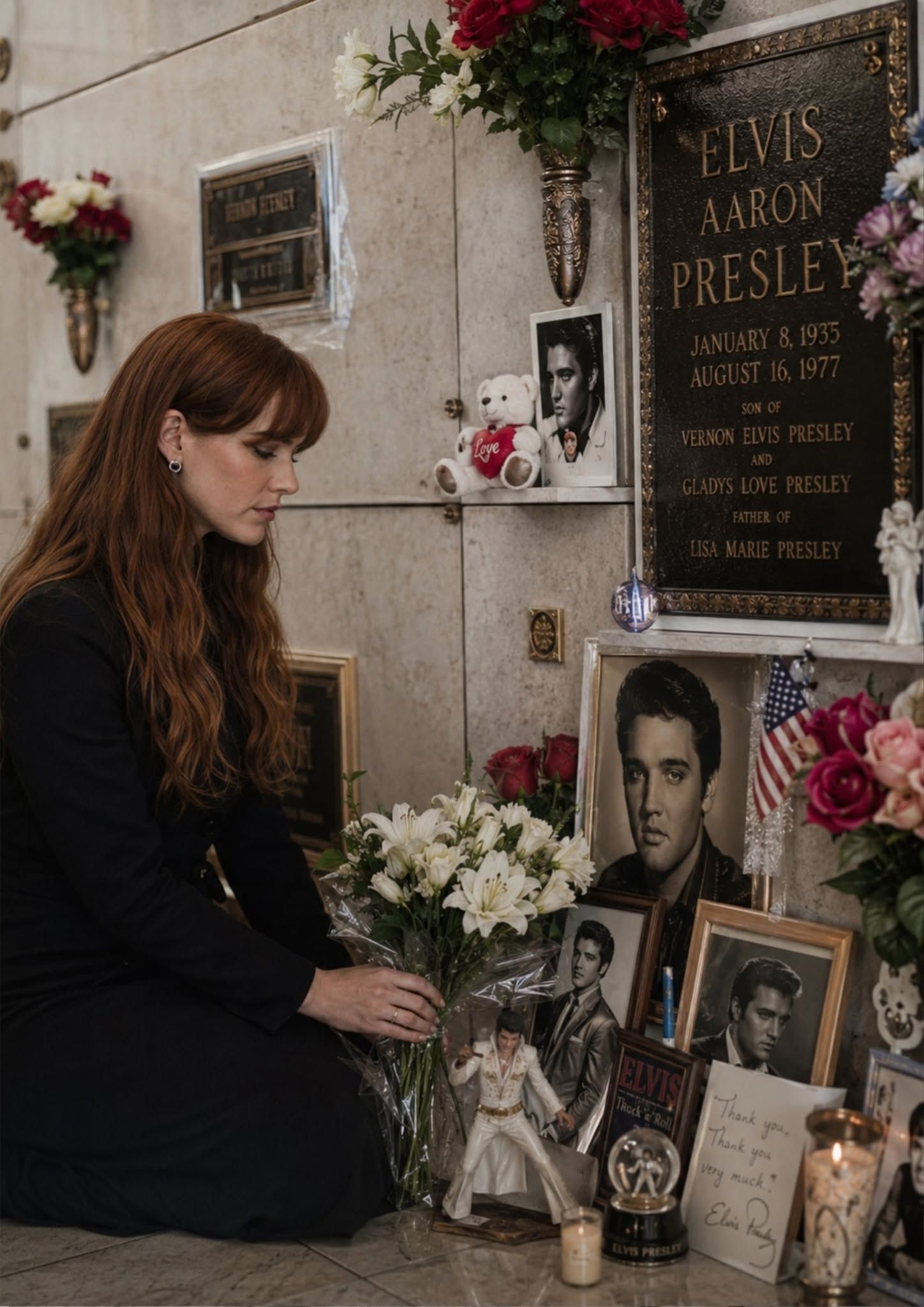
THE FILM RILEY KEOUGH COULD WATCH BUT NEVER ENTER was not merely another major Hollywood production to Elvis Presley’s granddaughter. For audiences around the world, Baz Luhrmann’s Elvis offered a dazzling passage through one of the most extraordinary careers in modern music: the electrifying performances, the cultural upheaval, the unforgettable voice, and the complicated machinery that surrounded a young man who became an American legend. For Riley Keough, however, the film was never just about the rise and fall of the King of Rock and Roll. It reached into the private history of her own family—a history shaped not only by triumph, but also by absence, grief, expectation, and wounds carried quietly from one generation to the next.
Keough, an accomplished actress and filmmaker in her own right, explained that she did not wish to appear in the film because the subject felt too close to her family. She spoke openly about the family trauma and generational trauma connected to Elvis Presley’s story, acknowledging that participating as a performer would have required her to step inside experiences that were already deeply personal. She was nevertheless moved by the film and reportedly watched it with her mother, Lisa Marie Presley, and her grandmother, Priscilla Presley. The experience brought her to tears, even as she expressed admiration for the care and respect with which Luhrmann approached the Presley family’s history.
That distinction is important. Riley’s decision was not a rejection of Elvis, his music, or the people who worked to honor his memory. Instead, it revealed something profound about the difference between public history and private inheritance. An actor can study Elvis Presley’s movements, listen closely to his recordings, examine his interviews, and reproduce the energy that once caused entire audiences to erupt. Yet a family member carries something no script can fully contain: the consequences of what happened after the applause ended.
Elvis Presley remains one of the most influential performers America has ever produced. His voice helped reshape popular music, while his image became recognizable across generations and national borders. But within the Presley family, Elvis was more than a symbol. He was a father whose daughter, Lisa Marie, was only nine years old when he died. He was the grandfather Riley never personally met, yet whose presence remained woven through Graceland, family memories, newspaper headlines, and the expectations placed upon his descendants. Riley later recalled how her mother continued to struggle with the loss of Elvis and how difficult it had been for Lisa Marie to process such an overwhelming childhood tragedy.
This is why Elvis Presley’s family pain was too personal for Hollywood to completely possess. Cinema can recreate the stage lights, the screaming crowds, the rhinestone suits, the recording sessions, and the lonely corridors behind the performance. It can offer interpretation, sympathy, and extraordinary artistic beauty. What it cannot do is remove the emotional distance between the people watching the story and the family still living inside its consequences.
For Riley, appearing in the film might have blurred that necessary boundary. She would not simply have been playing a character in a historical drama; she would have been entering a reconstruction of the forces that helped shape her mother’s life and, indirectly, her own. Her absence therefore became meaningful. It represented a quiet act of self-protection and an acknowledgment that not every family memory should be transformed into a performance.
Riley Keough’s decision not to appear in Baz Luhrmann’s Elvis speaks louder than any performance could have. She watched the film, recognized the love behind it, and respected the artists who brought her grandfather’s story back to the screen. Yet she also understood that there are places an actress may visit professionally and places a granddaughter must approach with different care.
For the world, Elvis Presley will forever be the performer whose music changed America. For Riley Keough, he is part of a far more complicated inheritance—one filled with extraordinary achievement, cherished family connections, painful losses, and questions that fame can never answer. Her choice reminds us that some legacies are too painful to act out, even when they are presented with admiration, dignity, and remarkable cinematic care.
In the end, Riley did not need to appear in Elvis to become part of its emotional meaning. Her absence told its own story: Hollywood could build the stage, reproduce the music, and illuminate the legend, but only the Presley family understood what remained after the lights went dark.