Introduction
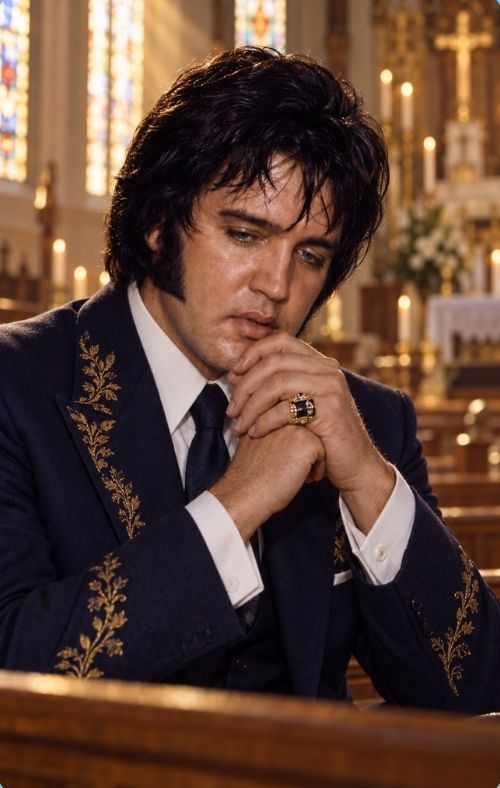
When Elvis Presley was discovered on that August morning in 1977, the world felt an unexplainable pause. The news seemed almost impossible to accept. A voice that had accompanied courtships, family celebrations, military departures, and changing generations had suddenly fallen silent. Millions mourned the celebrated performer, but behind the public grief was another, more intimate tragedy: the death of a vulnerable man who had carried extraordinary expectations for most of his adult life.
It was not only the loss of a voice that had shaped generations, but the quiet ending of a man who had carried more than any single life should have had to hold. Elvis had become famous at an age when most young men were still discovering who they wanted to be. Almost overnight, the shy boy from Tupelo was transformed into an international symbol. Every movement was examined, every appearance discussed, and every change in his life turned into public property.
The stage offered him purpose, yet it also demanded more than audiences could see. Beneath the bright costumes and commanding performances was a man living with increasing exhaustion and serious health difficulties. During his later years, the physical strain became more apparent. Nevertheless, Elvis continued preparing for concerts because performing was not simply his profession. It was one of the few places where he could still feel a direct connection with the people who had remained loyal to him.

Accounts of his final morning describe a painfully ordinary setting, far removed from spotlights and cheering crowds. A book was reportedly nearby, an appropriate detail for a man whose private intellectual and spiritual interests were often overshadowed by his public image. Elvis read widely, particularly about faith, philosophy, history, and the meaning of human existence. Reading gave his searching mind somewhere quiet to go when sleep would not come and the world outside Graceland felt too demanding.
In those final hours, far from the lights and the crowds, Elvis was alone with his thoughts. That image remains haunting precisely because it contains no grand theatrical farewell. There was no orchestra, no final curtain, and no carefully chosen last song. The performer who could command an arena with one note departed amid the routines of private life.
That contrast helps explain why the story continues to touch listeners nearly half a century later. Elvis was surrounded by assistants, relatives, musicians, and devoted admirers, yet fame could still be profoundly isolating. Being loved by millions did not necessarily mean being understood. Applause could fill a concert hall, but it could not automatically relieve physical pain, emotional weariness, or the burden of living inside an image that had grown larger than the person himself.
Elvis’s recordings reveal the human being beneath that image. Listen carefully to “If I Can Dream,” “American Trilogy,” “You Gave Me a Mountain,” or his deeply affecting performance of “Unchained Melody.” The attraction is not merely vocal power. It is the impression that he understood longing, faith, disappointment, and the need for redemption. Even when his health was failing, his finest performances retained an emotional honesty that technical perfection alone could never create.

A man who could ignite stadiums with a single note left this world in silence. Yet silence was not the end of his influence. His voice continued traveling through homes, churches, radios, films, and family record collections. Parents introduced him to their children, and those children eventually played the same songs for another generation. The music survived because it carried something more enduring than fashion: recognizable human feeling.
Behind the famous jumpsuits and the title of “King” remained the same boy from Tupelo—sensitive, curious, generous, and vulnerable. He remembered poverty, loved gospel music, valued his family, and searched throughout his life for spiritual reassurance. His generosity could be spontaneous and extravagant, but it often came from genuine compassion for people whose struggles reminded him of his own beginnings.
The saddest mistake would be to remember Elvis only through the circumstances of his death. His final chapter deserves honesty, but it should not erase the young singer who changed popular music, the soldier who grieved for his mother, the father who adored his daughter, or the mature performer still reaching for one more meaningful song.
He was never just a legend. He was a man who loved, struggled, searched, and gave until there was nothing left to give. Perhaps this is why Elvis Presley remains so deeply present in the world’s memory. We do not continue listening because he appeared untouchable. We listen because, behind one of the greatest voices of the twentieth century, we can still hear a fragile and unmistakably human heart.