Introduction
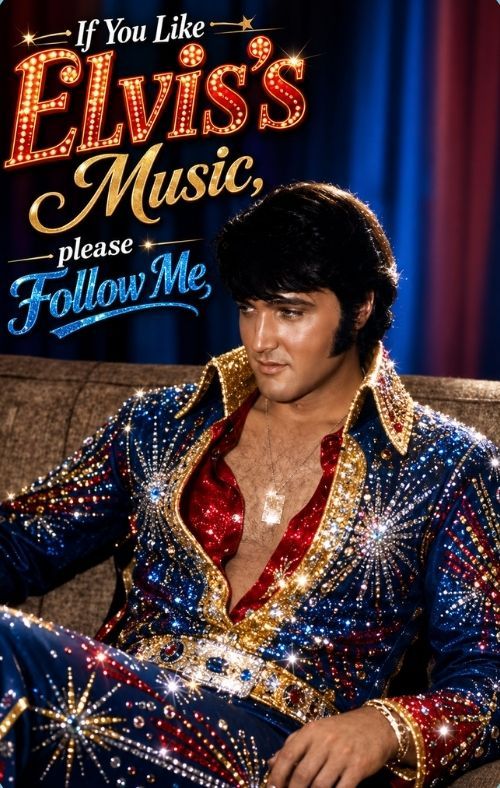
June 26th, 1977. Market Square Arena, Indianapolis. The house lights faded, the audience rose, and thousands of voices joined in a roar for a man whose name had already become inseparable from American popular culture. Then Elvis Presley appeared beneath the stage lights. To those watching, it was another Elvis concert—another evening of familiar songs, dramatic gestures, scarves, applause, and memories carried from one generation into another. Yet history would give that night an entirely different meaning. Nobody in that arena knew they were watching Elvis Presley perform his final concert. Just 51 days later, on August 16, 1977, he would be gone.
That knowledge makes the Indianapolis performance difficult to watch today without feeling the weight of hindsight. Every smile seems more significant. Every pause lasts a little longer. Every moment of fatigue invites questions that the audience could not possibly have answered that evening. What they saw was the King of Rock and Roll doing what he had done for years: stepping before a crowd and attempting to give them the Elvis Presley they had traveled to see. What we see now is something more complicated—a legendary performer carrying an increasingly difficult physical burden while still trying to fulfill the expectations surrounding one of the most famous names in entertainment.
By 1977, Elvis had lived through an extraordinary transformation. The young singer who had startled America in the 1950s had become a movie star, a cultural phenomenon, a Las Vegas headliner, and one of the most recognizable human beings on earth. Then came the magnificent 1968 Comeback Special, where a lean, commanding Elvis reminded audiences why his talent had once seemed almost impossible to contain. But nearly a decade later, the circumstances were very different.

His schedule had become demanding. Touring meant repeated travel, unfamiliar rooms, late nights, rehearsals, press attention, and the enormous pressure of appearing before audiences who expected greatness every time the curtain opened. Colonel Tom Parker, Elvis’s longtime manager, had helped construct a touring operation in which performances remained central to the Presley business. The momentum rarely seemed to stop.
Meanwhile, Elvis’s health had become increasingly concerning. His appearance changed noticeably during his final years, and footage from 1977 presents a man who could sometimes appear tired and physically uncomfortable. He was only 42 years old, yet there were evenings when he seemed considerably older. Accounts of his final period have frequently discussed poor sleep, prescription medication, dietary problems, and several chronic health difficulties that placed increasing strain on him.
And yet this is where the story becomes far more moving than a simple account of decline.
When the music began, Elvis could still find something extraordinary inside himself.
There were moments during those final concerts when the familiar voice suddenly emerged with astonishing authority. The posture might have changed. His movement might have slowed. But the instinct remained. Decades of singing, performing, listening, and communicating with audiences had created something almost automatic. He knew how to shape a phrase. He understood when to hold a note and when to soften it. He knew how to make thousands of people feel that a familiar song belonged specifically to them.
That contradiction is what makes the final chapter of Elvis Presley’s career so haunting. The vulnerabilities were becoming increasingly visible, yet flashes of brilliance remained. The old fire had not completely disappeared. At moments, it returned with startling force.
Those surrounding Elvis also faced a painful reality. Musicians, friends, family members, employees, and associates could see that the man at the center of their world was struggling. Years later, several people who knew or worked with him would describe their concern. But Elvis was no ordinary employer or colleague. He was the center of an enormous cultural and financial universe. Speaking openly to someone of that stature—particularly about his health and lifestyle—was enormously difficult.
That may be one of the saddest lessons contained within the Elvis story. Fame can surround a person with people while simultaneously making genuine confrontation harder. Elvis Presley was surrounded, yet increasingly vulnerable. The very machinery created to support the superstar could not necessarily protect the man.
Then came Indianapolis.

On June 26th, 1977, fans entered Market Square Arena expecting entertainment, not history. Elvis performed familiar favorites, spoke to his audience, introduced people important to him, and completed the show. There was no grand announcement that an era was ending. There was no carefully prepared farewell speech. There was no final spotlight designed to tell the audience, Remember this moment.
That is precisely why the evening remains so powerful.
Elvis did not know with certainty that he was saying goodbye. Neither did the people cheering for him.
The concert simply ended.
The audience left.
The equipment was packed.
The touring party moved on.
And one of the most remarkable careers in American music had quietly given its final live performance.
Looking back almost half a century later, it is tempting to search the footage for warnings, clues, or some hidden acknowledgment in Elvis’s expression. But perhaps the deeper meaning lies elsewhere. His final concert reminds us that history rarely announces itself when it is happening. Ordinary moments become monumental only after we learn what came next.
For Elvis Presley, Indianapolis was not merely the final curtain. It was the last chapter in a relationship between performer and audience that had transformed popular music for more than two decades. Beneath the exhaustion and behind the famous jumpsuit stood a man who, despite everything weighing upon him, still walked toward the lights when his name was called.
And when those lights finally went down on June 26th, 1977, nobody understood that they had just witnessed the last live performance of Elvis Presley—the King of Rock and Roll.
Only history knew what that night would become.