Introduction
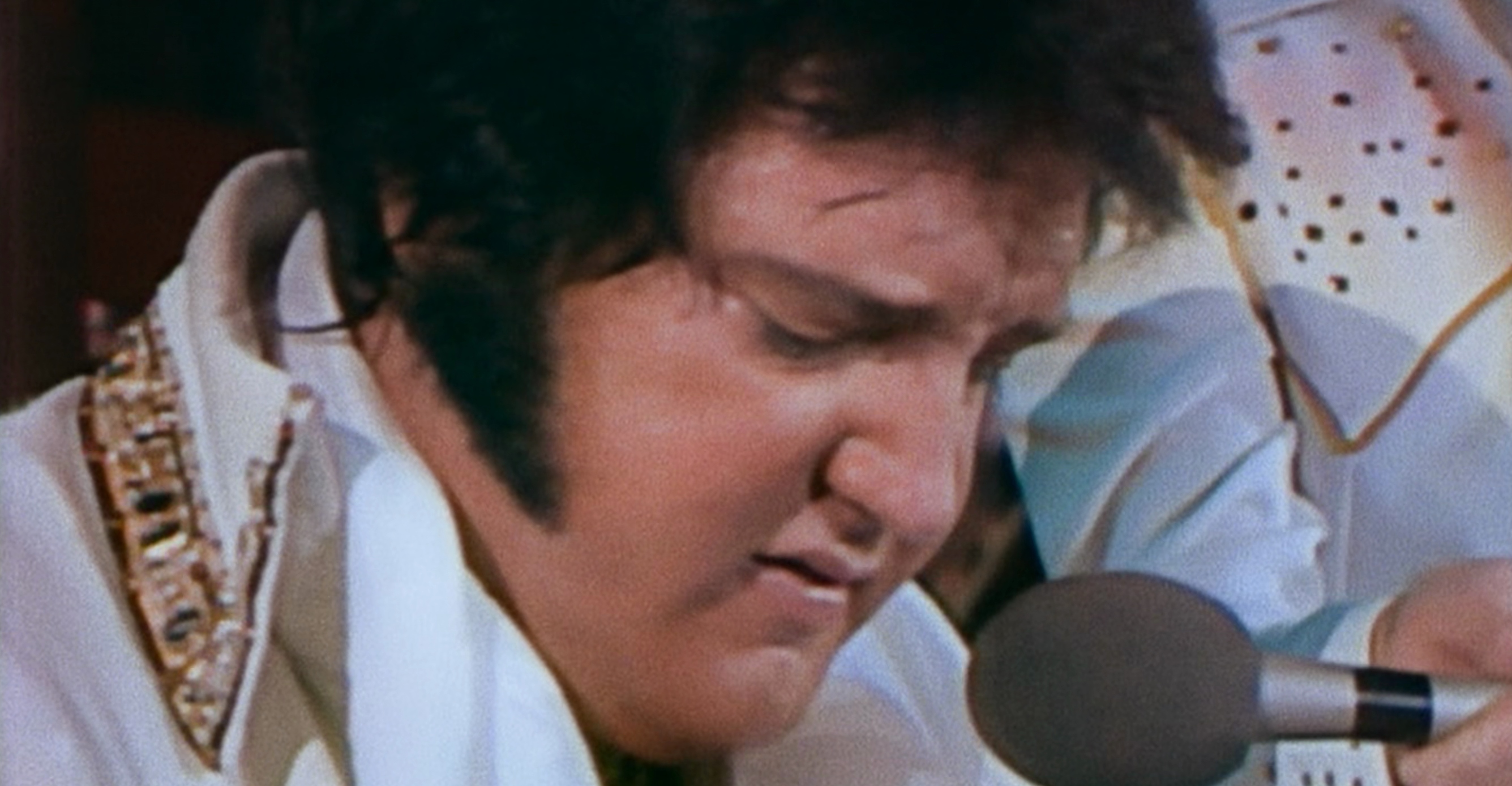
He was only 41. His health was failing. His performances were becoming increasingly difficult. Yet when the house lights dimmed and the familiar orchestral introduction filled the Las Vegas Hilton, Elvis Presley still stepped onto the stage. To the audience, he remained the King—a figure whose voice, presence, and legend seemed larger than ordinary human weakness. Behind that glittering image, however, was a man struggling beneath exhaustion, illness, medication, emotional strain, and the relentless demands of an entertainment machine that did not know how to stop.
During his final Las Vegas engagement in December 1976, Elvis performed a series of shows that now carry an unsettling historical weight. The city had once represented one of his greatest professional rebirths. When he returned to live performance there in 1969, he was energetic, focused, humorous, and vocally commanding. By late 1976, the difference was impossible to ignore. His movements had become slower. His concentration sometimes wandered. Certain songs appeared to demand more effort than they once had. Even so, flashes of the extraordinary performer remained.
That is what makes these final Las Vegas appearances so painful to revisit. Elvis was not simply a fading celebrity going through the motions. On some nights, his voice could still rise with astonishing power. A phrase, a gospel passage, or a deeply felt ballad could suddenly remind everyone why he had transformed popular music. Then the exhaustion would return, revealing how fragile the man behind the jeweled stage clothing had become.
Yet the lights came on, the band began playing, and Elvis walked onto the stage. He had been taught from an early age to fulfill his obligations. He understood that thousands of people had purchased tickets, traveled long distances, and waited for the opportunity to see him. Performing was not merely a profession; it had become central to his identity. The stage gave him love, purpose, and a temporary escape from the pressures surrounding him.
But it also trapped him.

The difficult question remains: Why didn’t anyone stop the King before it was too late? There is no single, simple answer. Elvis existed at the center of a complicated circle of business commitments, personal loyalties, medical problems, financial responsibilities, and public expectations. Many people depended upon him. Canceling performances could affect contracts, employees, musicians, venues, and future touring plans. Those around him may also have felt powerless to challenge a man whose fame had placed him beyond ordinary authority.
Some surely cared deeply for him. Yet caring for someone and knowing how to save them are not always the same thing. Elvis could be generous, warm, stubborn, vulnerable, and fiercely protective of his independence. Those qualities made intervention extraordinarily difficult. His decline was not one dramatic collapse that everyone could clearly recognize. It unfolded gradually, hidden behind applause, dark glasses, stage costumes, and occasional moments of brilliance.
ELVIS WAS FALLING APART—BUT THE LAS VEGAS SHOW STILL WENT ON. That sentence captures the tragedy of his final years. The audience saw a legend, while the people closest to him saw a tired man trying to carry a legend’s impossible weight.
His last Las Vegas engagement should not be remembered merely as a collection of uneven performances. It should be understood as a warning about fame, isolation, and the danger of treating a human being as though he can never become exhausted. Elvis had spent years giving audiences everything he possessed—his voice, energy, humor, and heart. By the end, the machinery surrounding his career continued to ask for more.
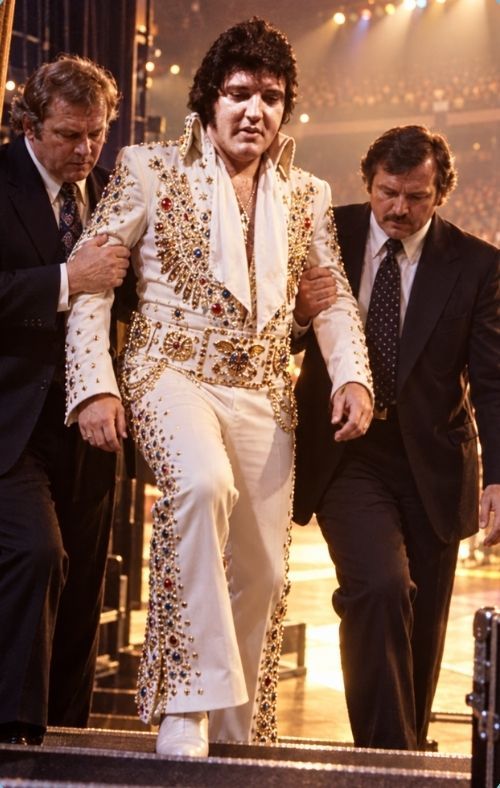
Only months later, on August 16, 1977, Elvis Presley died at Graceland at the age of 42. Looking back, those final Las Vegas nights feel almost like messages from a man who could no longer say plainly what his performances were revealing. He was still singing, still smiling, and still trying to be the King.
But beneath the applause, Elvis Presley may already have been asking—without words—for someone to finally let the show stop.