Introduction
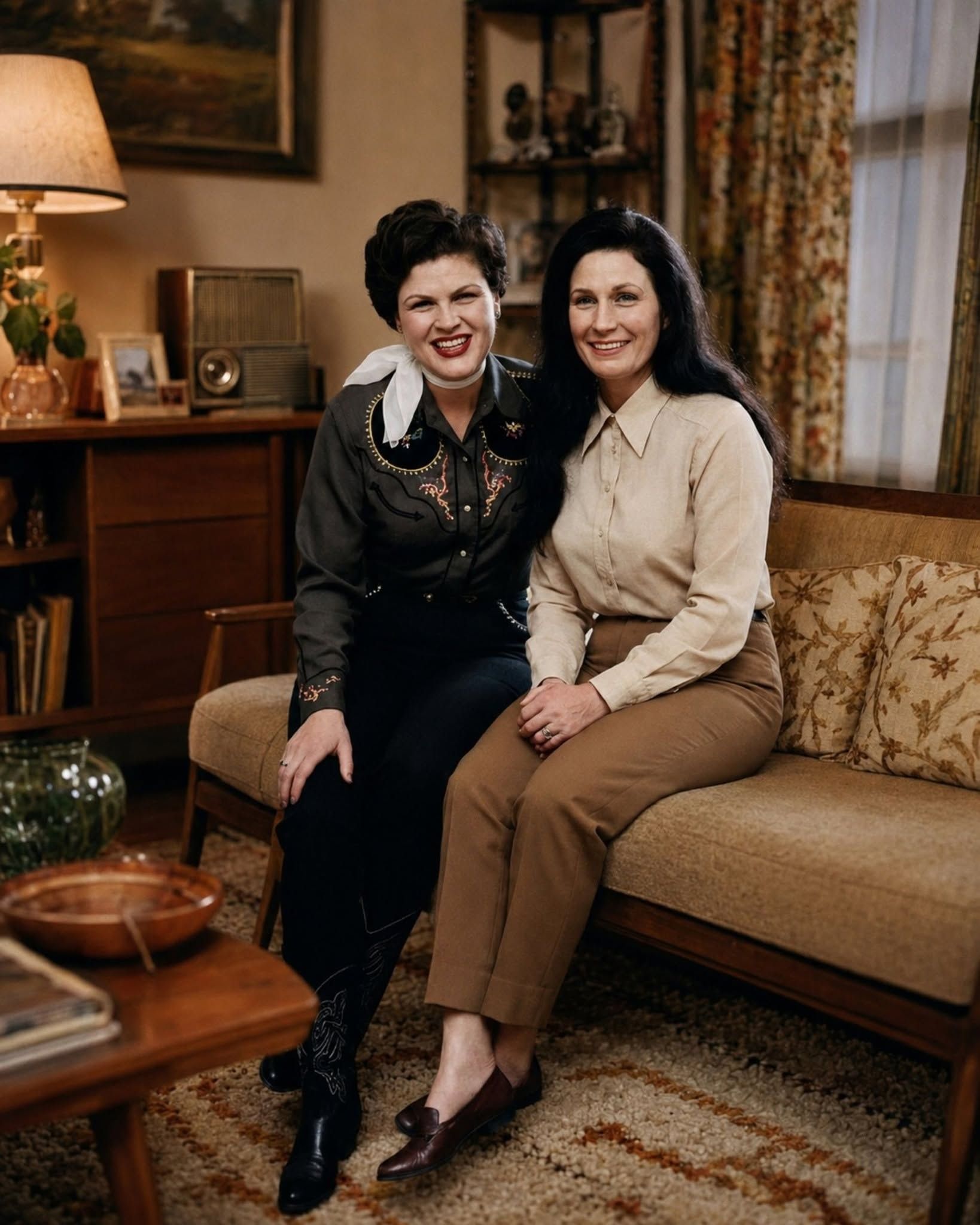
PATSY CLINE WAS LYING IN A HOSPITAL BED WITH HER FACE BANDAGED. THEN SHE HEARD A POOR KENTUCKY GIRL SING HER SONG ON THE RADIO — AND TOLD HER HUSBAND TO GO FIND HER.
There are moments in country music history that feel almost too tender to be real. They do not begin under bright stage lights, in front of roaring crowds, or inside the polished rooms where executives decide who deserves a future. Sometimes, the most important moments begin in pain, silence, and uncertainty. For Patsy Cline and Loretta Lynn, one of country music’s most meaningful friendships began not with applause, but in a hospital room.
In June 1961, Patsy Cline was fighting her way back from a terrible car accident in Nashville. Her injuries were serious. Her body was broken, her face was bandaged, and the future that had seemed so promising suddenly felt fragile. Patsy had already given country music a voice unlike any other — rich, wounded, elegant, and deeply human. But in that hospital bed, she was not the glamorous singer the world admired. She was a woman in pain, wondering what came next.
Then came the sound of another voice.
Loretta Lynn, still new to Nashville and still carrying the plainspoken strength of her Kentucky roots, appeared on the Midnight Jamboree and dedicated “I Fall to Pieces” to Patsy. It was more than a performance. It was a young singer reaching toward someone she admired, offering respect in the only way she knew how — through a song. Patsy heard it from her hospital bed, and something in Loretta’s voice must have reached her beyond the bandages, beyond the fear, beyond the pain.
She told her husband, Charlie Dick, to go find that girl.

That simple request became one of the most beautiful acts of generosity in country music. Patsy did not see Loretta as a threat. She saw promise. She saw hunger, innocence, and perhaps a little of her own struggle reflected back at her. Nashville could be cold, especially for women trying to make their way in a business that often asked them to be quiet, pretty, and grateful. Patsy understood that world. Instead of guarding her place, she opened a door.
When Loretta came to see her, she arrived nervous and unsure. Patsy, still hurting, welcomed her with warmth and honesty. Their friendship did not grow from publicity or convenience. It grew from kindness. Patsy helped Loretta understand the music business, guided her through difficult rooms, and gave her confidence at a time when confidence could mean survival.
That is what makes this story so powerful. It reveals Patsy Cline not only as a legendary singer, but as a woman of character. Her greatness was not limited to the microphone. It lived in the way she treated another young artist who needed encouragement. Loretta Lynn would later become one of the strongest truth-tellers country music ever produced, but before Nashville fully understood her, Patsy did.
Two years later, when Patsy died in the tragic plane crash of 1963, Loretta lost more than a hero. She lost a friend, a guide, and the woman who had called her close when the world still barely knew her name. That hospital room became part of country music’s hidden foundation — a place where pain met kindness, and where one great voice helped another find the courage to rise.

In the end, this story is not only about Patsy Cline and Loretta Lynn. It is about the rare beauty of one artist recognizing another before the world catches up. It is about mentorship, grace, and the quiet moments that shape history. Patsy may have been lying in a hospital bed, badly hurt and uncertain of her own future, but even there, she heard the future of country music singing through the radio — and she knew exactly what to do.