Introduction
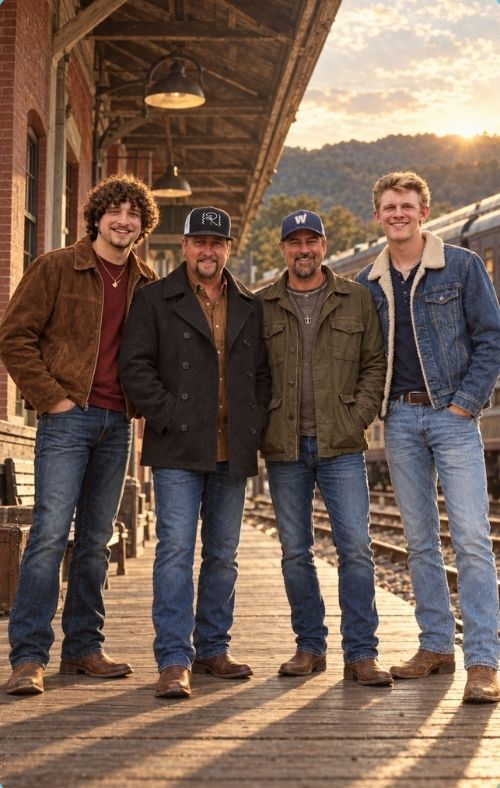
THREE GENERATIONS. FOUR VOICES. ONE FAMILY TRADITION THAT REFUSED TO FADE AWAY. These words capture the meaning of the performance described here: Jack and Davis Reid joining their fathers, Wil Reid and Langdon Reid of Wilson Fairchild, in a shared musical moment. Beyond the appeal of a family singing together, the scene invites a deeper reflection on how music survives across generations—through patient encouragement, familiar melodies, and the willingness of younger voices to make an inherited tradition their own.
The family connection gives this gathering particular significance. Wil and Langdon are the sons of Harold Reid and Don Reid, respectively, whose work with The Statler Brothers helped establish a beloved tradition of country harmony. Jack and Davis belong to the next generation of that same musical family. Their connection is documented, but its emotional meaning reaches beyond a family tree: it represents an ongoing relationship between the people who first gave these songs their character and those discovering how to carry that character forward.
For listeners who have treasured country music for decades, harmony has always offered something special. A melody can tell a story on its own, but several voices working together can give that story greater depth. One voice brings clarity, another warmth, and another a sense of weight beneath the words. The finest ensembles understand that distinction alone is insufficient; each singer must also listen. That balance between individuality and cooperation helps explain why family harmony can feel so meaningful.
In the scene presented, Wil and Langdon Reid occupy a position many older listeners will recognize. Once the younger generation, they now stand beside their own sons. That change carries a quiet emotional force. Parenthood often involves years of guidance whose results appear gradually, almost unnoticed. A shared performance brings those years into focus. The microphone becomes a meeting place where experience and possibility can stand together.
For Jack and Davis Reid, the family name offers both a connection and a creative responsibility. A respected musical inheritance can open a door, but it cannot supply the dedication required to develop a voice. Their participation suggests the most promising kind of continuity: younger musicians engaging with a tradition while leaving room for their own personalities to emerge. A legacy remains vital when it gives the next generation something to build upon.
This is also why the performance has meaning beyond nostalgia. Familiar music can return us to earlier chapters of our lives, but a younger singer changes the direction of that experience. Suddenly, the song belongs to the future as well. Older listeners may remember the voices that first made them care; newer listeners may discover the same musical values through performers closer to their own generation.
The strongest idea in this family story is therefore continuity through harmony. The lasting influence of The Statler Brothers provides its foundation, while Wilson Fairchild and the younger Reids give that influence an ongoing human presence. The tradition is carried through the practical act of singing, listening, and sharing a song.
Four voices cannot contain every memory of three generations. They can, however, make those connections audible. In that shared sound lies the enduring appeal of the Reid family’s story: music becomes a way of honoring where we came from while welcoming the voices that will take it further.