Introduction

ELVIS WORE A SECRET DISGUISE—THEN A TRAGEDY BEHIND “JAILHOUSE ROCK” LEFT HIM UNABLE TO WATCH THE FILM
Few motion pictures have captured the restless energy of early rock and roll as powerfully as Jailhouse Rock. Released in 1957, the film presented Elvis Presley as Vince Everett, a troubled young man whose raw musical ability offers him a path out of prison and into the recording industry. With his dark uniform, carefully styled appearance, and unmistakable voice, Elvis created a character who seemed dangerous, ambitious, and impossible to ignore. Yet behind the famous dance sequence and rebellious image was a deeply human story marked by illusion, redemption, and an unexpected tragedy that forever changed the way Elvis remembered the film.
The movie’s most celebrated moment remains the performance of “Jailhouse Rock,” written by Jerry Leiber and Mike Stoller. The scene placed Elvis at the center of an elaborate prison-themed set, surrounded by dancers dressed as inmates. His commanding movements, rhythmic confidence, and powerful delivery transformed the sequence into one of the most recognizable performances in popular culture. It was not merely a musical number; it was a declaration that rock and roll had arrived with a new visual language, one that belonged as much to the screen as it did to the radio.
Elvis reportedly played an important role in shaping the choreography, drawing upon his natural instincts as a live performer. Every movement appeared spontaneous, yet the sequence was carefully designed to communicate the rebellious spirit of the song. The striped prison clothing helped create the illusion that audiences were witnessing a dangerous outsider, while elements of costuming and hairstyling allowed Elvis to disappear more fully into the role. Beneath that disguise, however, remained a young performer carrying the growing pressure of extraordinary fame.
The film’s storyline also contained a striking warning about success. Vince Everett rises rapidly from prisoner to celebrated singer, but ambition begins to harden his character. He becomes distant from those who helped him and increasingly convinced that fame has placed him above ordinary loyalty. His confidence slowly becomes arrogance, and his choices threaten to leave him successful but alone.
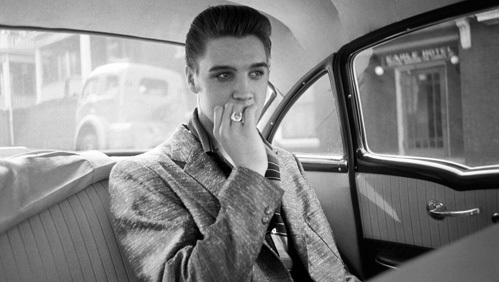
Then the story takes a dramatic turn. During a confrontation, Vince receives a serious blow to the throat. When he awakens, he is unable to sing, and the possibility of permanently losing his voice terrifies him. For a character whose identity has become inseparable from music, the silence is more frightening than prison. The scene forces Vince to reconsider his behavior and understand that talent is not something to be treated carelessly. His eventual recovery becomes more than a physical healing; it represents a chance to rebuild his character with humility and gratitude.
That theme must have carried special meaning for Elvis, whose voice was already becoming one of the most valuable and recognizable instruments in entertainment. Through Vince Everett, the film explored a fear familiar to many performers: the fear that the gift responsible for their success could suddenly disappear. The fictional threat gave Jailhouse Rock an emotional depth that extended far beyond its energetic soundtrack.
Yet the darkest chapter of the film’s history occurred after production was completed. Judy Tyler, who portrayed Peggy Van Alden, brought warmth, intelligence, and emotional balance to the story. Peggy recognizes Vince’s talent before the rest of the world does, but she also sees the pride and insecurity beneath his increasingly polished public image. Her calm presence provides a necessary contrast to Vince’s impulsive ambition.
Only days after filming ended, Judy Tyler and her husband were killed in a tragic automobile accident. She was just twenty-four years old. The news reportedly devastated Elvis, who had developed great respect for his co-star during production. Accounts from the period have long suggested that he found the loss so painful that he could not bring himself to watch the completed film.

This knowledge gives Jailhouse Rock a haunting quality for viewers who understand what happened behind the scenes. Judy Tyler appears vibrant and full of promise, unaware that the film would become one of her final lasting legacies. Her scenes with Elvis now carry a quiet sadness that no scriptwriter could have intended. What had been created as a lively musical drama became, for Elvis, a permanent reminder of a young life suddenly taken away.
The public remembers Jailhouse Rock for its unforgettable title song, its daring choreography, and Elvis Presley’s magnetic screen presence. However, the film also reveals something more fragile beneath the legend. It tells the story of a man nearly losing his voice, a proud character learning the meaning of humility, and a young actor facing a real tragedy that fame and applause could not repair.

More than six decades later, the performance still feels alive. Elvis moves across the screen with confidence, commanding every frame while wearing the carefully constructed disguise of a fictional prisoner. But behind the costume, the music, and the famous smile was a young man who would soon associate one of his greatest films with profound grief. That contrast is what makes Jailhouse Rock more than an entertainment landmark. It is a brilliant performance shadowed by loss—and a reminder that some of the brightest moments in cultural history can carry sorrows the audience never sees.