Introduction
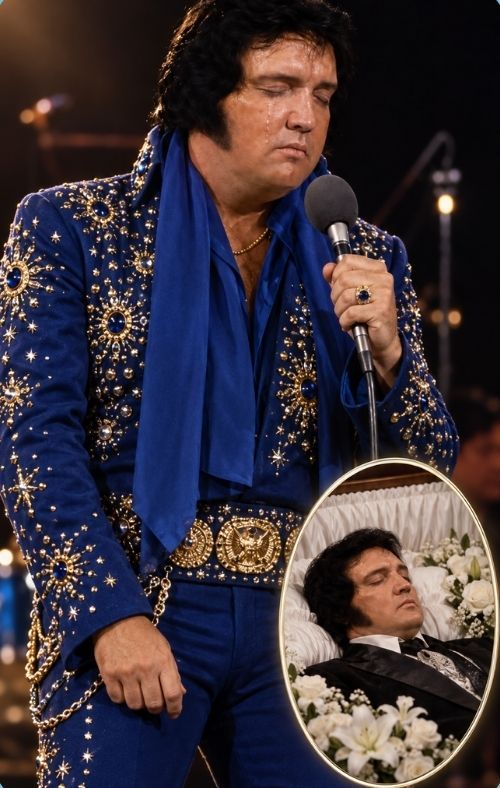
On August 16, 1977, the world received news that seemed almost impossible to accept: Elvis Presley was dead at only 42 years old. For millions of admirers, he had appeared larger than life—a commanding figure whose voice, movements, and unmistakable presence had transformed popular music. Yet behind the famous costumes, brilliant stage lights, and thunderous applause, a deeply human struggle had been unfolding. The King of Rock and Roll remained a legend to the public, but the man carrying that title had become increasingly fragile.
Elvis had experienced numerous health difficulties during his later years. Reports described problems including hypertension, glaucoma, digestive illness, insomnia, fluctuating weight, and the complicated effects of prescription medication. His physical condition was becoming harder to conceal, especially during demanding concert schedules. Even so, he continued to walk onto the stage. Night after night, audiences still waited for that familiar voice, and Elvis still attempted to give them the performer they remembered.
That determination makes his final appearances especially moving today. The televised concerts recorded in Omaha on June 19, 1977, and Rapid City on June 21, 1977, showed an artist visibly altered by illness and exhaustion. Some moments were difficult to watch, but others revealed why his musical gift could never be reduced to appearance alone. When Elvis reached for a powerful phrase, traces of the old brilliance returned. His voice could still rise above the orchestra with astonishing emotional force.
Performances such as “My Way” and “How Great Thou Art” now carry a meaning that no one in those audiences could have fully understood. “My Way” sounds almost like an unplanned summary of a remarkable life—proud, wounded, defiant, and increasingly aware of time. “How Great Thou Art,” meanwhile, returned Elvis to the gospel music that had shaped him long before fame arrived. In those sacred notes, listeners can hear not merely a celebrity fulfilling a concert obligation, but a man searching for strength in the music that had comforted him since childhood.

What makes Elvis Presley’s final days particularly heartbreaking is that he was not preparing to retire. Another tour was scheduled to begin, and the machinery surrounding his career was already moving. His next concert was planned for August 17, 1977, in Portland, Maine. Clothes were being selected, travel arrangements were in place, and musicians expected to return to work. There was every reason to believe that Elvis would once again leave Graceland, board an aircraft, and step into the light before another excited crowd.
But that next performance never happened.
On the afternoon of August 16, the gates of Graceland became the boundary between expectation and tragedy. The scheduled tour suddenly became an unfinished chapter. There would be no farewell concert, no carefully chosen final song, and no last bow beneath the spotlight. The singer who had spent more than two decades saying goodbye to audiences night after night was denied the opportunity to offer one final goodbye of his own.
Nearly half a century later, THE FINAL TOUR remains one of the most haunting stories in American music. It is not simply a story about fame or declining health. It is about the enormous distance between the public legend and the private man. Elvis continued because performing had become inseparable from his identity. The stage demanded more than his body could comfortably give, yet it also remained the place where he felt most alive.
That is why the silence after his death still feels so powerful. Elvis Presley never knew that the stage awaiting him would be the one he would never reach. His final tour survives only in schedules, packed luggage, unfinished plans, and the memories of people who expected to hear him sing again. The curtain did not fall after an encore. It fell at Graceland—and music was never quite the same afterward.