Introduction
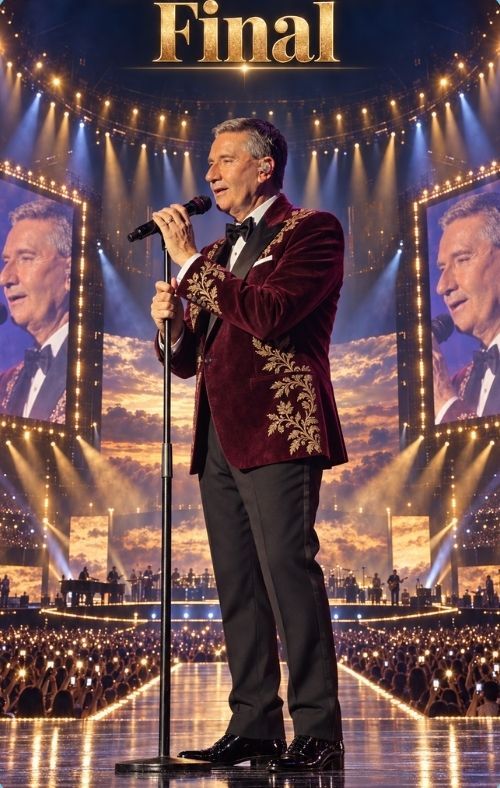
For more than four decades, Daniel O’Donnell has occupied a distinctive place in the hearts of listeners who value sincerity, melody, faith, and tradition. His concerts have never depended upon elaborate spectacle or fashionable reinvention. Instead, they have been built around something increasingly rare: a direct and gracious relationship between a singer and the people who have followed his journey. That is why the idea of Daniel O’Donnell’s final tour before an extended break carries such emotional significance.
This should not be mistaken for a permanent retirement. Daniel has repeatedly made it clear that stepping away from a demanding touring schedule does not mean abandoning music. His decision represents a pause—a chance to protect his health, spend more time with his family, and reconsider the pace at which he wishes to work in the years ahead. Nevertheless, when a beloved performer takes even a temporary step back, every remaining concert naturally feels more precious.
A Daniel O’Donnell performance is like opening a treasured family album. Familiar songs bring back particular rooms, faces, celebrations, and quiet Sunday afternoons. His gentle interpretations of Irish ballads, traditional country songs, inspirational favorites, and romantic standards often awaken memories that have rested silently for years. He does not merely sing these compositions; he allows listeners to recognize portions of their own lives within them.
That quality explains his extraordinary longevity. Daniel’s voice is warm rather than overpowering, controlled rather than theatrical. He understands that an honest lyric rarely needs unnecessary decoration. With his clear phrasing and calm delivery, he gives each word sufficient room to reach the audience. For older listeners in particular, this musical restraint feels reassuring. It recalls an era when performers trusted a beautiful melody, a meaningful story, and the attentive silence of an audience.

During this concluding chapter of touring, songs such as “Stand Beside Me,” “I Just Want to Dance with You,” “The Magic Is There,” and “Footsteps” assume a deeper emotional weight. Titles once associated with companionship and happiness can suddenly sound like messages exchanged between Daniel and his admirers. The audience has stood beside him through changing decades, while his music has accompanied them through marriages, anniversaries, bereavements, family gatherings, illnesses, and new beginnings.
The most moving moment may not arrive during the grandest song. It could occur when Daniel pauses between numbers, recognizes a familiar face, shares a modest story from Donegal, or simply looks across the theatre with gratitude. These small gestures have always defined his appeal. His admirers do not regard him as an unreachable celebrity. They see a familiar and dependable presence—someone whose music entered their homes and remained there.
There is also courage in knowing when to slow down. Touring demands constant travel, irregular rest, and considerable physical stamina. Choosing time for recovery and family is not a surrender; it is a mature acknowledgment that a meaningful career must be lived as well as performed. Daniel’s pause reminds us that artists are human beings before they are public figures.
When the final note of this touring chapter fades, there may be tears, but they need not be tears of despair. Daniel O’Donnell’s final tour before a new beginning is not the closing of a door. It is an opportunity to appreciate an exceptional relationship between an artist and several generations of listeners.

The stage lights may dim for a while, and the road may become quieter. Yet the records will continue playing, the memories will remain vivid, and the songs will still bring people together. For Daniel and his loyal audience, this is not simply a goodbye. It is a grateful pause—and perhaps the gentle promise that, when the time is right, the music will lead him home again.