Introduction
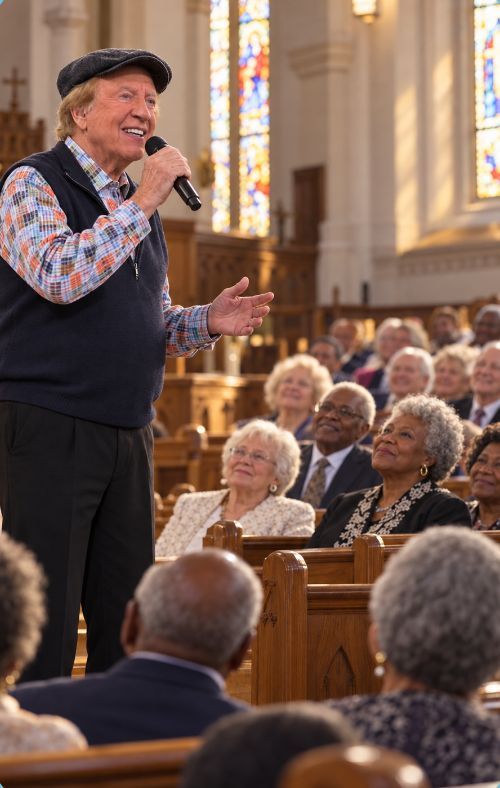
Some music becomes more meaningful as we grow older. A hymn once heard from a wooden church pew can return decades later carrying the memory of a parent’s voice, a familiar congregation, or a difficult season made bearable by faith. That is the emotional territory of Bill Gaither’s Homecoming—a place where songs connect the people we remember with the people still beside us.
As Bill Gaither celebrated his 90th birthday in 2026, a remarkable gathering offered listeners another opportunity to experience that connection. Bill and Gloria Gaither had brought together more than 250 gospel, Christian, and country artists for a Homecoming recording session on September 16, 2025. Performances from that gathering became I Go to the Rock, released in March 2026, and the later collection You Are Loved. The timing matters: the taping took place before his milestone birthday, preserving a meeting of generations whose musical conversation continues through these recordings.
The scale alone invites attention. Yet the deeper appeal lies in what happens when experienced singers and younger performers share familiar music. Gospel harmony depends on listening: knowing when to support a melody, when to let a phrase breathe, and when a simple entrance can carry more feeling than an elaborate flourish. In a gathering like this, those musical instincts become part of the inheritance.
The official account describes an event celebrating both gospel music’s legacy and its future. Among the participants were The Gaither Vocal Band, The Oak Ridge Boys, Tasha Cobbs Leonard, Rhonda Vincent, David Phelps, The Isaacs, and Jason Crabb. That breadth gives the gathering significance beyond nostalgia. It places different voices and musical backgrounds within a shared tradition while leaving room for each performer’s character.
For listeners drawn to the title performance, “I Go to the Rock” offers a particularly fitting center. Its message of seeking firm ground in troubled circumstances belongs naturally within a Homecoming setting. The gathering’s performance featured Chris Blue, Jason Crabb, and Angie Primm, bringing distinct voices to a song built around assurance and conviction. The musical interest lies in how a personal declaration of faith can expand into a communal expression without losing its directness.
There is also an understandable poignancy in watching veteran artists sing together. Older audiences know how quickly an ordinary occasion can become a treasured memory. A familiar face, a recognizable vocal tone, or the way a singer shapes a closing phrase may recall years of listening. Recording such moments preserves details that sheet music alone cannot hold: breath, timing, warmth, and the individual sound of a human voice.
Still, describing this gathering as a confirmed final farewell or an emergency race against time would go beyond the documented account. Its emotional weight needs no invented deadline. The presence of established performers alongside emerging artists already gives it a powerful meaning: a living tradition being shared while its practitioners can still learn from one another.
For many longtime listeners, that is the enduring value of Bill and Gloria Gaither’s Homecoming vision. These recordings offer familiar songs another life in the ears of children and grandchildren. They invite a younger listener to discover why a melody mattered so deeply to someone older—and invite the older listener to hear something fresh within it.
The most moving promise of this gathering is therefore found in the music itself. Voices change, generations pass, and audiences discover new ways to listen. But when singers gather with care and conviction, faith, memory, and musical fellowship remain audible. A song someone carried through a lifetime can become the song that helps another person begin.