Introduction

Sometimes the words that draw the most attention in country music arrive between the songs. A passing remark, a brief answer, an expression caught on camera—each can become a story larger than the moment itself. That is the fascination behind Ella Langley’s apparent response to Riley Green over “taking credit” for her success. Beneath the discussion lies a question many listeners will recognize from their own working lives: how do you acknowledge someone’s help while preserving the dignity of what you have accomplished yourself?
The exchange began with Green discussing his experience working with Langley during an appearance on The Voice. His reference to taking her on tour, followed by an observation about how well she was doing, prompted different interpretations. Some viewers heard an established performer expressing pride in a former touring companion. Others thought the emphasis placed too much weight on his contribution to her career. Reporting on the exchange describes Langley subsequently responding to a fan’s question during an Instagram Live, saying she “didn’t love that” and adding, “typical.” Her answer was widely interpreted as referring to Green, although she did not name him in the quoted response. usmagazine.com
Those few words leave considerable room for interpretation. They suggest displeasure, but they cannot tell an audience everything about a professional relationship. Nor can a short television remark establish precisely what Green intended. For readers who have watched public figures come and go over several decades, that distinction deserves attention. A moment can be revealing without being a complete explanation.
The musical partnership provides a more rewarding place to begin understanding why this story has attracted such interest. On “You Look Like You Love Me,” Langley and Green offer the kind of conversational interplay that has long made country duets appealing. To my ear, the performance works because neither voice needs to overwhelm the other. Langley brings character, timing, and an assured sense of storytelling; Green’s measured delivery gives her a contrasting presence to work against. Their voices invite listeners into a scene, allowing personality to carry as much weight as melody.
For older listeners, that approach may recall an era when a duet unfolded like a small drama. The pleasure came from hearing two distinct performers inhabit the same story. A memorable collaboration requires listening as well as singing: knowing when to enter, when to hold back, and when a plain phrase will communicate more than an elaborate flourish. Heard in that tradition, Langley’s contribution is central to the performance’s identity.
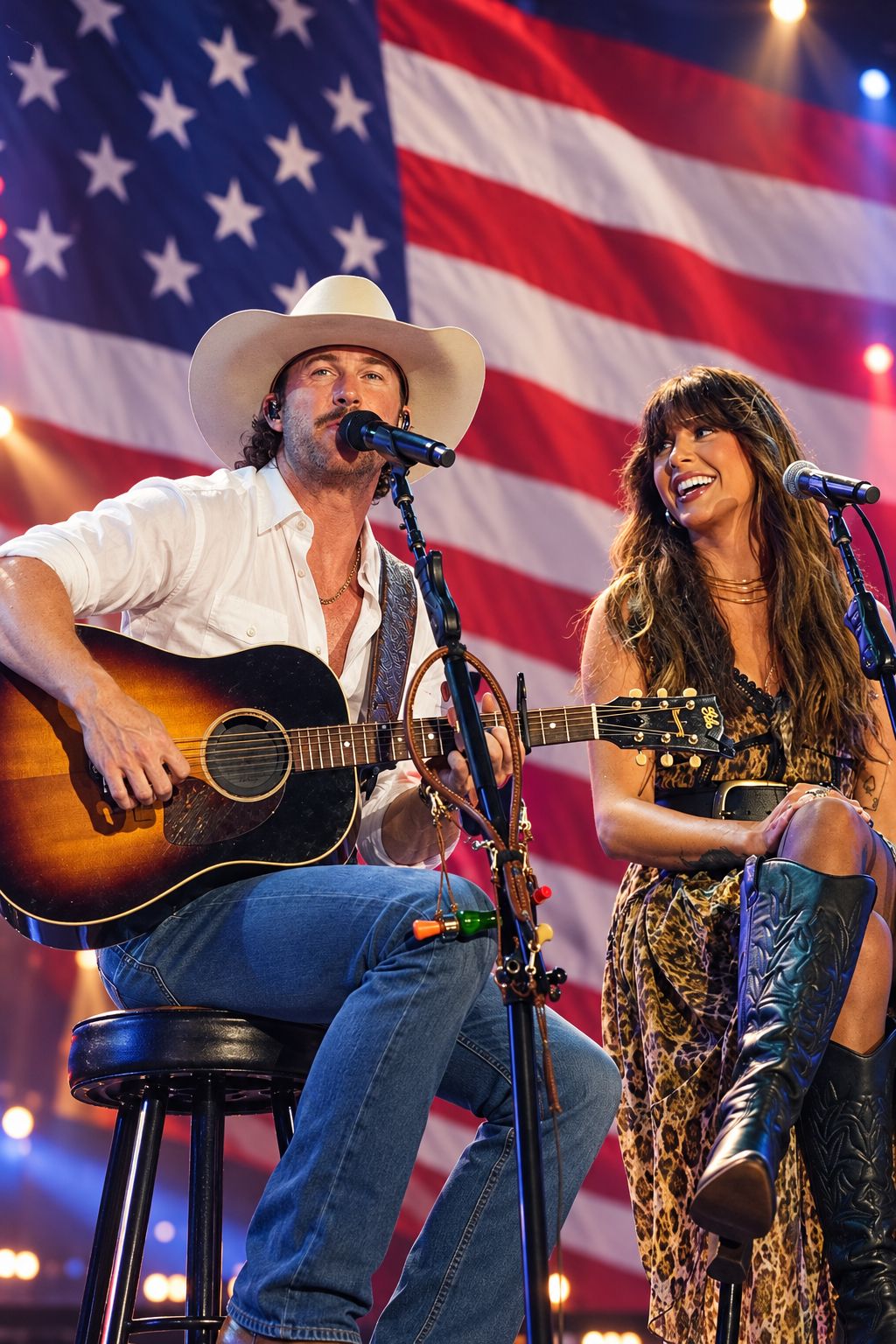
That is also why the question of recognition resonates beyond celebrity conversation. An invitation to tour can be valuable. So can an introduction, a shared recording, or encouragement from an established colleague. Yet the artist receiving that opportunity still has to make something of it. Audiences respond to a voice, a point of view, and the ability to make a song feel worth hearing again. Support and individual achievement can both deserve acknowledgment.
It would be premature to treat this exchange as proof of a permanent rupture. What makes it interesting is the tension between the public story of a successful partnership and each artist’s right to describe their own work. Listeners can appreciate the music without pretending to know every private conversation behind it.
Ultimately, Ella Langley and Riley Green have given audiences a collaboration worth discussing on musical grounds. The current controversy adds another layer, but the recordings offer the stronger invitation: listen closely to what each performer contributes. Beyond the headlines, that is where an artist’s individuality becomes audible—and where credit finds its most persuasive expression.